
10 Proven Clothing Brand Marketing Strategies for 2025
Launching a clothing brand is one thing; making it a household name is another. In a saturated market where new labels emerge daily, a brilliant design or a quality garment is only the starting point. To truly succeed, you need a powerful, multi-channel marketing engine to capture attention, build a dedicated community, and drive consistent, predictable sales. Generic advice won't cut it. Success requires a deliberate and well-executed plan.
This guide is designed to be your go-to playbook, cutting through the noise to provide a comprehensive roundup of proven clothing brand marketing strategies tailored for independent creators and growing businesses. We will move beyond the obvious to deliver actionable steps, real-world examples, and fresh perspectives on what works right now. You will learn how to effectively implement tactics such as:
- Influencer and Creator Partnerships: Moving beyond simple shout-outs to build authentic collaborations.
- Social Commerce and Shoppable Posts: Turning your social feeds into direct sales channels.
- Limited Edition Drops: Creating urgency and hype to sell out collections quickly.
- User-Generated Content (UGC) Campaigns: Building social proof and community by empowering your customers.
Furthermore, we will explore how modern, on-demand services like Direct-to-Film (DTF) transfers can revolutionize your prototyping and production. This technology allows you to test new designs, launch exclusive merchandise, and run cost-efficient sample runs with minimal upfront investment and risk. Whether you're sketching your first design or looking for innovative ways to scale, these strategies are your blueprint for building a brand that not only sells products but also resonates deeply with its audience.
1. Strategy #1: Forge Authentic Connections with Influencer & Creator Partnerships
Move beyond transactional sponsored posts by building genuine, long-term relationships with influencers and content creators who align with your brand’s ethos. This approach leverages their established trust and credibility to introduce your apparel to a dedicated audience, making it feel like a genuine recommendation rather than a paid advertisement. The core of this strategy is authenticity, integrating your clothing brand into a creator's natural content stream.
Why This Strategy Works
Modern consumers, particularly Gen Z and Millennials, are wary of traditional advertising. They trust recommendations from creators they follow, viewing them as peers. A successful partnership turns an influencer into a true brand advocate, generating content that resonates deeply with their followers and drives higher-quality engagement and conversions.
How to Implement This Strategy
- Identify the Right Partners: Focus on micro-influencers (10k-100k followers) whose audience demographics and personal style perfectly match your target customer. Their smaller, more niche audiences often yield higher engagement rates. Use platforms like Upfluence or simply search relevant hashtags on Instagram and TikTok to find potential collaborators.
- Build a Real Relationship: Start by engaging with their content organically. When you reach out, personalize your message. Instead of a generic template, explain exactly why you believe their style and values align with your brand.
- Co-Create Content: Empower creators by giving them creative freedom. Send them your products and brainstorm content ideas together, such as a "style three ways" video, a behind-the-scenes look at your design process, or a day-in-the-life feature.
Key Insight: The goal isn't just a one-off post; it's building an ambassadorship. Consider offering a personalized discount code for their followers and a commission on sales. This incentivizes long-term promotion and provides a clear way to track ROI.
This method is one of the most effective clothing brand marketing strategies for building brand awareness and social proof quickly. To truly forge authentic connections, delve into an ultimate guide to influencer marketing for ecommerce to master outreach and campaign measurement. For new brands working with a tight budget, this approach can be surprisingly cost-effective, as many micro-influencers are open to gifted collaborations. You can learn more about starting a brand with limited funds to maximize your initial investment.
2. Leverage Social Commerce and Shoppable Posts
Transform your social media feeds from simple brand showcases into powerful, interactive storefronts. Social commerce integrates e-commerce functionality directly into platforms like Instagram, TikTok, and Facebook, allowing customers to discover and purchase your apparel without ever leaving the app. By creating shoppable posts, hosting live shopping events, and utilizing in-app checkouts, you significantly reduce friction in the buying journey.

This strategy turns passive scrolling into an active shopping experience, capturing impulse buys and capitalizing on the moment a potential customer is most inspired by your designs. Brands like Shein master this by linking viral TikTok trends directly to their TikTok Shop, making it easy for viewers to buy the exact item they just saw in a video.
Why This Strategy Works
Modern shopping is about immediacy and convenience. By removing the extra steps of navigating to an external website, you cater to the short attention spans of online consumers and drastically lower cart abandonment rates. This approach meets customers where they are already spending their time, making the path from discovery to purchase seamless and visually driven.
How to Implement This Strategy
- Set Up Your Shops: Connect your product catalog to Facebook and Instagram Shops, and if applicable, TikTok Shop. Ensure all product information, including pricing, sizing, and inventory, is accurate and synchronized with your main e-commerce platform.
- Optimize Visuals for Shopping: Use high-quality, mobile-first lifestyle images and videos that show your clothing in action. Consistently tag products in your feed posts, Stories, and Reels. Make it a habit to use the "Link" sticker in Stories to direct followers to specific product pages.
- Host Live Shopping Events: Create urgency and excitement by hosting live sales on Instagram or TikTok. You can showcase new arrivals, offer exclusive discounts to viewers, and answer questions in real-time. This interactive format builds community and drives immediate sales.
Key Insight: The power of social commerce lies in its ability to shorten the sales funnel. Focus on creating compelling, native content that feels organic to the platform, rather than just posting static product shots. Tell a story with your visuals to inspire a purchase.
This is one of the most direct clothing brand marketing strategies for boosting conversions and generating revenue straight from your social channels. For brands utilizing on-demand production, social commerce is a perfect fit, as you can test new designs and sell products without holding large amounts of inventory. You can explore how to start a print-on-demand business that integrates perfectly with this lean sales model.
3. Content Marketing & Storytelling: Weave a Compelling Brand Narrative
Go beyond just selling apparel by creating valuable, engaging content that tells your brand’s story and builds an emotional connection with your audience. This strategy involves producing content like blog posts, videos, and social media features that showcase your company’s values, mission, and unique perspective. The goal is to make customers feel like they are part of a community, not just buyers of a product.
Why This Strategy Works
Today's consumers don't just buy what you make; they buy why you make it. Storytelling transforms your brand from a faceless entity into a personality with purpose. When customers resonate with your story, whether it's about sustainability like Patagonia or radical transparency like Everlane, they become loyal advocates who share your message, driving organic growth and brand affinity.
How to Implement This Strategy
- Define Your Core Narrative: What is your brand's origin story? What problem do you solve, or what values do you stand for? Document this narrative and ensure it is consistently reflected across all your content, from your "About Us" page to your Instagram captions.
- Show, Don't Just Tell: Create behind-the-scenes content that reveals your design process, introduces your team, or highlights the craftsmanship of your products. Video is especially powerful for this, whether it's a short TikTok showing how a DTF transfer is applied or a longer YouTube video detailing your sourcing ethics.
- Educate and Inspire: Write blog posts that offer value beyond your products. A sustainable brand could write about eco-friendly laundry tips, while a streetwear brand might create a guide to local skate spots. This positions you as an expert and a resource, not just a seller.
Key Insight: Consistency is the cornerstone of effective storytelling. Develop a content calendar to plan your narrative arcs and ensure a steady stream of engaging material. Your story isn't a one-time campaign; it's the ongoing conversation you have with your community.
This is one of the most powerful clothing brand marketing strategies for building a loyal, long-term customer base. High-quality visuals are crucial to telling your story effectively, so mastering your presentation is essential. You can learn how to create the perfect product photography lighting setup to ensure your visuals match the quality of your narrative.
4. Strategy #4: Drive Repeat Business with Email Marketing & Customer Segmentation
Don’t overlook the power of the inbox. Email marketing is a direct, owned channel for nurturing customer relationships, moving beyond one-time sales to build a loyal community. By segmenting your audience based on behavior, preferences, and purchase history, you can send highly personalized messages that resonate, drive repeat purchases, and significantly increase customer lifetime value. This is one of the most cost-effective clothing brand marketing strategies available.
Why This Strategy Works
Unlike social media, where algorithms control reach, email gives you a direct line to your customers. Personalized communication makes customers feel seen and valued. A targeted email with product recommendations based on past purchases, like those from H&M, is far more effective than a generic blast, leading to higher engagement, better conversion rates, and stronger brand loyalty.
How to Implement This Strategy
- Build Your List with a Valuable Offer: Don't just ask for an email; give something in return. Offer a compelling lead magnet like a 15% discount on their first order, a free style guide, or exclusive access to new collection previews. Promote this offer prominently on your website via pop-ups and footer forms.
- Segment Your Audience Intelligently: Go beyond basic demographics. Create segments for first-time buyers, VIP customers (high spenders), and users who have abandoned their carts. You can also segment by interest based on what product categories they’ve viewed, such as "shoppers interested in graphic tees."
- Automate Key Campaigns: Set up automated email sequences that trigger based on specific actions. Essential automations include a welcome series for new subscribers, abandoned cart reminders (like Boohoo’s timely follow-ups), and post-purchase follow-ups that ask for a review or suggest complementary items.
Key Insight: Personalization is more than just using a customer's first name. Reference their past purchases, recommend similar styles, or send a special offer on their birthday. This level of detail shows you're paying attention and transforms your emails from marketing noise into a valuable, curated service.
5. User-Generated Content (UGC) Campaigns
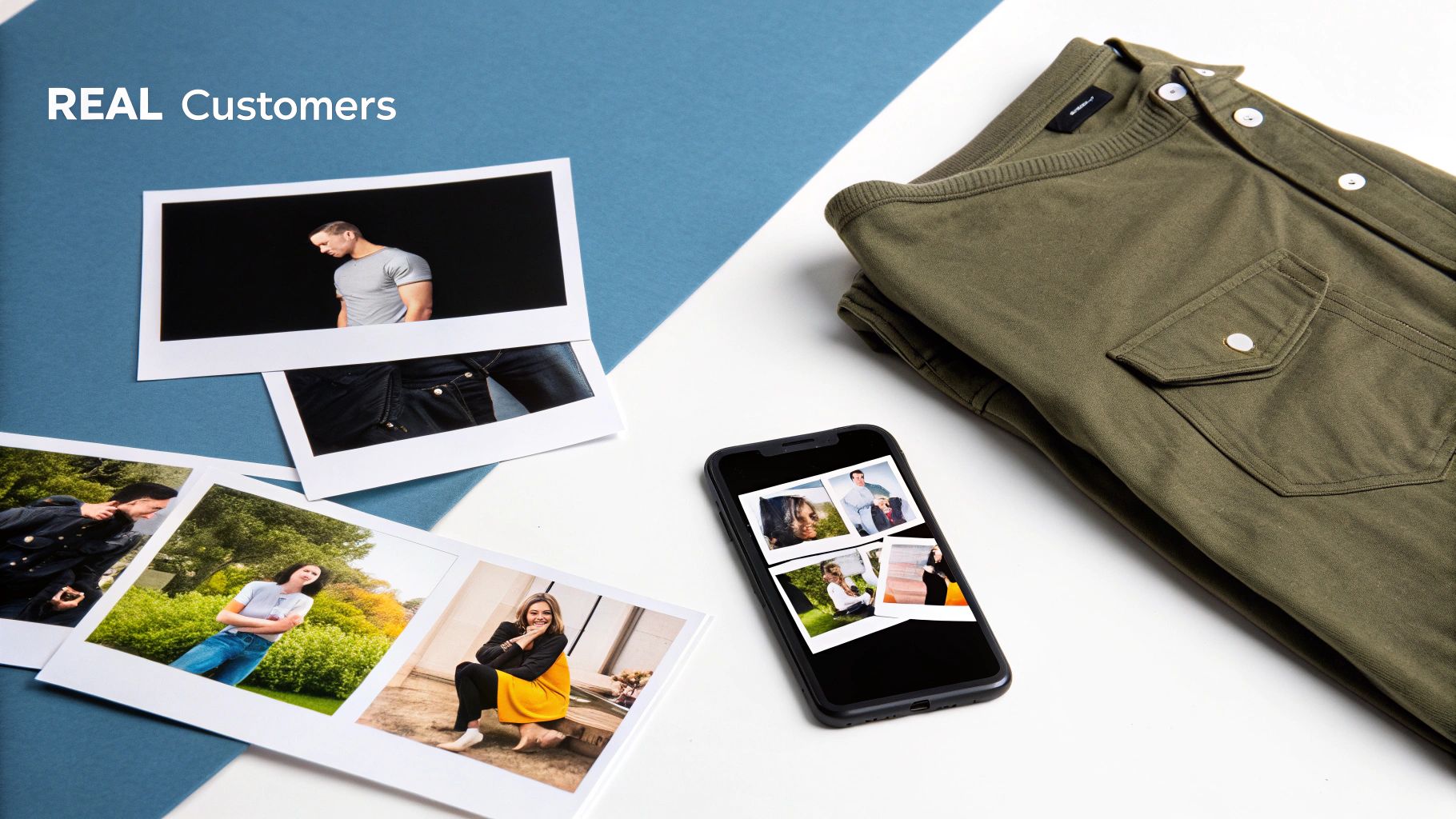
Turn your customers into your most powerful marketing asset by encouraging them to create and share content featuring your clothing. User-generated content (UGC) campaigns leverage your community’s enthusiasm to build authentic social proof, provide a stream of free marketing assets, and amplify your brand’s reach. This strategy transforms passive buyers into active participants in your brand story.
Why This Strategy Works
Shoppers trust content from real people far more than they trust polished brand advertisements. When potential customers see your apparel on diverse body types and in real-life settings, it removes purchase hesitation and builds immediate credibility. Campaigns like Aerie’s #AerieREAL or ASOS’s #AsSeenOnMe showcase how powerful this customer-centric approach is for building community and driving sales.
How to Implement This Strategy
- Create a Memorable Hashtag: Develop a simple, unique, and branded hashtag that is easy for customers to remember and use. Promote it clearly on your website, social media bios, and even on your packaging or clothing tags.
- Incentivize Participation: Encourage submissions by offering a clear value exchange. This could be a chance to be featured on your official social media pages, entry into a giveaway for a gift card, or even a small discount on their next purchase.
- Engage and Repost Consistently: Actively monitor your branded hashtag and engage with every post. Like, comment, and share the best content (with permission and credit) across your channels to show your community that you see and value their contributions.
Key Insight: The success of a UGC campaign lies in making participation effortless and rewarding. Clearly outline how customers can share their content and establish a straightforward policy for usage rights. Featuring a wide variety of styles and people reinforces inclusivity and encourages more customers to join in.
This is one of the most cost-effective clothing brand marketing strategies because it leverages your existing customer base to generate authentic promotional material. To take this approach to the next level, you can explore innovative ways to scale your efforts. For an ultimate guide, dive into AI UGC content for brands to blend authenticity with scalable social proof.
6. Strategy #6: Drive Urgency with Seasonal and Limited Edition Drops
Harness the power of scarcity by creating time-sensitive or quantity-restricted product releases. This strategy leverages the psychological principle of FOMO (fear of missing out) to generate immediate hype, drive quick sales, and cultivate an engaged community eager for your next move. By making products feel exclusive, you transform a simple purchase into an event, turning customers into dedicated fans.
Why This Strategy Works
Limited edition drops create a sense of urgency that standard inventory cannot match. Brands like Supreme and Yeezy have built entire empires on this model, proving that scarcity elevates perceived value and brand prestige. This approach is highly effective for testing new designs with minimal risk and keeping your brand’s offerings fresh and exciting, encouraging repeat visits and purchases from customers who don't want to miss out.
How to Implement This Strategy
- Build Anticipation: Start teasing the drop on social media 1-2 weeks in advance. Use countdown timers on your website and in Instagram Stories, share sneak peeks of the designs, and run polls to engage your audience in the pre-launch excitement.
- Define the Scarcity: Clearly communicate why the drop is limited. Is it a seasonal collection (e.g., "Our Summer '24 Capsule"), a collaboration, or a numbered, one-time release? Honesty is crucial to maintain customer trust.
- Launch Strategically: Coordinate the launch across all channels-email, social media, and SMS-simultaneously. Offer early access to your email subscribers or most loyal customers as a reward, which also helps gauge initial demand.
Key Insight: The success of a limited drop depends as much on the pre-launch marketing as it does on the product itself. The goal is to build a crescendo of excitement that peaks at the exact moment the product becomes available, ensuring a rapid sell-out and reinforcing the item's desirability.
This tactic is one of the most powerful clothing brand marketing strategies for creating buzz and driving immediate revenue. For small brands, this is an excellent way to manage cash flow and avoid overstocking. You can use on-demand services to produce an exact number of units, minimizing financial risk while maximizing hype.
7. Strategy #7: Launch Affiliate & Referral Programs for Performance-Based Growth
Turn your biggest fans, from loyal customers to niche bloggers, into a motivated sales force with affiliate and referral marketing. This performance-based model involves giving partners a unique link or code; you then pay them a commission for every sale they drive. It’s a low-risk, high-reward way to expand your reach, as you only pay for tangible results like actual sales.
Why This Strategy Works
Affiliate and referral programs tap into the power of word-of-mouth marketing at scale. When a trusted blogger, publisher, or even a friend recommends your clothing, the endorsement carries significant weight. This model is incredibly cost-effective, ensuring your marketing budget is spent directly on conversions rather than just impressions or clicks, making it an ideal strategy for brands focused on a strong return on investment.
How to Implement This Strategy
- Choose Your Platform: Start with an affiliate management app on your e-commerce platform like Shopify or use a dedicated network like ShareASale or Rakuten. These tools automate tracking, link generation, and commission payouts, simplifying the entire process.
- Recruit the Right Partners: Actively seek out affiliates whose audience and aesthetic match your brand. Look for fashion bloggers, YouTube reviewers, or even complementary brands. Create a clear application page on your website outlining the commission structure and benefits.
- Equip Affiliates for Success: Provide your partners with a comprehensive toolkit. This should include high-resolution product images, brand guidelines, pre-written copy, and promotional banners. The easier you make it for them to promote your products, the more successful they will be.
Key Insight: Structure your program with tiered commissions to motivate top performers. For example, offer a base 10% commission, but increase it to 15% for affiliates who drive over 50 sales a month. This gamifies the process and encourages sustained effort.
This is one of the most scalable clothing brand marketing strategies because it directly ties marketing spend to revenue. Programs like those from ASOS or Revolve demonstrate how a robust network of affiliates can become a primary sales channel, driving consistent traffic and building brand credibility simultaneously.
8. Strategy #8: Leverage Personalization and AI-Driven Recommendations
Elevate the customer journey by using artificial intelligence (AI) and machine learning to deliver personalized product recommendations, customized shopping experiences, and individualized marketing messages. This technology-driven approach moves beyond generic marketing to treat each customer as an individual, significantly increasing conversion rates and fostering loyalty. Much like Netflix suggests shows you'll love, your brand can suggest outfits and pieces a customer is most likely to buy.
Why This Strategy Works
Modern shoppers expect experiences tailored to their tastes. By analyzing browsing history, purchase data, and even on-site behavior, AI can predict what a customer wants to see next. This reduces friction in the discovery process, making customers feel understood and valued. Brands like Stitch Fix have built entire business models on this concept, using AI-powered styling to curate personalized boxes of clothing for their subscribers.
How to Implement This Strategy
- Collect First-Party Data Ethically: Use on-site quizzes ("Find Your Style"), newsletter sign-ups, and purchase history to gather customer preferences. Be transparent about what data you are collecting and how it will be used to improve their shopping experience.
- Integrate Personalization Tools: Platforms like Shopify have apps (e.g., Rebuy, LimeSpot) that add AI recommendation engines to your store. These can create "You Might Also Like" sections, personalized homepages, and tailored email campaigns.
- Combine AI with Human Curation: While algorithms are powerful, they can lack nuance. Use AI to generate initial recommendations, but have a human stylist or merchandiser review and refine collections, especially for key marketing campaigns or VIP customers. This blend ensures both relevance and brand consistency.
Key Insight: Start small with personalized email marketing. Segment your audience based on past purchases (e.g., customers who bought graphic tees) and send them targeted emails showcasing new arrivals in that specific category. This is a powerful, low-cost entry point into personalization.
This is one of the more advanced clothing brand marketing strategies, but its impact on customer lifetime value is unmatched. By making your customers feel seen, you transform a simple transaction into a lasting relationship, encouraging repeat purchases and turning shoppers into genuine brand fans.
9. Strategy #9: Champion Sustainability with Purpose-Driven Marketing
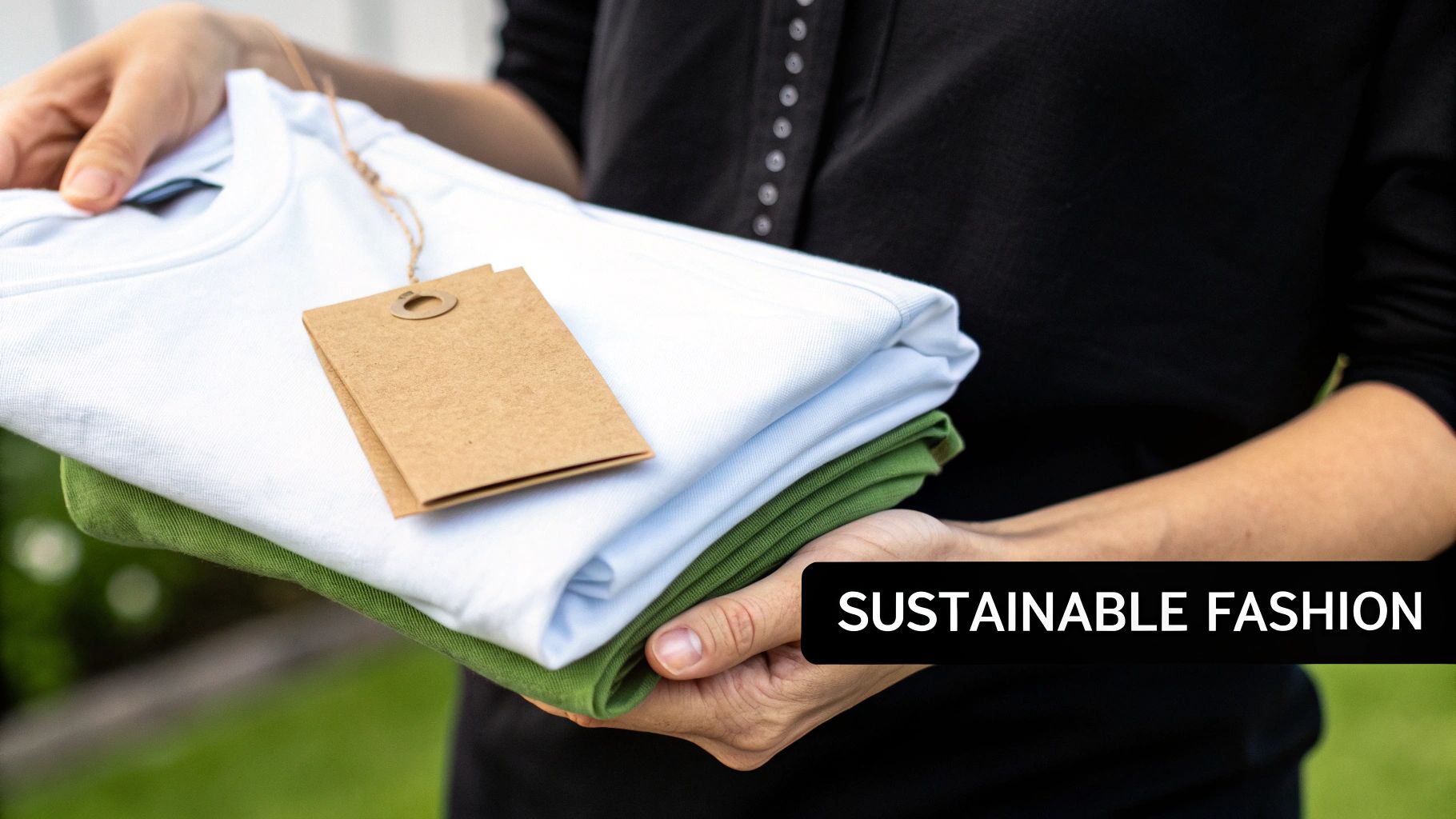
Position your brand as environmentally and socially responsible by being transparent about your production, materials, and community impact. This strategy connects with consumers on a deeper level by showing that your brand stands for more than just profit. Modern shoppers, especially younger demographics, actively seek out and support companies that align with their personal values, turning your ethical stance into a powerful competitive advantage.
Why This Strategy Works
Consumers are increasingly aware of the fashion industry's environmental and social footprint. Brands that demonstrate genuine commitment to ethical practices, like Patagonia's environmental activism or Allbirds' material innovations, build immense brand loyalty and trust. This approach differentiates you in a crowded market and attracts a dedicated customer base willing to pay a premium for products that do good.
How to Implement This Strategy
- Be Radically Transparent: Don't just say you're sustainable; prove it. Document your supply chain, share information about your factory partners, and explain the lifecycle of your garments. Use a dedicated page on your website to detail your ethical commitments, as exemplified by Everlane's famous transparency model.
- Communicate Your Impact: Use storytelling to explain the "why" behind your brand. Create content that highlights the people, communities, and environments positively affected by your business. Share measurable achievements, such as "reduced water usage by 40%" or "donated 1,000 items to local shelters."
- Engage Your Community: Involve your customers in your mission. Launch initiatives like a clothing recycling program, partner with a non-profit for a cause-related campaign, or host workshops on sustainable fashion. This turns customers into active participants in your brand's purpose.
Key Insight: Authenticity is non-negotiable. Avoid "greenwashing" at all costs. Start small with achievable goals, such as using recycled packaging or sourcing organic cotton, and be honest about your journey and future aspirations. Third-party certifications like Fair Trade or GOTS (Global Organic Textile Standard) can significantly boost your credibility.
This is one of the most resonant clothing brand marketing strategies for building a brand that lasts. By embedding purpose into your operations and messaging, you create a powerful narrative that attracts and retains a loyal, value-aligned audience. To dive deeper into building an ethical foundation, you can explore resources on sustainable fashion practices to ensure your claims are backed by action.
10. Create Hype with Experiential Marketing and Pop-Up Shops
Go beyond the screen and bring your brand to life with immersive, physical experiences. Pop-up shops, interactive installations, and brand-hosted events create a tangible connection between your apparel and your audience, transforming passive consumers into active participants. This strategy turns shopping into a memorable event, generating powerful word-of-mouth marketing and social media buzz.
Why This Strategy Works
In a digitally saturated market, physical experiences stand out. They offer a unique opportunity for customers to touch, feel, and try on your products while absorbing your brand’s atmosphere firsthand. This multisensory engagement builds a much deeper emotional connection than an online ad ever could, fostering genuine brand loyalty and creating shareable moments that amplify your reach organically.
How to Implement This Strategy
- Choose a Strategic Location: Identify a location with high foot traffic from your target demographic. This could be a booth at a local market, a short-term rental in a trendy neighborhood, or a collaboration within an existing, complementary retail store.
- Design an "Instagrammable" Space: Create a visually stunning environment that encourages visitors to take photos and share them. Think unique backdrops, interesting lighting, and interactive displays. The goal is to make your space a destination, not just a store.
- Offer Exclusivity: Drive urgency and excitement by offering products or discounts available only at the pop-up. Limited-edition drops, exclusive merchandise, or a special gift with purchase can significantly boost attendance and sales.
Key Insight: The success of a pop-up isn't just measured in immediate sales but in the buzz it generates. Partner with local influencers to promote the event, encourage user-generated content with a specific hashtag, and capture high-quality photos and videos to use in your marketing long after the event ends.
This is one of the most effective clothing brand marketing strategies for creating a powerful, in-person brand statement. Brands like Supreme have mastered this by turning their product drops into can't-miss cultural events, proving that a physical footprint, even a temporary one, can build immense hype.
10-Point Clothing Brand Marketing Comparison
| Strategy | 🔄 Implementation Complexity | ⚡ Resource Requirements | 📊 Expected Outcomes | 💡 Ideal Use Cases | ⭐ Key Advantages |
|---|---|---|---|---|---|
| Influencer and Creator Partnerships | Medium — contract + creative coordination | Moderate–High — influencer fees, content production | High engagement and brand awareness; measurable conversions | Product launches, youth-targeted and niche campaigns | Authentic endorsements; strong social proof |
| Social Commerce and Shoppable Posts | Medium–High — platform integrations & checkout setup | Moderate — product tagging, mobile-optimized assets | Faster purchase funnel; higher impulse conversions; first‑party data | Mobile-first retail, high-volume SKUs, live shopping | Reduces friction to buy; high conversion rates |
| Content Marketing and Storytelling | Medium — ongoing editorial & production cadence | Moderate — writers, video production, SEO effort | Long-term loyalty, improved SEO, thought leadership | Brand building, sustainability messaging, education | Deep emotional connection; sustained organic reach |
| Email Marketing and Customer Segmentation | Low–Medium — setup flows and segmentation logic | Low — email platform + data hygiene | Very high ROI; repeat purchases and recoveries; measurable | Retention, cart recovery, VIP lifecycle programs | Owned channel; highly measurable & personalizable |
| User-Generated Content (UGC) Campaigns | Low–Medium — campaign prompts + moderation | Low — incentives, community management | Authentic social proof; increased engagement; cost-efficient content | Community growth, social proof campaigns, product launches | Genuine authenticity; scalable content at low cost |
| Seasonal and Limited Edition Drops | High — tight coordination across teams | High — inventory planning, marketing push | Immediate sales spikes, heightened PR and FOMO | Hype-driven brands, collaborations, premium launches | Creates urgency and buzz; protects margins |
| Affiliate and Referral Marketing Programs | Medium — tracking, compliance, partner management | Low–Medium — commissions and platform fees | Performance-based growth; measurable CPA/ROAS | Driving incremental sales via partners and advocates | Pay-for-performance; expands reach efficiently |
| Personalization and AI-Driven Recommendations | High — data pipelines & model integration | High — tech stack, data science, tooling | Increased conversion rates, AOV, lower returns | Large catalogs, repeat customers, scale personalization | Scalable individualized experiences; boosts revenue |
| Sustainability and Purpose-Driven Marketing | Medium–High — supply chain transparency effort | High — sourcing, certifications, operational changes | Strong loyalty with conscious consumers; premium positioning | Brands prioritizing ethics, long-term differentiation | Differentiation and PR; builds trust with conscious buyers |
| Experiential Marketing and Pop-Up Experiences | High — event production and logistics | High — venues, staffing, design and tech | Memorable engagement and social buzz; localized impact | Flagship activations, product demos, PR-driven launches | Deep emotional connection; high social shareability |
Weaving It All Together: Your Path to a Thriving Brand
Building a successful clothing brand in today's crowded market is less about finding a single magic bullet and more about weaving together a cohesive tapestry of strategic initiatives. The journey from a great design idea to a thriving, recognizable brand is paved with smart, consistent, and creative marketing. The ten distinct clothing brand marketing strategies we've explored, from leveraging influencer partnerships to launching purpose-driven campaigns, are not just isolated tactics; they are interconnected threads that, when combined, create a powerful and resilient brand identity.
Your primary takeaway should be this: you don't need to do everything at once. Attempting to launch a pop-up shop, an affiliate program, and a complex AI-driven personalization engine simultaneously is a recipe for burnout. The key is to start small, master a few core areas, and build from there. Identify the strategies that most closely align with your brand's unique story and your target audience's behaviors.
Your Actionable Blueprint for Growth
To move from theory to practice, consider this structured approach:
-
Select Your Foundation: Choose two strategies to master first. A powerful and cost-effective starting point is combining Content Marketing and Storytelling (Strategy #3) with a targeted Email Marketing funnel (Strategy #4). This pairing allows you to attract an audience with your brand's narrative and then nurture that relationship directly.
-
Amplify with Community: Once your foundation is solid, integrate a User-Generated Content (UGC) Campaign (Strategy #5). This not only provides you with authentic social proof but also deepens the connection with your most passionate customers, turning them into vocal advocates for your brand.
-
Create Scarcity and Hype: With an engaged community in place, introduce Seasonal and Limited Edition Drops (Strategy #6). This tactic leverages the Fear of Missing Out (FOMO) and transforms a simple product release into an exciting event that drives immediate sales and buzz.
The most effective clothing brand marketing strategies are iterative. They require you to launch, measure, learn, and adapt. Your Key Performance Indicators (KPIs) are your compass, guiding your decisions and telling you what's resonating with your audience and what isn't.
The Power of Agile Production
A critical thread connecting many of these modern marketing tactics is the need for operational agility. Running limited drops, creating merchandise for pop-up events, or even seeding products to influencers for a UGC campaign can be financially risky if you're tied to large, traditional production runs. This is where embracing flexible, on-demand manufacturing methods becomes a strategic advantage.
Key Insight: Your marketing can only be as agile as your production. By decoupling your creative ideas from the constraints of bulk inventory, you unlock the freedom to test, experiment, and react to market trends in real-time without risking significant capital.
Leveraging technologies like Direct-to-Film (DTF) transfers allows you to produce high-quality, full-color designs for prototypes, sample runs, or limited edition collections with incredible efficiency. This approach empowers you to bring a new design from concept to reality in days, not months, perfectly complementing a dynamic and responsive marketing plan.
Ultimately, the goal is not just to sell garments; it's to build a brand that people connect with on a deeper level. It's about creating a community, sharing a story, and delivering an experience that extends far beyond the fabric itself. By thoughtfully selecting and integrating the right marketing strategies and pairing them with smart, flexible production, you can transform your creative vision into a lasting and profitable brand with a fiercely loyal following.
Ready to bring your most creative marketing ideas to life without the risk of bulk inventory? With Raccoon Transfers, you can order high-quality, full-color DTF transfers for your next limited drop, influencer kit, or pop-up event. Explore the possibilities and see how agile production can fuel your growth at Raccoon Transfers.