
10 Game-Changing Craft Fair Booth Setup Ideas for 2026
Welcome, creators and entrepreneurs! In the bustling world of craft fairs, your booth is more than just a space-it's your storefront, your brand story, and your first handshake with potential customers. A generic table and a simple sign might get you by, but a thoughtfully designed setup can dramatically increase foot traffic, engagement, and ultimately, your sales. Generic advice won't cut it. To truly succeed, you need specific, actionable craft fair booth setup ideas that not only look great but also function as powerful sales engines.
This guide moves beyond basic aesthetics to provide 10 innovative booth blueprints designed for modern makers. We'll focus on creating immersive experiences, particularly for showcasing custom goods like apparel and hard-surface products using high-quality DTF and UV-DTF transfers. Each idea is a complete plan, packed with practical tips on layout, materials, interactive elements, and strategic product presentation. To truly transform your booth into a standout sales tool, learning from strategies for other event types can be beneficial. Explore the strategies for the best giveaways for trade shows that actually work to attract visitors and generate real leads.
Forget vague tips and uninspired displays. Here, you will find concrete instructions for building interactive demo stations, portfolio walls that pop, and educational hubs that convert curious shoppers into loyal customers. Let's build a booth that doesn't just display your products, but actively sells them for you.
1. Interactive DTF Transfer Demo Station
Among the most effective craft fair booth setup ideas is creating an experience, not just a display. An interactive Direct-to-Film (DTF) transfer demo station does exactly that by transforming your booth from a static shop into a live production studio. This setup involves a heat press and a collection of blank items like t-shirts, tote bags, or even UV-DTF compatible hard goods like mugs and phone cases. Shoppers can watch in real-time as you apply a vibrant, durable design, turning a plain product into a finished piece right before their eyes.
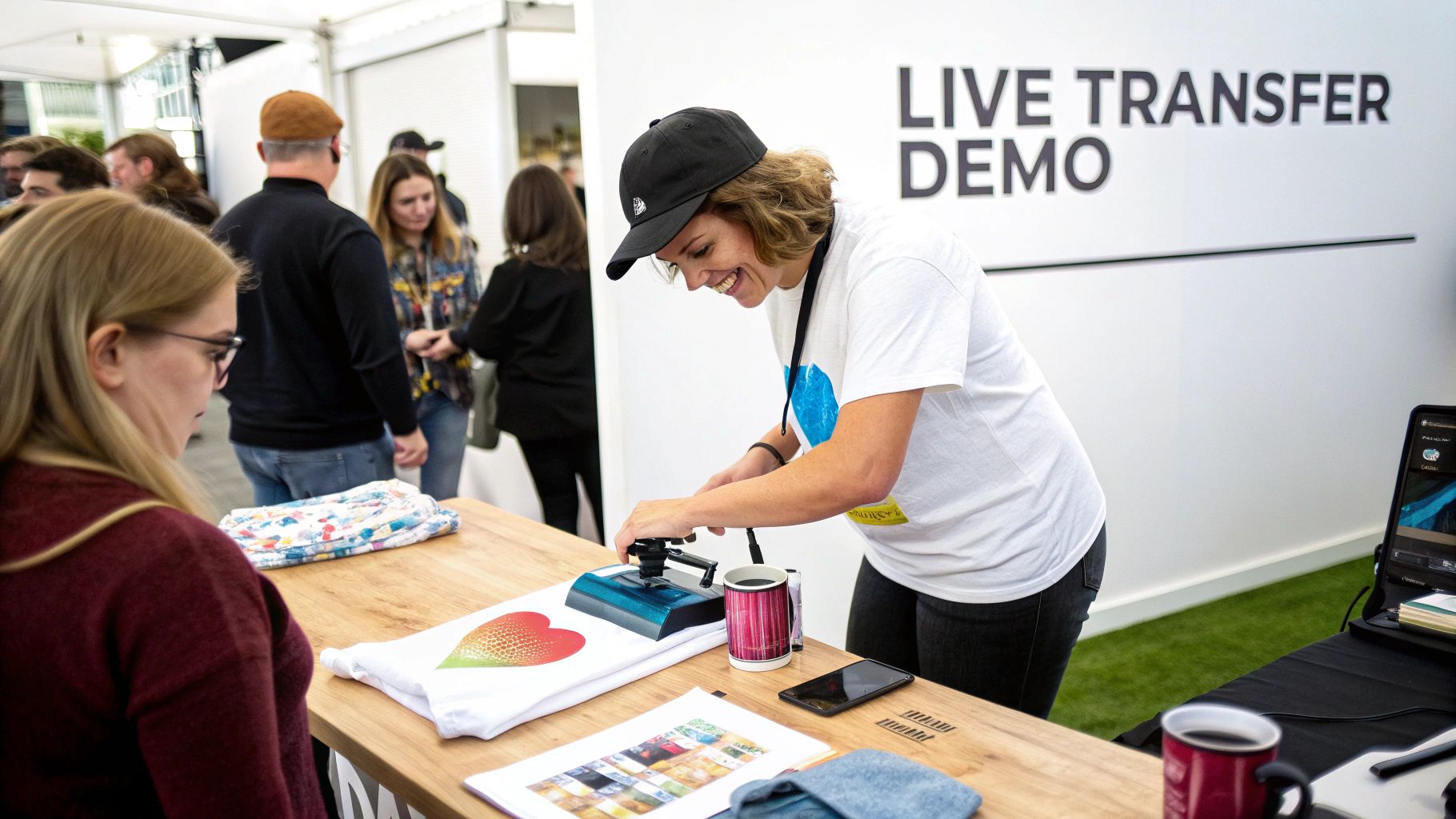
This hands-on approach demystifies the printing process, builds immediate trust in your product's quality, and creates a memorable "wow" factor that draws crowds. It allows potential customers to touch and feel the final product just seconds after creation, confirming the soft feel and impressive durability of DTF transfers.
Implementation and Showcase Tips
To execute this effectively, preparation is key. Pre-cut a variety of your most eye-catching transfer designs to make each demonstration quick and seamless, aiming for a 2-3 minute turnaround per item. This rapid process holds audience attention and allows you to serve more people.
- Schedule Demos: Post a clear schedule (e.g., "Live Demos every 30 minutes!") to build anticipation and manage crowd flow.
- Showcase Variety: Apply transfers to different materials and products throughout the day. Press a design onto a cotton tee, then a polyester hoodie, and then use a UV-DTF transfer on a ceramic mug to highlight versatility.
- Engage the Senses: Let customers feel the finished print and see the color vibrancy up close. Explain the benefits as you work, such as wash durability and stretchability.
Key Insight: A live demo answers customer questions about quality and feel before they even have to ask. Seeing the process builds confidence and drives on-the-spot sales of both finished goods and the transfers themselves.
This interactive station is one of the most powerful craft fair booth setup ideas for any custom goods creator. It not only showcases your products but also educates your audience, making your booth a must-see destination. For a deeper dive into the equipment and techniques, you can find a comprehensive guide on the DTF heat press process to ensure your demos run smoothly.
2. Portfolio Wall Display with Material Samples
Instead of relying on customers to imagine what your designs look like on different products, show them. A portfolio wall is one of the most effective craft fair booth setup ideas for demonstrating range and quality. This tactile display features finished projects and material swatches, allowing shoppers to see and feel the incredible results of your DTF and UV-DTF transfers across various applications. Imagine a beautifully organized grid showcasing your work on everything from soft-spun cotton t-shirts and polyester performance wear to wooden signs, glass tumblers, and leather patches.
This setup acts as a silent salesperson, instantly communicating your versatility and expertise. By presenting physical examples, you answer unspoken questions about texture, color vibrancy, and durability. Customers can compare a print on a blended hoodie to one on a canvas tote bag, helping them visualize their own custom project and building confidence in your brand's capabilities.
Implementation and Showcase Tips
A successful portfolio wall is all about organization and clear communication. Use a consistent backdrop, like a neutral-colored pegboard or fabric-covered panels, to make your samples pop. Arrange items logically to guide the customer's eye and tell a compelling story about what you offer.
- Categorize Your Work: Group samples by application (e.g., "Team & Spirit Wear," "Custom Hard Goods," "Small Business Merch") to help customers find relevant examples quickly.
- Pair Photos with Samples: Mount high-quality, laminated photos of finished products in action next to the physical swatches to provide context and inspiration.
- Incorporate QR Codes: Add small QR codes next to specific samples that link directly to that product's online listing or a custom quote form, bridging the gap between physical interest and digital sales.
- Highlight Specialty Prints: Create a dedicated section for unique transfers like glitter, holographic, or UV-DTF on textured surfaces to showcase your premium offerings.
Key Insight: A tactile portfolio wall transforms abstract ideas into tangible possibilities. Letting customers touch a soft, stretchable DTF print or feel the raised texture of a UV-DTF decal is far more convincing than a verbal description alone.
This approach is one of the craft fair booth setup ideas that best serves creators with a diverse product line. It educates customers on the full scope of your services, encouraging larger and more varied orders by sparking their imagination.
3. Gang Sheet Design Builder Showcase Station
One of the most innovative craft fair booth setup ideas is to bring your digital tools into the physical world. A Gang Sheet Design Builder Showcase Station achieves this by setting up tablets or laptops that allow visitors to interact directly with your online design tool. Customers can see firsthand how to arrange multiple designs onto a single transfer sheet, optimizing space and significantly reducing their cost per print. This interactive experience educates them on the efficiency and value of your service.
This setup demystifies a powerful ordering method that many new creators find intimidating. By guiding them through the process, you empower them to become more efficient, cost-effective buyers. It transforms your booth from a simple product display into an educational hub, building long-term customer relationships by showing them how to save money and maximize their creativity.
Implementation and Showcase Tips
A successful digital station hinges on a user-friendly and reliable setup. Ensure your devices are fully charged and bring backup power sources. The goal is to make the digital experience as smooth and accessible as possible, even for those who aren't tech-savvy.
- Pre-load Demos: Have several sample gang sheets already loaded in the builder. This allows you to quickly demonstrate the tool's potential without starting from scratch each time.
- Offer an Incentive: Provide a special discount code exclusively for booth visitors who try the builder. This encourages engagement and drives future online sales after the event.
- Ensure Connectivity: Never rely on event Wi-Fi. Bring a dedicated mobile hotspot to guarantee a stable internet connection for a seamless demonstration.
- Use Physical Examples: Display printed examples of well-organized gang sheets next to the tablets. This tangible reference helps connect the digital tool to the final physical product.
Key Insight: An interactive builder station educates customers on cost-saving techniques, positioning your brand as a helpful partner rather than just a vendor. This value-added experience builds trust and encourages larger, more efficient orders.
This station is a forward-thinking craft fair booth setup idea that caters to serious creators and small business owners. It showcases the technology behind your products and teaches customers how to be smarter purchasers. For those new to the concept, a complete guide on how to leverage DTF gang sheets can provide a deeper understanding of the benefits.
4. DIY Crafter Starter Kit Display
Instead of only selling finished goods, one of the most strategic craft fair booth setup ideas is to empower fellow creators. A DIY Crafter Starter Kit Display transforms your booth into a resource hub for aspiring hobbyists and home-based entrepreneurs. This setup features thoughtfully curated bundles that combine essential supplies like transfer samples, application instruction guides, design templates, and attractively branded packaging to create an all-in-one solution for beginners.
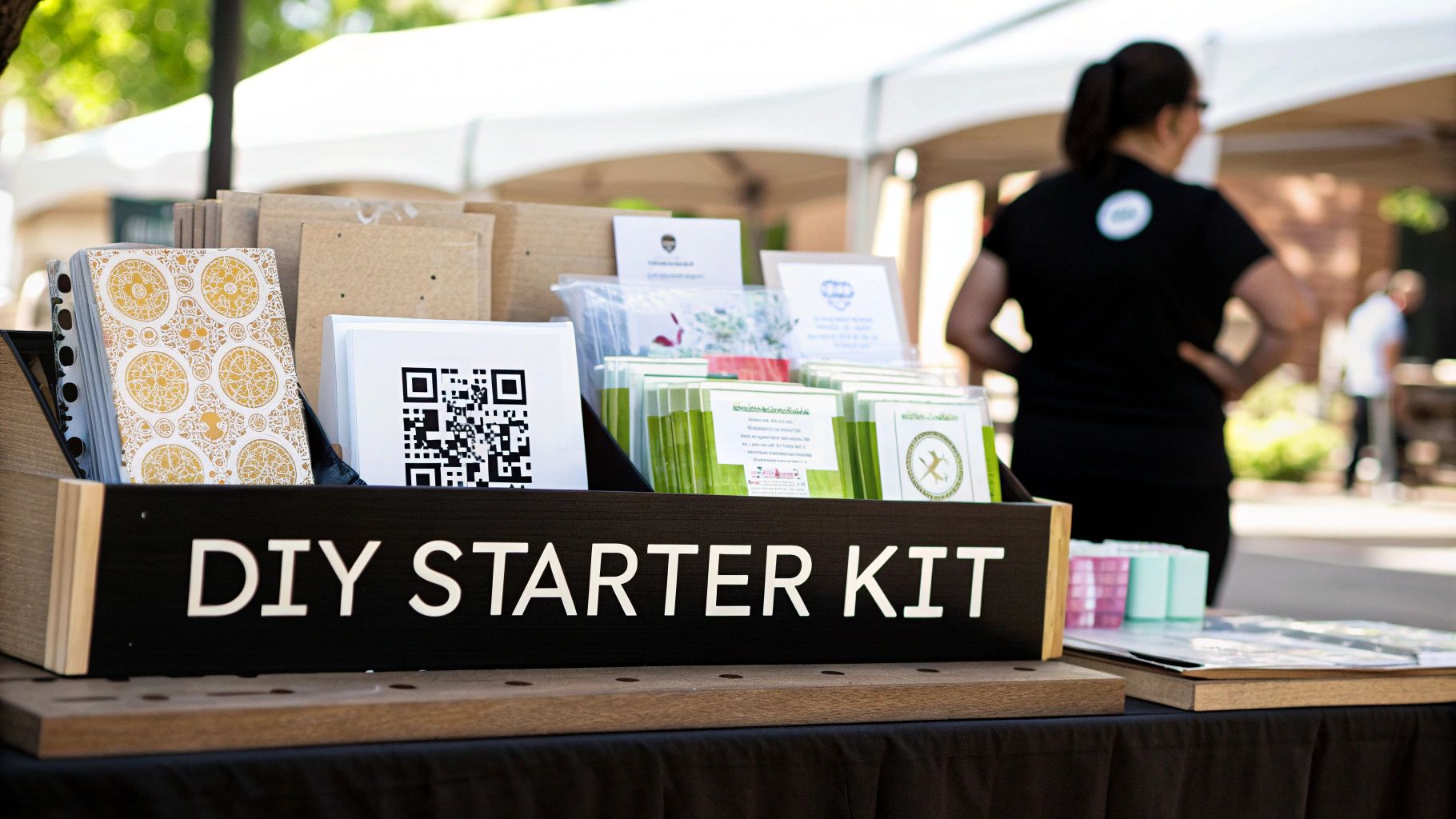
This approach positions you as an expert and supplier, not just a seller. It taps into the massive DIY market and shows potential customers the complete journey from a simple transfer to a polished, sellable product. By providing the tools for their success, you build a loyal customer base that will return for supplies long after the fair ends.
Implementation and Showcase Tips
The key to a successful starter kit is making it accessible and aspirational. Your display should clearly communicate the value and potential inside each box. Use signage to showcase the finished products that can be made with each kit, illustrating the end result for shoppers.
- Offer Tiered Options: Create bundles at different price points to appeal to various budgets. A 'Budget' kit might include a few transfers and a guide, while a 'Premium' kit could add a small pressing pillow, blank tote, and a discount on a future full-sheet order.
- Leverage QR Codes: Include a QR code on each kit that links directly to a video tutorial demonstrating the application process. This digital support adds immense value and builds customer confidence.
- Create Instagram-Worthy Packaging: Design your kits to be visually appealing. Good packaging encourages customers to share their unboxing experience on social media, providing you with free marketing.
Key Insight: Selling starter kits shifts your role from a product vendor to a business enabler. You're not just selling a physical item; you're selling the potential for creativity and a new hobby, which creates a much stronger customer connection.
This strategy is perfect for brands that sell supplies like DTF transfers, as it directly caters to the growing community of at-home crafters. It’s an effective way to generate both immediate sales and long-term recurring revenue. To help your new customers on their journey, you can provide them with resources on how to start a craft business from home.
5. Eco-Friendly Process Education Hub
In a market where consumers are increasingly driven by sustainability, one of the most powerful craft fair booth setup ideas is to position your brand as the eco-conscious choice. An Eco-Friendly Process Education Hub transforms your space from a simple retail point into a mission-driven exhibit. This setup focuses on clearly communicating the environmental benefits of modern printing methods like DTF compared to traditional techniques such as screen printing, which often involves high water usage and chemical waste.
This approach attracts a valuable demographic of conscious consumers who are willing to invest in products that align with their values. By showcasing data on water savings, waste reduction, and the use of non-toxic, water-based inks, you build a brand narrative centered on responsibility. It educates customers, justifies your product's quality, and creates a compelling reason to buy beyond just aesthetics.
Implementation and Showcase Tips
To create an effective education hub, your messaging must be clear, credible, and visually engaging. Use a mix of large-format graphics, small takeaways like postcards, and digital displays to present the information in easily digestible formats. Focus on statistics that make a tangible impact.
- Use Hard Data: Display clear, impactful statistics like "Uses 80% less water than screen printing" or "Produces zero water waste." Cite your sources to build credibility.
- Showcase Materials: Let visitors see and touch products printed with eco-friendly inks. Highlight the Oeko-Tex certified transfers to assure them of safety and quality, especially for children's apparel.
- Incorporate Natural Elements: Use reclaimed wood displays, potted plants, and natural fiber signage (like linen or cork) to visually reinforce your eco-friendly theme and create an inviting atmosphere.
- Tell the Story: Explain why sustainability matters to your brand. A personal story about your commitment to responsible production can be far more engaging than a simple list of facts.
Key Insight: Educating customers on the "why" behind your process builds brand loyalty and a deeper connection. When a shopper understands they are making a better choice for the planet by purchasing from you, the transaction becomes more meaningful and memorable.
This strategy is one of the most forward-thinking craft fair booth setup ideas available today. It not only helps you sell products but also builds a community around shared values, turning one-time buyers into long-term advocates for your brand. To get started, you can explore the sustainability advantages of DTF technology and use that data as the foundation for your educational displays.
6. Custom Merchandise Business Case Study Station
Moving beyond product displays, one of the most compelling craft fair booth setup ideas is to showcase tangible proof of concept. A business case study station shifts the focus from what you sell to what your customers can achieve. This setup highlights real-world success stories of brands, resellers, and entrepreneurs who have scaled their ventures using custom transfers, turning your booth into a hub of inspiration and business intelligence.
This approach builds immense credibility by featuring before-and-after revenue metrics, powerful customer testimonials, and visual journeys from a simple side hustle to an established brand. It positions your products not just as craft supplies, but as essential tools for business growth, resonating deeply with aspiring entrepreneurs in the crowd.
Implementation and Showcase Tips
To create an impactful case study station, you need to curate stories that are both relatable and aspirational. Focus on presenting clear, concise narratives that are easy to digest in a busy fair environment. This B2B-style approach is highly effective at attracting serious buyers looking for a reliable production partner.
- Showcase Diverse Journeys: Feature a mix of case studies, such as an e-commerce store that boosted its profit margins, a local band that sold out of tour merchandise, or a non-profit that raised funds with custom apparel.
- Visualize the Data: Use professionally printed posters or foam boards to display key metrics. Highlight figures like "Increased revenue by 150%" or "Reduced production time by 12 hours/week."
- Offer Takeaways: Create one-page, professionally printed handouts for each case study. Include key challenges, the solutions your transfers provided, and direct quotes from the business owner.
- Protect Privacy: Offer anonymity to clients who prefer not to have their brand name used publicly. Focus on the business model and the impressive results instead.
Key Insight: A case study station transforms your sales pitch from "Here's what our product does" to "Here's what our product can do for your business." It provides social proof and a clear ROI, answering the crucial "why" for potential B2B clients and serious creators.
This setup is one of the most strategic craft fair booth setup ideas for vendors aiming to attract long-term, high-volume customers. By demonstrating proven success, you build a level of trust and authority that a simple product display cannot match.
7. Promotional Product Solution Showcase
Shifting from a standard retail approach, a promotional product solution showcase transforms your booth into a B2B sales hub. This setup is specifically designed to attract event planners, corporate buyers, and promotional product distributors by highlighting your capabilities for bulk orders and branded merchandise. Instead of selling individual items, you are selling a service: the ability to supply high-quality, customized goods for events, corporate gifts, and trade shows.
This strategic focus positions you as a reliable production partner rather than just another artisan. The display should feature pristine examples of branded apparel, event merchandise, and corporate gifts, demonstrating your skill with logos and branding guidelines. The goal is to show potential business clients that you can handle volume with consistent, professional results, making it one of the most lucrative craft fair booth setup ideas for growth-minded creators.
Implementation and Showcase Tips
Success with this setup depends on presenting yourself as a credible and organized supplier. Your booth should be polished, professional, and full of information that answers the key questions a business buyer would have. Focus on quality, scalability, and reliability in all your messaging and displays.
- Highlight Volume Pricing: Clearly display pricing tiers for bulk orders (e.g., 100, 250, 500, 1000+ units) on spec sheets for popular items like t-shirts, tote bags, and mugs.
- Showcase Past Work: Create a portfolio or display board featuring high-quality photos or physical samples of previous corporate orders (with client permission) to build credibility.
- Provide Spec Sheets: Have printed spec sheets ready for your most popular promotional products. Include details like material composition, imprint area, available colors, and DTF/UV-DTF application benefits.
- Offer Partnership Information: Prepare materials for potential resellers or white-label partners, outlining your capabilities and partnership terms.
Key Insight: B2B clients aren't just buying a product; they are investing in a reliable partner for their brand. Your booth must communicate professionalism, quality control, and the ability to deliver on time and on budget.
This approach is ideal for makers looking to scale beyond single-item sales and tap into the larger, more consistent revenue stream of corporate and event merchandising. It establishes your brand as a serious player in the promotional products industry.
8. Social Media Engagement & Photo Opportunity Booth
In today's digital marketplace, one of the most powerful craft fair booth setup ideas is to turn your space into a viral marketing engine. A social media engagement and photo opportunity booth is designed to do just that, creating an "Instagrammable" experience that encourages shoppers to become brand advocates. This setup features a branded backdrop, props, and beautifully staged products, transforming a corner of your booth into a shareable moment.
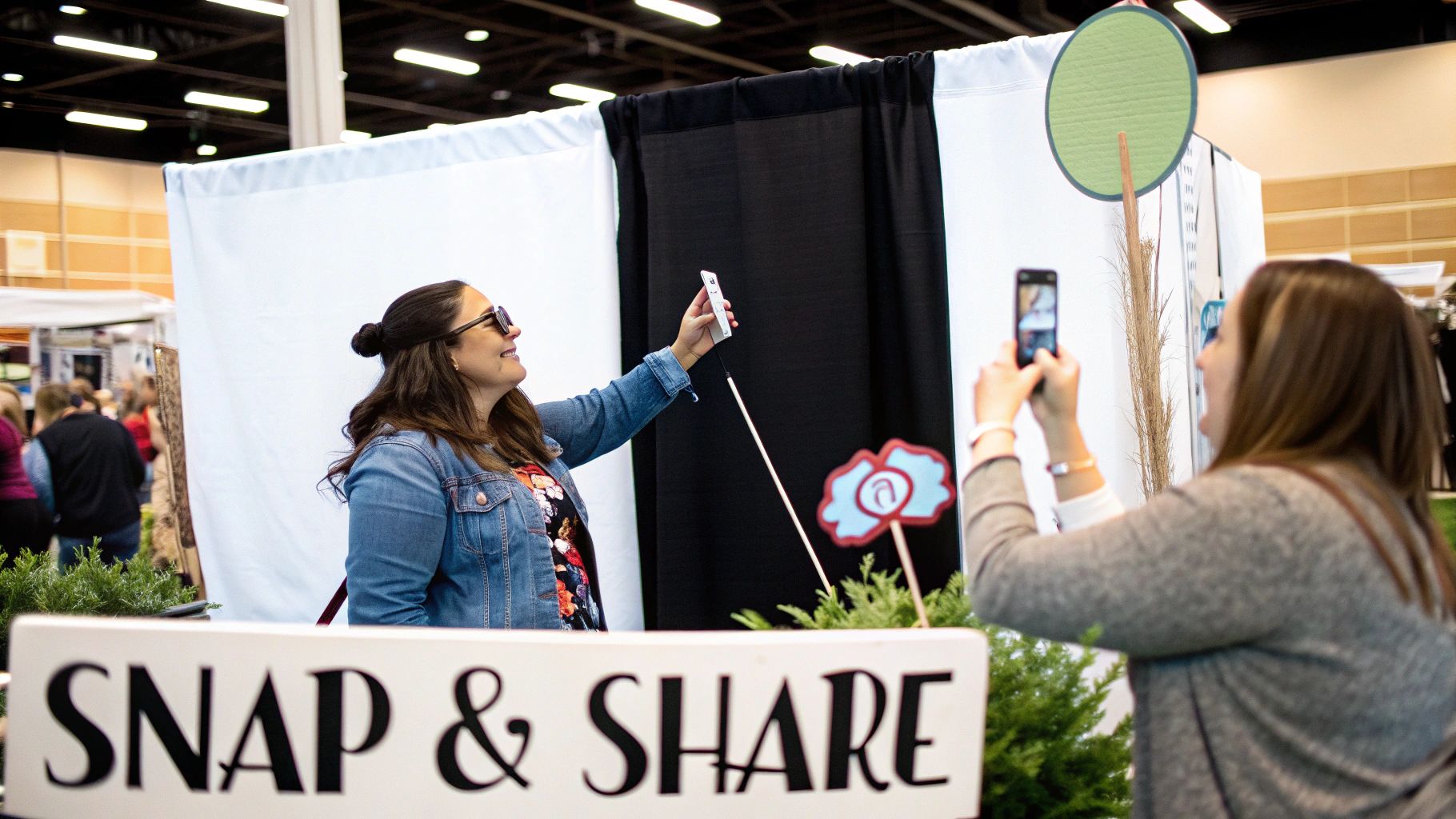
This strategy leverages user-generated content to expand your reach far beyond the physical event. When customers post photos from your booth, they are providing a personal endorsement to their followers. By including a unique hashtag, QR codes to your social profiles, and offering a small incentive, you create a self-perpetuating cycle of promotion that builds brand awareness and social proof.
Implementation and Showcase Tips
A successful photo booth needs to be visually appealing and easy to use. Design a backdrop using your brand colors and a clear, readable logo or slogan. Stage some of your best-selling items, like custom t-shirts or hats, so visitors can model them in their pictures. The goal is to make sharing irresistible.
- Create a Clear Call to Action: Use signage with your unique event hashtag (e.g., #YourBrandFair) and instructions for a contest or discount. For example, "Tag us @YourBrand for 10% off your purchase today!"
- Showcase Finished Goods: Have a "selfie station" where customers can try on and photograph themselves in your custom apparel. Display decorated tumblers or phone cases on pedestals that are perfect for a close-up product shot.
- Offer an Incentive: Provide a tangible reason to post. This could be entry into a giveaway, an instant discount, or a free sticker. This small investment can yield significant marketing returns.
Key Insight: A photo opportunity booth doesn't just sell a product; it sells an experience. It transforms passive browsers into active participants, generating authentic marketing content that builds community and drives future sales.
This modern approach is one of the most effective craft fair booth setup ideas for connecting with a younger, tech-savvy audience. It extends the life of your market appearance from a single day into lasting online engagement. You can find inspiration for creating compelling visual calls to action by reviewing effective social media marketing examples from top brands.
9. Educational Workshop & Quick Tutorial Station
Transform your booth from a simple sales point into a valuable educational hub with a mini-workshop and quick tutorial station. This approach shifts the focus from purely transactional to informational, positioning you as an industry expert and building a community around your brand. The setup involves creating a small, designated area with seating, a screen for presentations, and materials for hands-on learning, offering short, scheduled sessions on topics like DTF application techniques or starting a custom apparel business.
By offering free, high-value knowledge, you attract a dedicated audience of serious buyers and aspiring entrepreneurs. This strategy builds deep trust and brand loyalty far more effectively than a standard sales pitch. Attendees leave not only with potential products but also with actionable skills and a strong, positive connection to your business.
Implementation and Showcase Tips
To make this concept work, meticulous planning and promotion are crucial. Announce your workshop schedule on social media and email lists before the event to build anticipation and drive traffic directly to your booth. Keep each session concise and packed with value to respect attendees' time and maintain high engagement.
- Create a Clear Schedule: Display a large, visible schedule with session topics and times (e.g., "11:00 AM: Gang Sheet Design Tips," "1:00 PM: Perfect Heat Press Application").
- Keep It Short and Sweet: Limit tutorials to 15-20 minutes, including a brief Q&A, to hold attention and allow for frequent rotations.
- Capture Leads: Use a simple sign-up sheet or QR code to collect email addresses from attendees in exchange for a digital handout or a post-event discount, building your marketing list.
- Offer Exclusive Deals: Provide a special discount code valid only for workshop participants to encourage immediate purchases and reward them for their time.
Key Insight: An educational station attracts a highly qualified audience. People who invest time in a tutorial are already deeply interested in the craft and are more likely to become long-term customers and brand advocates.
This is one of the most powerful craft fair booth setup ideas for establishing authority and fostering a loyal community. It provides immense value upfront, making your booth a can't-miss destination for anyone serious about custom apparel and design.
10. Fastest Turnaround & Next-Day Shipping Showcase
In a market where speed is a competitive advantage, your craft fair booth setup can be designed to highlight not just your products, but your incredible efficiency. A "Fastest Turnaround & Next-Day Shipping Showcase" focuses on Raccoon Transfers' key operational strength: a 24-hour turnaround. This setup moves beyond showcasing finished goods and instead sells the promise of reliability and speed, a crucial factor for event planners, last-minute merchandisers, and businesses facing tight deadlines.
This concept transforms your booth into a testament to operational excellence. Instead of just displaying t-shirts, you're displaying trust. You can use visual aids like a large timeline poster, a digital "order clock" counting down from 24 hours, and testimonials from clients who were saved by your quick service. This approach directly addresses a major pain point for many customers: long waits for custom orders.
Implementation and Showcase Tips
To make this concept tangible, use clear, bold visuals that communicate speed at a glance. The goal is to make visitors instantly understand that you solve the problem of time-sensitive projects. Your setup should be clean, professional, and focused on logistics as much as creativity.
- Create a Visual Timeline: Design a large poster or banner that illustrates the entire process: "Order Placed Monday 10 AM → Printed Monday 4 PM → Shipped Tuesday 9 AM → Delivered Wednesday." This makes the abstract concept of speed concrete.
- Showcase Recent Orders: Display a few finished items (like DTF-printed hoodies or UV-DTF mugs) with small, elegant tags showing their actual production dates, e.g., "Printed & Shipped Yesterday." This provides real-world proof.
- Feature Testimonials: Dedicate a section of your display to quotes from satisfied customers, especially those in time-sensitive industries. For example, "Raccoon Transfers saved our event with their next-day shipping!"
- Offer a 'Fast Turnaround Guarantee': Have printed certificates or flyers that formalize your speed promise, adding a layer of professionalism and commitment that builds buyer confidence.
Key Insight: Many craft fair shoppers are small business owners themselves. Highlighting your fast and reliable turnaround positions you not just as a product vendor, but as a strategic partner who can help their own business succeed under pressure.
This setup is one of the most strategic craft fair booth setup ideas for B2B-focused creators. It shifts the conversation from "what can you make?" to "how quickly and reliably can you deliver?" a powerful differentiator in a crowded market. To see the speed in action, you can learn more about the 24-hour rush order process and how it supports businesses with urgent needs.
10-Item Craft Fair Booth Setup Comparison
| Booth / Activation | Implementation Complexity 🔄 | Resource Requirements ⚡ | Expected Outcomes ⭐📊 | Ideal Use Cases 💡 | Key Advantages |
|---|---|---|---|---|---|
| Interactive DTF Transfer Demo Station | High — on-site heat-press, safety protocols, trained operator | Electricity, heat-press, consumables, dedicated staff time | Live proof of quality, high engagement, immediate samples & social content | Maker expos, trade shows, product launches | Real-time credibility; sensory engagement |
| Portfolio Wall Display with Material Samples | Low — simple install, careful curation | Printed images, material swatches, wall/display space | Browsing-driven trust; tactile verification of materials | Craft fairs, B2B booths, retail showrooms | Low maintenance; tactile trust-building |
| Gang Sheet Design Builder Showcase Station | Medium — requires integration and demos | Tablets/laptops, reliable internet, secured devices | Demonstrates cost savings, captures leads, clarifies pricing | E‑commerce events, cost-conscious customers, B2B sales | Shows ROI and workflow efficiency |
| DIY Crafter Starter Kit Display | Low — straightforward boxed displays | Kit inventory, packaging, QR codes to resources | Drives impulse purchases; lowers barrier for hobbyists | Maker fairs, craft retailers, community events | Easy setup; appeals to beginners |
| Eco-Friendly Process Education Hub | Low–Medium — needs accurate sourcing and design | Infographics, vetted data, printed/digital materials | Differentiates on sustainability; builds loyalty with eco audience | Sustainability festivals, eco-conscious brands | Values-based differentiation; educational credibility |
| Custom Merchandise Business Case Study Station | Medium — needs permissions and curation | Case study materials, metrics, visuals, printed handouts | Builds credibility and inspires growth; shows concrete ROI | Entrepreneur conferences, B2B trade shows | Peer validation; relatable success templates |
| Promotional Product Solution Showcase | Medium–High — requires polished samples & pricing | High-quality sample inventory, pricing sheets, sales staff | Attracts large-volume B2B orders; demonstrates scalability | Event planners, corporate buyers, promo distributors | Targets high-value clients; volume revenue potential |
| Social Media Engagement & Photo Opportunity Booth | Low — creative design and props | Branded backdrop, props, signage, social monitoring tools | Generates organic reach and UGC; boosts visibility | Festivals, pop-ups, brand activations | Earned media and broadened audience reach |
| Educational Workshop & Quick Tutorial Station | High — scheduling and expert presenters | Presentation AV, seating, trained staff, handouts | Positions brand as expert; generates qualified leads | Conferences, maker communities, multi-day events | Thought leadership; engaged, high-quality leads |
| Fastest Turnaround & Next-Day Shipping Showcase | Low–Medium — needs operational proof and displays | Timeline visuals, testimonials, order-tracking examples | Clear competitive edge for time-sensitive buyers; trust in reliability | Event merch sellers, last-minute planners, B2B buyers | Measurable speed advantage; attracts urgent orders |
Your Next Craft Fair: From Planning to Profit
Moving beyond the craft table and into the world of craft fairs is a significant step for any creator. It’s a transition from a hobby or a small online business into a public-facing brand, and your booth is the physical manifestation of that brand. The craft fair booth setup ideas we’ve explored are designed to do more than just display your products; they are engineered to create experiences, tell stories, and ultimately, drive sales. A well-executed booth transforms passive browsers into engaged, paying customers.
The common thread weaving through all ten strategies is intentionality. Your booth should not be an afterthought. It is a carefully curated retail space, a marketing tool, and a customer engagement hub all rolled into one compact footprint. By moving past the simple "products on a table" model, you differentiate yourself in a crowded marketplace and demonstrate the true value and quality of your work.
Distilling Strategy into Action
As you prepare for your next event, it's crucial to distill these concepts into a concrete action plan. Don't feel pressured to implement all ten ideas at once. Instead, focus on the ones that best align with your brand, your products, and your target audience.
- For the Hands-On Educator: If your brand thrives on empowering other creators, the Interactive DTF Transfer Demo Station or the Educational Workshop & Quick Tutorial Station are your power plays. These setups establish you as an expert and build a community around your products.
- For the B2B Innovator: If you're targeting small businesses or promotional clients, the Custom Merchandise Business Case Study Station and the Promotional Product Solution Showcase are essential. They shift the conversation from a simple transaction to a long-term partnership, demonstrating clear ROI.
- For the Story-Driven Brand: If your process, materials, or mission are central to your identity, lean into the Portfolio Wall Display and the Eco-Friendly Process Education Hub. These ideas allow you to articulate your unique story and connect with customers on a deeper, more emotional level.
The ultimate goal is to create a booth that works for you, even when you're busy with another customer. A great setup answers questions before they are asked, showcases quality that speaks for itself, and makes the purchasing process intuitive and enjoyable. This strategic approach to your craft fair booth setup is what separates a moderately successful day from a record-breaking event.
Key Takeaway: Your craft fair booth is your most powerful in-person marketing asset. Treat its design and execution with the same level of care and strategic thinking that you dedicate to your product creation. The investment in a dynamic, engaging setup pays dividends in brand recognition, customer loyalty, and increased revenue.
Your Blueprint for Success
Your journey from planning to profit is a cycle of preparation, execution, and refinement. Use the checklists, layout guides, and signage tips from each section as your blueprint. Before your next event, take the time to sketch out your booth, list your necessary materials, and script your key talking points. Consider how you will showcase your custom apparel using vibrant DTF transfers or add intricate branding to hard goods with versatile UV-DTF applications.
Remember, every element should have a purpose. From the height of your displays to the placement of your checkout, each choice can either contribute to or detract from the customer experience. By embracing these innovative craft fair booth setup ideas, you are not just selling a product; you are building a brand, fostering a community, and creating a memorable experience that will keep customers coming back long after the fair has ended.
Ready to elevate your product quality and make your booth unforgettable? The vibrant, durable, and easy-to-apply DTF and UV-DTF transfers from Raccoon Transfers are the professional-grade solution you need to make your custom apparel and merchandise truly stand out. Explore our extensive options and start creating products that sell themselves at Raccoon Transfers.