
Valentines DTF Transfers: From Design to Pressed Shirt
January is when a Valentine seller starts doing uncomfortable math. You have a short selling window, several promising shirt ideas, and no reliable way to know whether customers will want matching couple tees, pet gifts, or something completely different. Ordering too much leaves you with seasonal stock. Ordering too little leaves you rushing transfers, blanks, and fulfillment when demand finally arrives.
Valentines DTF transfers make that decision easier because you can test full-color artwork in small batches, personalize individual products, and decorate different garment types without committing to one large inventory run. The profitable approach isn't to print every heart design you can think of. It's to segment the audience, test the artwork, protect the press quality, and use gang sheets carefully.
Why Valentines DTF Transfers Deserve a Spot in Your Shop
A seasonal apparel shop rarely needs more inventory. It needs more options with less risk. Screen printing can make sense for a proven design and a substantial run, but it becomes less comfortable when you're testing several phrases, colors, and audience segments. Cut vinyl handles simple shapes well, yet fine script, gradients, and multicolor illustrations can turn into a slow weeding job.
DTF transfers sit in the practical middle. You can order a detailed, full-color design ready for heat application, then produce only the garments that have a realistic chance of selling. That lets a small brand offer a couple design beside a friendship design, a pet portrait, and a family gift without filling shelves with one narrow theme.
Practical rule: Treat Valentine inventory as a test portfolio, not a single product bet.
What a sensible first assortment looks like
A balanced launch might include:
- One romantic direction: Names, dates, initials, or coordinated designs for partners.
- One friendship direction: Wearable phrases for Galentine's gatherings, close friends, or group orders.
- One pet direction: A customizable silhouette or affectionate phrase for pet parents.
- One family direction: Designs for children, parents, siblings, or matching household apparel.
- One evergreen direction: A heart, floral, or affectionate design that still works after February 14.
That mix gives customers more ways to identify with the holiday without assuming every buyer is shopping for a romantic partner. It also gives you a better chance of reusing artwork after the seasonal rush.
The workflow is straightforward. Choose the audience first, prepare artwork for the garment color, order a compact mix through a gang sheet, test the press settings on the actual blank, and launch before the fulfillment window becomes uncomfortable. The following sections cover the transfer construction, audience-specific design choices, apparel and hard goods, wash durability, ordering, application, and launch planning.
What Valentines DTF Transfers Actually Are
Think of a standard DTF transfer as a professionally printed sticker for fabric, except you don't peel and stick it permanently with pressure alone. A printer places the design on a special film, prints the color layers, adds a white layer where opacity is needed, and coats the back with thermoplastic adhesive powder. A heat press then softens that adhesive and fuses the graphic into the textile.
The layers each have a job:
- CMYK ink creates the visible artwork. Saturated reds, pinks, portraits, gradients, and detailed lettering come from it.
- The white underbase supports contrast. On a dark shirt, it separates the color artwork from the fabric so the design doesn't lose its brightness.
- TPU hot-melt adhesive bonds the transfer to the fibers. It needs the correct combination of heat, dwell time, and pressure to form a reliable bond.
That construction explains why DTF suits seasonal products. You can prepare a detailed Valentine illustration without cutting every color separately, then apply it to suitable cotton, polyester, blended, stretch, or leather products according to the transfer supplier's instructions. The transfer isn't the finished product by itself. The blank, artwork, press settings, and care instructions all influence the result.
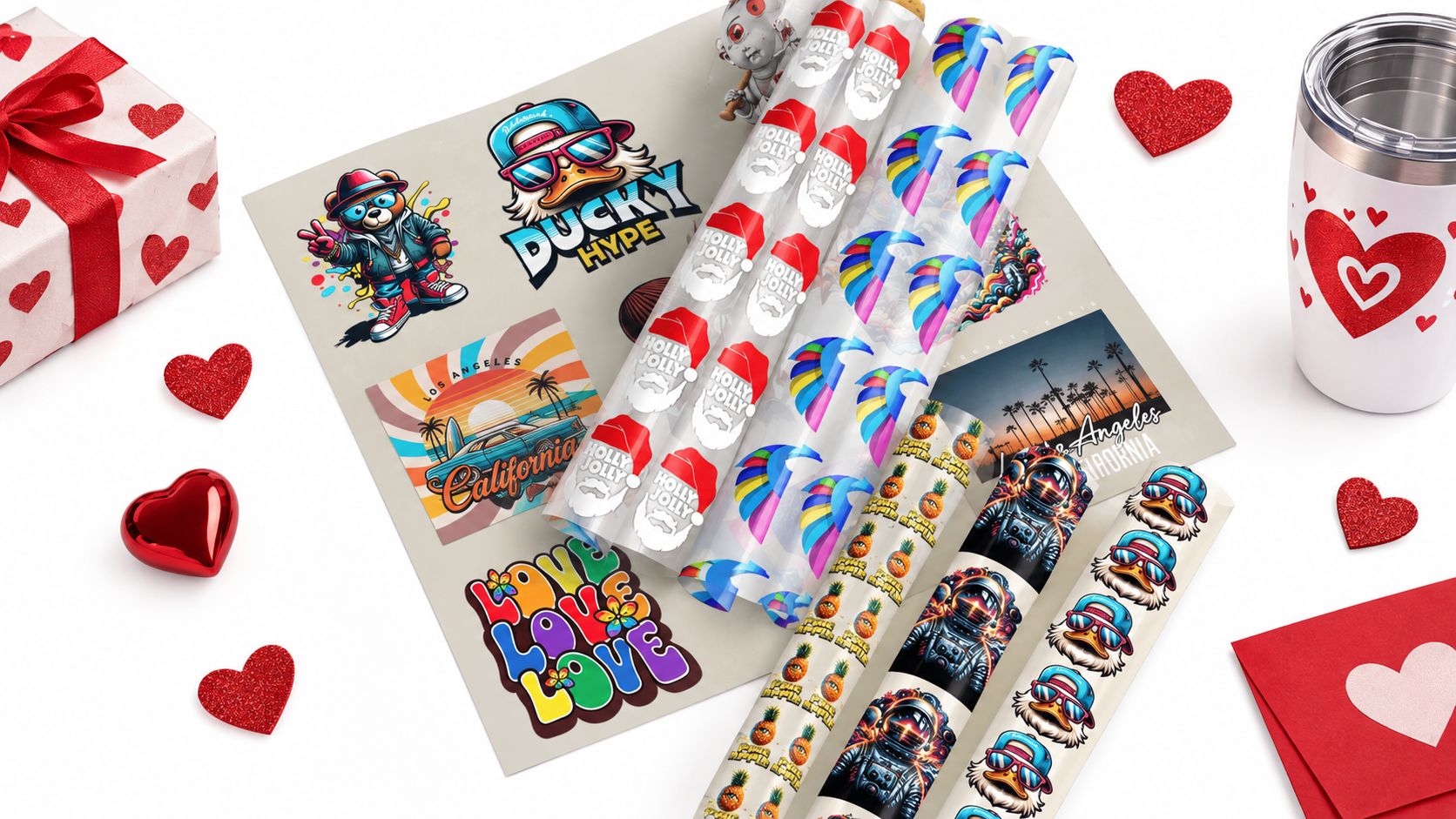
For hard goods, the process is different. UV DTF transfers are adhesive decals intended for smooth surfaces such as glass, acrylic, plastic, metal, and ceramics, rather than heat-pressed fabric. A seller considering Upload Your Own UV DTF Gang Sheets should treat that product as a hard-surface workflow, follow its application guidance, and remember that performance varies with use and conditions.
Valentine's Day is observed every year on February 14. Its connection with romantic love became clear during the 14th century, including through Geoffrey Chaucer's poem Parliament of Fowls, while historical accounts describe mass-produced valentines appearing by the late 1700s. That long-established calendar helps apparel sellers plan design releases, promotion, production, and fulfillment, as documented in Britannica's history of Valentine's Day.
The tradition may be romantic, but the design opportunity is broader. Names, dates, hearts, affectionate phrases, pet portraits, and friendship graphics can serve customers in the United States, Canada, the United Kingdom, France, Mexico, Australia, and other markets where February 14 is recognized.
Designing Valentine Artwork That Prints and Sells
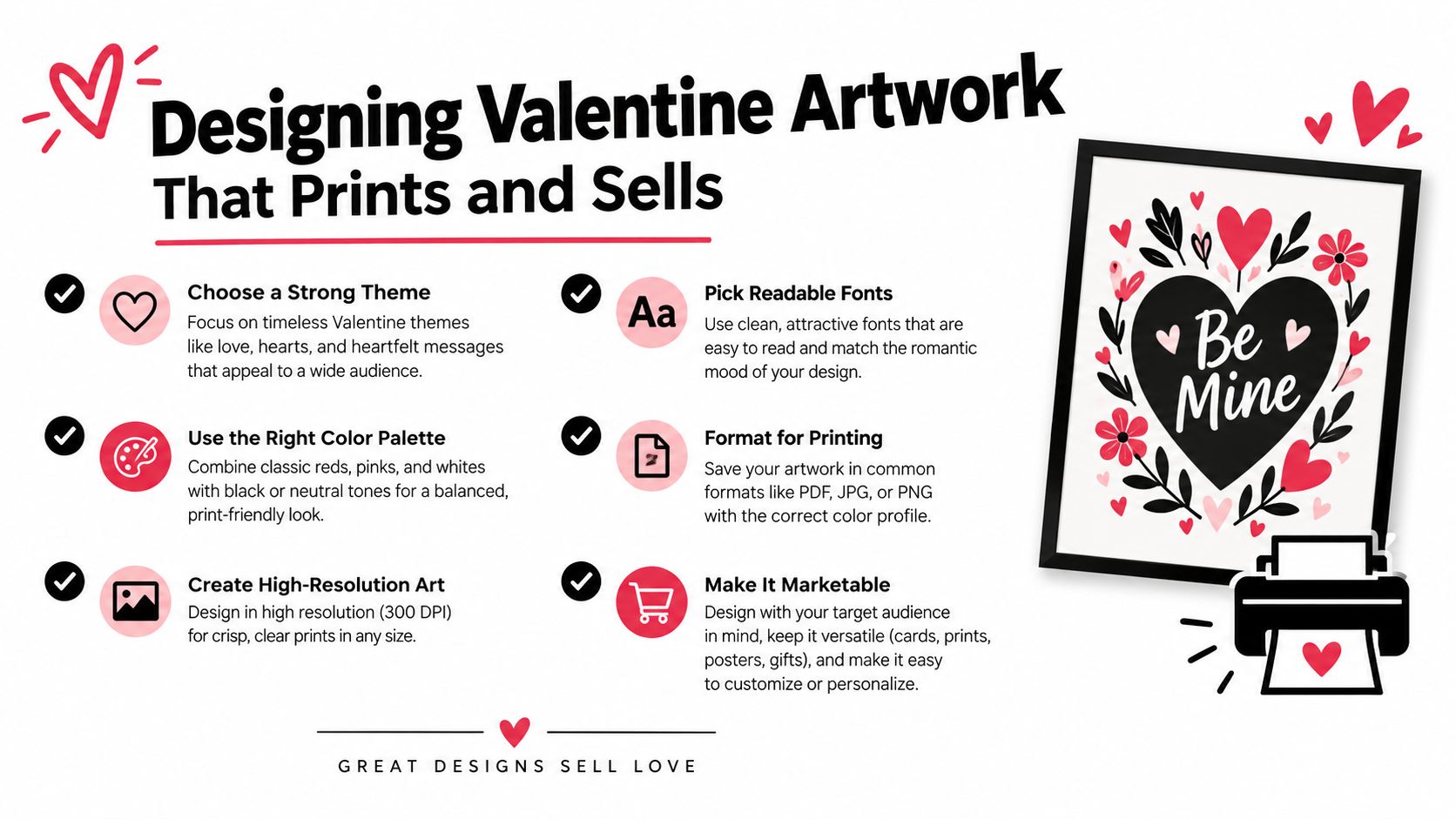
The most attractive mockup isn't automatically the safest design to produce. Valentine artwork often combines saturated red, pink, white, small hearts, and delicate script. Those elements can look excellent on screen but expose weak registration, excessive underbase, or poor sizing once they're pressed onto a real garment.
Start with contrast. Reds and pinks need a clean substrate relationship, especially on dark blanks. The white underbase keeps the color from sinking visually into the fabric, but too much white around small hearts or lettering can create a stiff feel and a visible halo. Prepare light-fabric and dark-fabric versions separately instead of forcing one file to work everywhere.
Build for the audience, not just the holiday
A couples-only collection is easy to understand, but it also puts every design in the most crowded lane. I prefer a segmented set with clear buying occasions:
| Audience | Design direction | Palette and wording |
|---|---|---|
| Pet parents | Pet silhouette, portrait, paw-and-heart mark | Warm neutrals, red accents, names |
| Friends and Galentine's groups | Coordinated but non-identical group designs | Pink, plum, cream, and inclusive phrases |
| Teachers and coworkers | Small gifts with names or simple appreciation messages | Calm red, berry, navy, or neutral tones |
| Families | Initials, dates, household names, or matching icons | Flexible colors that work across ages |
| Self-gifting buyers | Floral hearts, affirmations, or personal initials | Wearable combinations that don't depend on a partner |
Use phrases that don't assume gender, marital status, or a particular relationship. A customizable name, date, pet, or initial often gives the buyer more value than a generic declaration of romance. It can also remain relevant after the holiday, which reduces the risk of unsold seasonal stock.
Fine script deserves special attention. Zoom to the final print size and check that counters in letters such as “a,” “e,” and “o” remain open. Large solid red or white areas should have enough room to flex with the garment. Gradients and detailed illustrations are strong DTF candidates because they don't require the separate cutting and layering associated with cut vinyl.
Run a short quality check
Before committing to a launch, inspect registration at 100% scale, verify that the underbase doesn't form an unnecessary border, and group gang-sheet artwork by garment color and material. Then press and wash a sample on the exact blank you intend to sell. Independent experimental work found DTF-printed cotton and polyester with good-to-excellent color fastness, graded 4–5 after five wash cycles, and printed QR graphics remained scannable after laundering, as reported in this DTF color-fastness study.
For additional artwork preparation guidance, use this guide to designing a shirt for printing. The practical test still matters more than a perfect digital preview.
Where Valentines Transfers Work Best
Choose the transfer type based on the surface, not on the artwork alone. Standard DTF belongs on fabric and requires a heat press. UV DTF belongs on smooth hard goods and uses an adhesive decal application, which makes it useful where pressing fabric isn't practical.
A matching couple shirt with a red script heart is a standard DTF product. A coordinated tumbler, water bottle, laptop, or glass gift set is a UV DTF product. Both can use the same name, date, or heart motif, but they need different production methods and care expectations.

Compare the two workflows
| Transfer Type | Best Surfaces | Application Method | Ideal Valentine Products |
|---|---|---|---|
| Standard DTF | Cotton, polyester, blends, stretch fabrics, and suitable leather | Heat press using validated settings | Couple tees, youth shirts, family pajamas, tote bags, hoodies |
| UV DTF | Glass, metal, plastic, acrylic, ceramics, and other smooth hard surfaces | Clean, position, peel, and press the decal firmly | Tumblers, water bottles, glass gifts, laptops, small keepsakes |
Standard DTF gives apparel sellers the broadest clothing range, but the garment still controls the final feel and adhesion. A stretchy blank may recover differently from a rigid cotton shirt, and a dark garment may need a carefully balanced underbase. Don't combine every blank type into one production assumption.
UV DTF opens a separate gift category. A seller can pair a fabric design with a personalized bottle or tumbler without putting either item through the wrong process. Hard-surface decals are designed for adhesion and color on suitable smooth surfaces, but the care instructions still matter. Hand washing is the safer recommendation for items with a UV DTF decal when longevity is a priority.
Use the same artwork family across both paths only after checking that the details make sense at the intended size. Tiny script that reads well on a shirt may be difficult to position on a curved bottle. A bold name, simple heart, and clean outline usually transfers more reliably to a small hard good than a crowded illustration.
Durability and Care for Wash-Resistant Valentine Prints
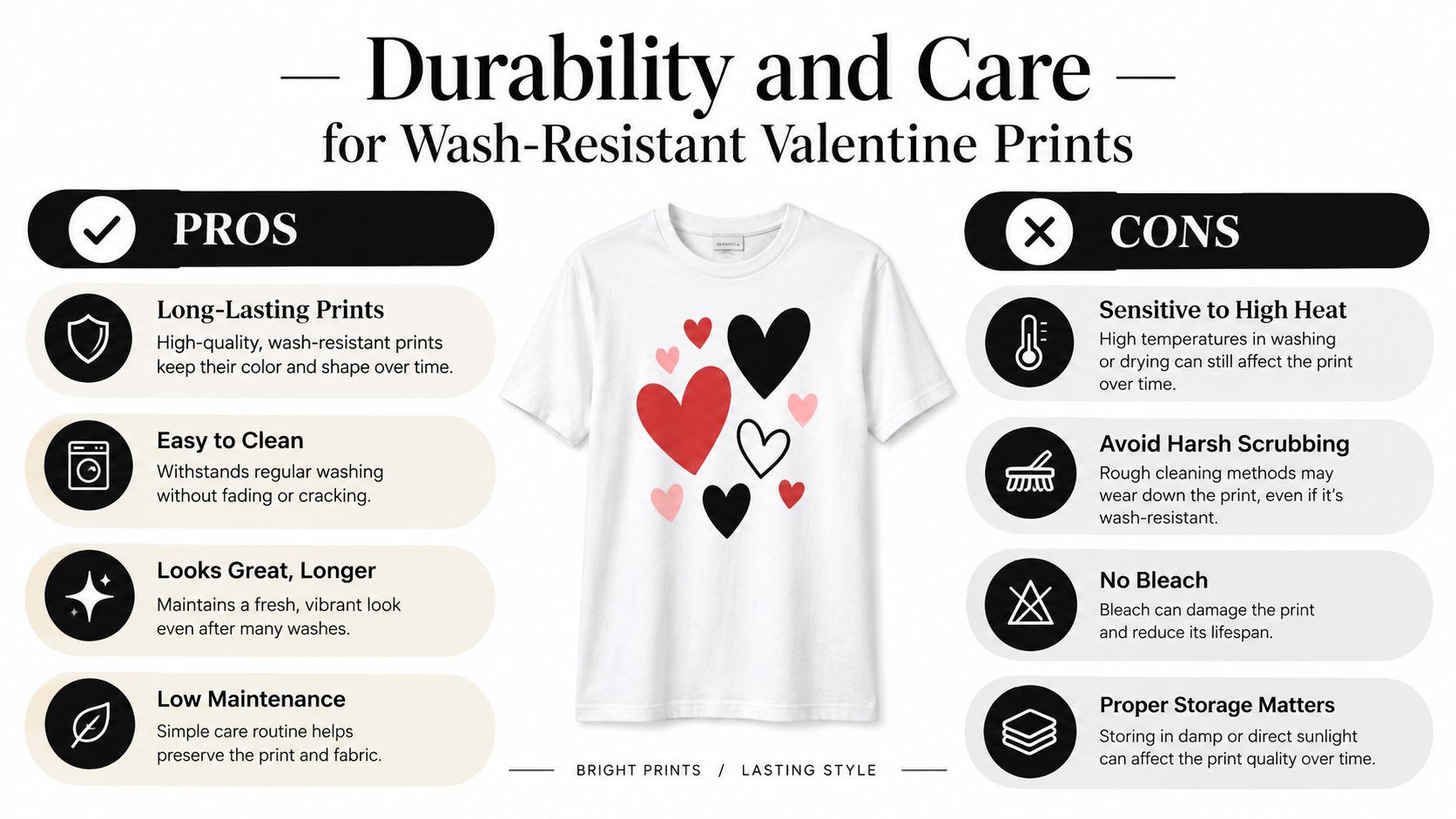
A transfer doesn't fail because the design contains a heart. It fails when the adhesive hasn't fused properly, the garment stretches beyond what the bond can tolerate, or the customer exposes the print to harsher care than the product can handle.
DTF adhesive is thermoplastic. The TPU hot-melt layer softens as it reaches the required thermal range, then forms fiber-to-fiber bonding as the press applies the necessary heat and pressure. Temperature alone isn't enough. A short dwell time or light pressure can leave adhesive only partially melted, which is where thin script may begin lifting at the edges.
Pressing controls the bond
Use the transfer manufacturer's validated temperature, dwell time, and pressure. Don't copy a setting from a different film, adhesive system, or garment blend and assume the result will match. Cotton, polyester, and stretch fabrics respond differently to heat, recovery, and pressure.
A textile study reported strong wash and abrasion performance for tested DTF samples, with no significant color loss through 15 washing cycles and strong performance through 20 cycles. The same study observed significant bonding at 120°C when sufficient TPU melting occurred, as described in the textile bonding and durability research. Those findings support careful application, not a universal setting for every transfer and blank.
The useful test isn't a beautiful first press. It's a pressed sample that still looks clean after controlled washing and rubbing.
Large red or white sections can crack when they flex, particularly if the print is oversized for the garment or the adhesive bond is incomplete. Delicate script shows a different failure mode, with edge lifting around narrow strokes and small counters. Inspect both areas after the sample wash.
Give customers clear care instructions
A small care card prevents avoidable complaints. Keep the guidance direct:
- Wash inside out: Reduce direct friction against other garments and the machine drum.
- Use cold water: Lower heat is gentler on both the print and the blank.
- Skip bleach: Harsh chemicals can affect the garment and the decorated surface.
- Dry with low heat or hang dry: Excessive dryer heat can stress the print and fabric.
- Don't iron directly over the design: Place a protective layer over the print if ironing is necessary.
For customer-ready wording, keep a copy of these DTF transfer care instructions with every apparel order. A care card won't fix a poor press, but it helps a correctly fused transfer perform as intended.
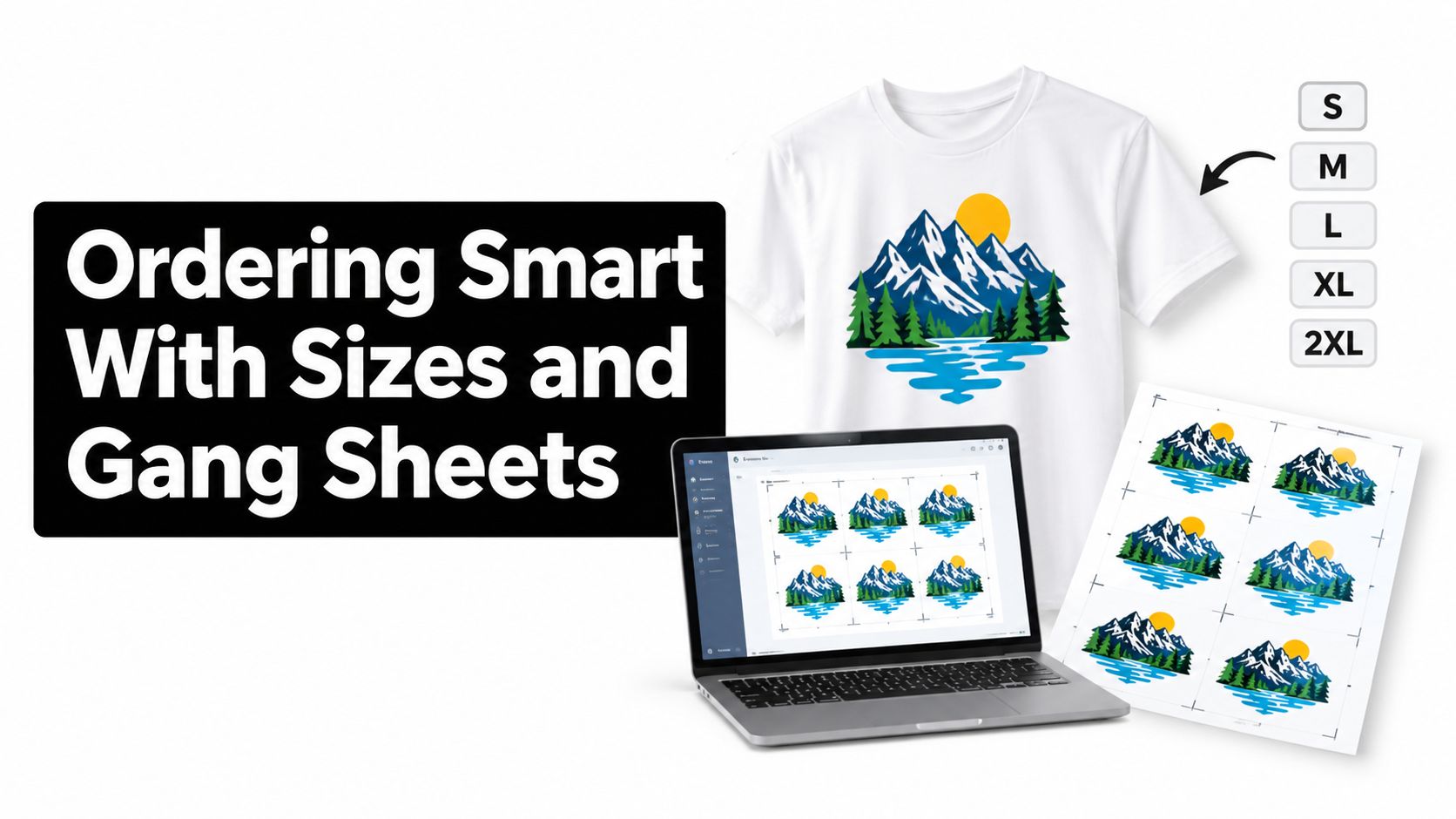
Ordering Smart With Sizes and Gang Sheets
Over-ordering usually starts with a sizing mistake. Sellers place every artwork at the largest possible size, discover that the design feels oversized on a youth shirt or crowded on a pocket, then spend more film and blank inventory correcting the problem. Build each Valentine design for its placement before you build the order.
Use separate artwork for a full front, a small chest or pocket mark, a sleeve accent, and a youth garment. The correct choice depends on the blank, the audience, and the visual weight of the design. A detailed pet portrait may need more room than a simple initial heart. A fine script phrase should not be reduced until its counters become clogged.
A gang sheet consolidates multiple graphics on one sheet. That makes it useful for seasonal testing because you can combine a pet design, friendship phrase, family graphic, and couple artwork instead of ordering a separate run for every idea. The savings aren't automatic, though. Poor spacing creates unusable offcuts, and mixing incompatible versions makes production harder.
Organize the sheet around production
Group designs by:
- Garment color: Keep light-fabric and dark-fabric artwork separate when underbase treatment differs.
- Material: Don't treat cotton, polyester, and stretch blanks as interchangeable without testing.
- Placement: Arrange full-front designs apart from pocket and sleeve artwork so picking is obvious.
- Audience: Keep related designs together so you can track which segment is moving.
- Repeatability: Leave room for the designs you expect to reorder, not only the experimental ones.
Work backward from February 14. Allow time for artwork approval, transfer production, blank purchasing, pressing, photography, promotion, packing, and shipping. Fast turnaround and expedited delivery can rescue a late order, but they shouldn't be the operating plan. A seasonal calendar is safer because it gives you time to test a blank before customers receive it.
The wider U.S. holiday market supports planning, but it doesn't tell you how many shirts your shop will sell. The National Retail Federation expected $27.5 billion in U.S. Valentine's Day consumer spending in 2025, with average planned spending of $188.81 per celebrant and 55% of consumers planning to celebrate. Its data also includes gifts for friends, family, classmates, coworkers, and pets, not apparel alone, as reported by the National Retail Federation's 2025 Valentine's Day forecast.
Use that figure as a signal that the holiday deserves preparation, not as a reason to buy blindly. Start with a varied test, watch which audience responds, and reorder the designs that earn clear demand.
How to Apply Valentines DTF Transfers Step by Step
Application becomes predictable when the press operator treats every step as part of the bond. A clean placement and correct setting matter more than rushing through a stack of garments.
Prepare, position, press, peel, and finish is the basic flow:
- Prepare the garment. Place the blank on a clean, flat press bed. Pre-press it according to the transfer supplier's instructions to remove moisture and smooth the application area.
- Position the transfer. Check center alignment, design direction, and placement before closing the press. Make sure the film lies flat, especially around fine script and small hearts.
- Press with validated settings. Use the manufacturer's recommended temperature, dwell time, and pressure for the specific transfer and garment blend. Don't compensate for uncertain settings by adding heat indiscriminately.
- Peel as directed. Some films require a hot peel, others a warm or cool peel. Follow the transfer instructions rather than guessing from another product.
- Finish with a second press. If the supplier recommends it, use the specified protective sheet and a short second press to reinforce adhesion.
The common Valentine failures are easy to spot. Edge lifting around a narrow letter usually points to incomplete adhesive fusion, poor pressure, or a surface that wasn't flat. Cracking through broad red or white areas can indicate excessive print size, garment flex, or an under-cured or under-pressed transfer.
For a detailed apparel workflow, use this guide to apply DTF transfers to T-shirts. Always test the exact blank before producing a customer order.
UV DTF follows a different path. Clean and dry the hard surface, position the decal carefully, peel away the carrier as directed, and press the transfer firmly from the center outward to remove air pockets. No heat press is needed, but a curved or textured surface still demands careful placement and firm adhesion.
Your Valentine Season Launch Checklist
Run this checklist before opening orders:
- Design: Build concepts for couples, pets, friends, family, teachers, and self-gifting buyers. Include customizable names, dates, initials, or portraits where they add value.
- Prepare: Check fine script, counters, registration, contrast, and underbase coverage at final size. Make separate versions for light and dark garments when needed.
- Order: Use right-sized artwork and gang sheets grouped by garment color and material. Test a small mix before committing to a broad inventory.
- Press: Validate temperature, dwell time, and pressure for each transfer and blank. Wash and rub a sample before selling premium pieces.
- Sell: Add care instructions to every apparel order, publish shipping cutoffs before February 14, and show the actual garment rather than relying only on mockups.
- Reduce waste: Consolidate compatible designs, avoid oversized artwork, use durable blanks, minimize unnecessary packaging, and combine shipments where practical.
Sustainability works best as an operating practice rather than a slogan. Independent textile-printing research reports that digital printing can reduce water consumption by as much as 95% and electricity use by about 30% compared with conventional processes, while raw materials and energy can still account for roughly 90% of textile-printing impact, according to research on textile-printing environmental impacts. The sensible takeaway is to reduce overproduction, plan gang sheets carefully, select durable blanks, and avoid unnecessary shipments.
Promotion should match the segmented collection. If your launch includes different designs for pets, friends, and self-gifting, organize the message around those buying occasions instead of showing only romantic couples. For a practical channel-specific approach, review this resource on boosting Valentine sales with SMS and coordinate messages with your actual stock and fulfillment capacity.
Start early enough to test the press, photograph the finished products, and learn which audience responds. That preparation turns Valentine's Day from a rushed inventory gamble into a controlled small-batch collection.
Raccoon Transfers provides custom DTF transfers for apparel and UV DTF transfers for suitable hard surfaces, including gang-sheet options for combining multiple designs. Visit Raccoon Transfers to prepare your segmented Valentine collection, order the formats that match your products, and begin testing before the seasonal rush.