
A Guide to the Best T Shirt Fabrics for DTF Printing
When it comes to picking the best t shirt fabrics, your decision really hinges on what you're trying to achieve. You're constantly juggling comfort, how long the shirt will last, and how bright you want your print to be. If you're aiming for that premium, soft feel, 100% ringspun cotton is almost always the winner. But for athletic gear that needs to take a beating, 100% polyester is king, while a good cotton/polyester blend gives you a bit of both worlds.
Finding the Best Fabric for DTF Printing
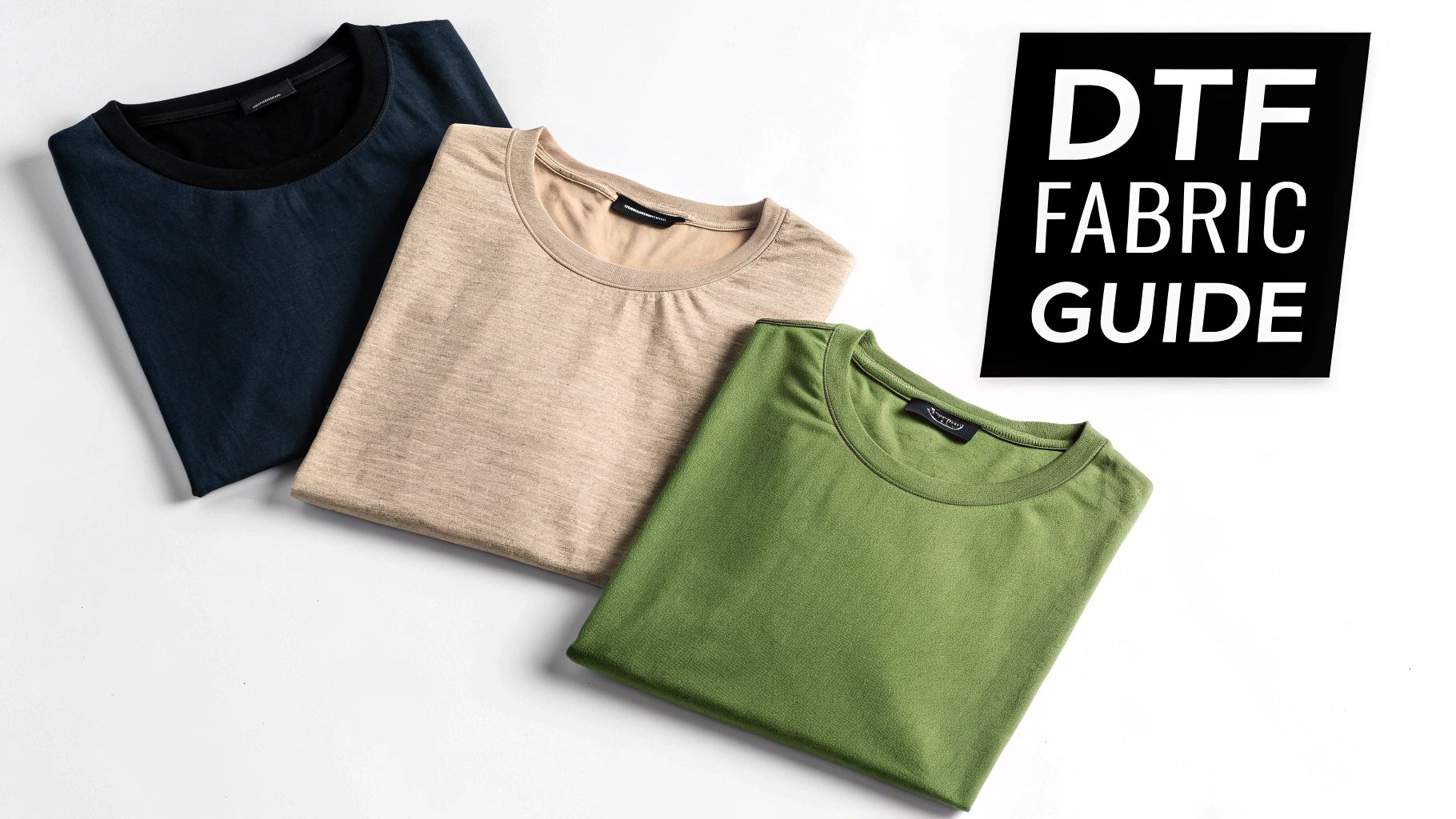
Choosing the right material is ground zero for any custom apparel project, and it's even more critical when you're working with Direct-to-Film (DTF) transfers. The fabric you pick has a direct say in everything—from how the shirt feels to how punchy your design looks once it's pressed. It's also the deciding factor in whether that garment looks great after one wash or fifty.
This guide is designed to skip the fluff and give you straight answers. We're going to put the most common t-shirt fabrics under the microscope so you can make a smart choice for your brand, your band, or your next big project.
We'll be focusing on the big three:
- 100% Cotton Variants: The old-school classic, loved for its softness and print-friendly surface.
- 100% Polyester: The workhorse for performance apparel, known for its toughness and moisture-wicking magic.
- Cotton/Polyester Blends: The popular hybrid that aims to deliver the best qualities of both natural and synthetic fibers.
Quick Comparison of Core Fabric Types
Before we get into the nitty-gritty, it helps to understand the fundamental trade-offs. Each material brings something different to the table, making it better suited for certain jobs, whether that's high-end retail, promotional giveaways, or team uniforms.
A fabric's blend isn't just about feel; it sets the rules for your heat press. Your heat, pressure, and peel method all need to be tweaked for cottons, polys, and blends to get that perfect, long-lasting transfer.
Here’s a quick look at how these fabrics stack up at a glance.
| Fabric Type | Primary Advantage | Common Use Cases | Key Consideration for DTF |
|---|---|---|---|
| 100% Cotton | Softness & Breathability | Retail brands, everyday wear | Soaks up ink beautifully for rich colors |
| 100% Polyester | Durability & Moisture-Wicking | Athletic apparel, workwear | Needs lower heat to avoid scorching |
| Cotton/Poly Blend | Balanced Comfort & Resilience | Promotional items, uniforms | Versatile and resists shrinking |
Think of this as the starting line. Now we can really dig into what makes each of these materials tick, helping you confidently choose the best t shirt fabrics for whatever you're printing.
Why Cotton Is the Gold Standard for Apparel
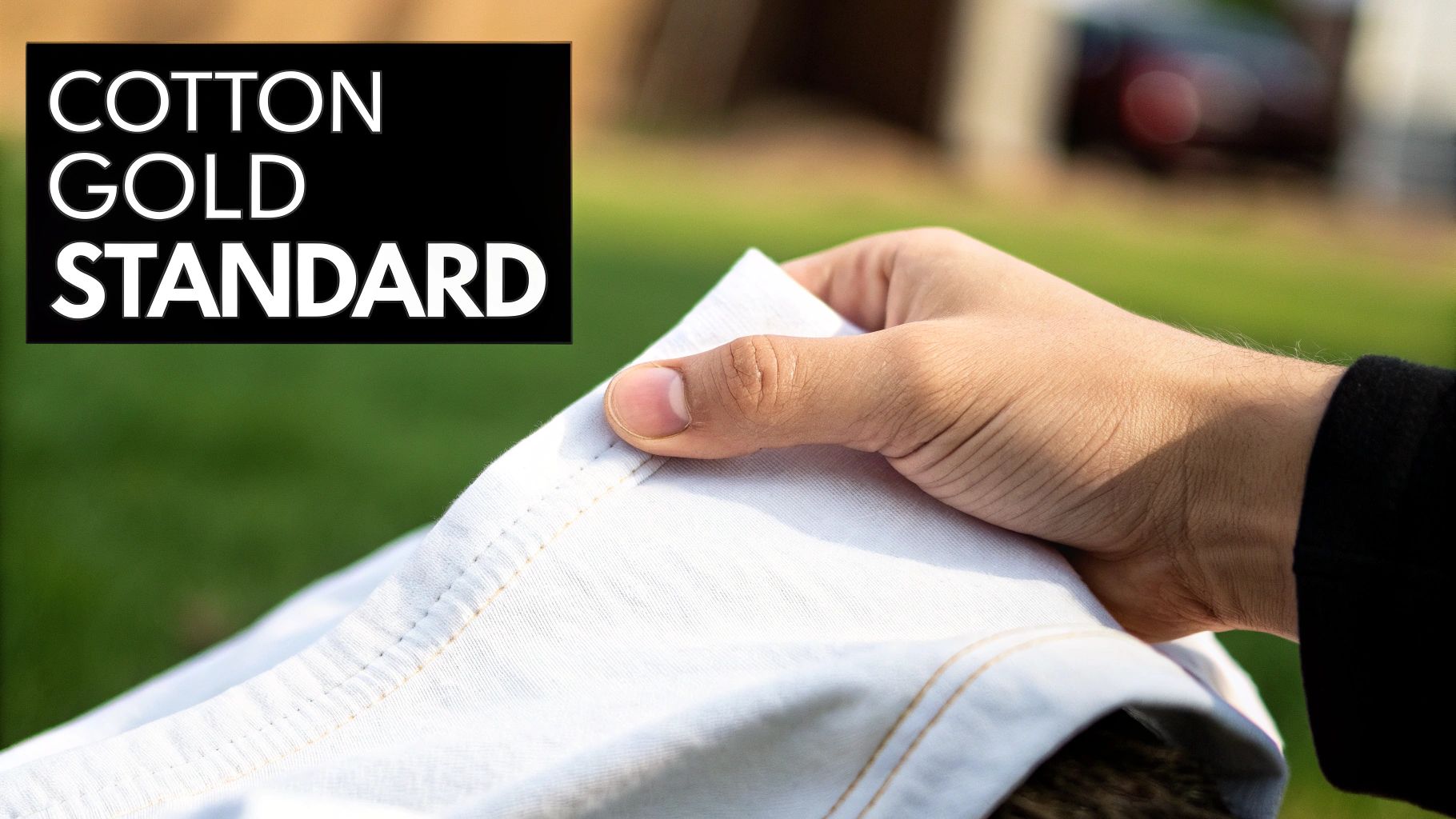
When you think of the best t shirt fabrics, cotton isn't just one of the options—it's the benchmark. For decades, it has completely dominated the industry, currently holding a massive 42% of the global T-shirt market share. There's a good reason for that. Nothing quite beats its classic combination of comfort, breathability, and natural feel, making it the default choice for everyday wear. You can see more data on this trend in this Impressions Magazine article.
For anyone in the custom apparel game, cotton is more than just a popular fabric; it's a reliable partner. Its natural fibers create a fantastic surface for DTF printing. The adhesive powder and ink bond incredibly well, resulting in prints that are not only sharp and vibrant but also stand up to wash after wash.
This reliability makes cotton the safest, most effective starting point for almost any project you can dream up, whether it's for promotional giveaways or a premium retail brand.
Distinguishing Between Cotton Types
Here's something every expert learns quickly: not all cotton is the same. The way the fibers are processed completely changes the feel, longevity, and price of a T-shirt. Nailing this choice is crucial.
- Standard Cotton: Think of this as the workhorse. It’s affordable, gets the job done, and is available everywhere, making it perfect for bulk orders and promo items. It's comfortable enough, but can sometimes have a slightly rougher texture compared to more refined options.
- Ringspun Cotton: This is where things get noticeably better. The cotton strands are twisted and thinned, creating a much finer, stronger, and softer rope of fiber. The end result is a T-shirt that feels softer to the touch and is way more durable, resisting that annoying pilling.
- Combed and Ringspun Cotton: Welcome to the top tier. After the ringspinning process, this cotton is combed to remove any leftover impurities or short, prickly fibers. What you're left with is an exceptionally smooth, soft, and strong fabric that feels genuinely luxurious.
For apparel brands aiming to establish a premium reputation, choosing combed and ringspun cotton is non-negotiable. The superior hand-feel immediately communicates quality and justifies a higher price point, elevating your product from a simple tee to a retail-ready garment.
The difference isn't just about how it feels. That ultra-smooth surface of combed and ringspun cotton also provides the perfect canvas for DTF transfers, allowing for incredibly crisp and detailed prints. Your designs will look as good as the shirt feels.
Benefits for Your Apparel Business
Going with cotton isn't just playing it safe; it's a smart business move. Its natural qualities offer real-world advantages that strengthen your brand and keep customers happy.
Its breathability is legendary. The natural fibers let air move freely, pulling moisture away from the skin to keep the wearer cool and comfortable. This is why a cotton tee feels just as good in a casual office as it does at an all-day outdoor festival.
Plus, cotton's sustainable appeal is a huge selling point for today's eco-conscious shoppers. It’s a natural, biodegradable, and renewable resource, which helps position your brand as a responsible choice in a very crowded market.
Addressing the Trade Offs
Of course, no fabric is perfect. The two classic knocks against cotton are its tendency to shrink and wrinkle. A 100% cotton shirt can definitely lose some size after that first wash, especially if it hasn't been pre-shrunk.
Luckily, these are mostly solved problems. Most reputable manufacturers now offer pre-shrunk garments, which takes care of the vast majority of shrinkage concerns. For a closer look at how major brands handle this, check out our in-depth review of the Gildan Heavy Cotton T-Shirt.
As for wrinkles? A quick toss in the dryer or a few passes with an iron usually smooths things out. For most people, these minor trade-offs are well worth it for the unbeatable comfort and quality that only cotton can provide.
Stepping Up to Polyester and Blends
When you move past cotton, you get into a world of fabrics built for performance. Polyester isn't just a budget-friendly alternative; it's a deliberate choice for projects that demand serious resilience. Think of it as an engineered solution for specific, tough jobs.
If you need a shirt that can handle sweat, hold its color after a hundred washes, and stand up to abuse, polyester and its blends are where you should be looking. They're the backbone of athletic apparel, heavy-duty work uniforms, and any promotional gear that needs to last. Cotton just can't compete in these arenas.
The Power of 100% Polyester
Pure polyester is a workhorse. It’s a synthetic fiber famous for its incredible strength, wrinkle resistance, and knack for keeping its shape. The biggest difference between it and cotton is how it handles moisture. Cotton absorbs it, but polyester is hydrophobic—it pushes water away.
This is what makes it moisture-wicking. Instead of soaking up sweat and getting heavy, the fabric pulls moisture off your skin and sends it to the surface to evaporate. This is a game-changer for keeping someone cool and dry during a workout, making 100% polyester the undisputed champ for sports jerseys, gym clothes, and outdoor event apparel.
For a job like team uniforms or marathon shirts, 100% polyester is really the only practical choice. It won't break down from constant use, and the moisture management is a real performance benefit that people can actually feel.
The smooth, non-porous surface of polyester is also a fantastic canvas for DTF transfers, producing incredibly bright and sharp designs. But you have to be careful. Too much heat can scorch the fabric or cause dye migration, where the shirt’s color bleeds into your transfer. Getting the settings just right is crucial, and you can learn more in our guide to heat press temperatures for polyester.
Cotton/Polyester Blends: The All-Purpose Hybrid
So, what if you love the softness of cotton but need the muscle of polyester? That’s exactly what blends are for. The most common you'll see is the 50/50 cotton/polyester blend, which is a true jack-of-all-trades.
This blend gives you the best of both worlds:
- Enhanced Durability: It's way more resistant to shrinking and tearing than a 100% cotton shirt.
- Improved Comfort: The cotton fibers make it feel much softer against the skin than pure polyester.
- Easy Care: It wrinkles a lot less than cotton, which is a huge plus for staff uniforms or large promotional orders.
The 50/50 blend is a go-to for businesses that need merchandise to be both comfortable and durable. It’s a smart, cost-effective choice that doesn't feel cheap, ensuring your branded apparel looks sharp wash after wash.
Tri-Blends: The Premium Choice for Softness and Style
When the goal is a super-soft, fashionable, modern-looking shirt, the tri-blend is king. This fabric usually mixes three materials: cotton, polyester, and rayon, and each one brings something special to the party.
Cotton offers breathability, polyester provides durability and shape, and rayon gives the shirt an exceptionally soft feel and a distinct, flattering drape. The end result is a lightweight, slightly stretchy shirt that feels perfectly "lived-in" from the very first wear.
Tri-blends are ideal for retail brands, high-end promotional merch, or any project where a premium feel is non-negotiable. Their unique texture often creates a subtle heathered look, which adds a bit of visual depth to the garment.
The rise of these performance fabrics is changing the custom apparel game. Polyester and its blends are becoming the first pick for sportswear and promo items, thanks to their wrinkle resistance and great value. This is happening as the custom printing market is projected to hit $9 billion by 2033, growing at a 6.52% annual rate. You can discover more insights about t-shirt industry statistics on Printful.com to see where things are headed. Choosing the right synthetic blend helps you meet that growing demand head-on.
A Head-to-Head Fabric Analysis for DTF Printing
Choosing the right T-shirt for DTF printing goes way beyond just picking a color. Every fabric behaves differently under a heat press, and that choice will make or break everything from the vibrancy of your design to how the final shirt actually feels. To get it right, you have to know how each material stacks up.
This is a direct, no-fluff comparison of the four fabrics you'll encounter most: 100% cotton, 50/50 blends, tri-blends, and 100% polyester. We're going to put them head-to-head on what really matters: feel, print quality, durability, and cost.
Feel and Comfort
Let's be honest, if a shirt isn't comfortable, no one will wear it. This is the first thing your customer notices, and it's where you make your first impression.
-
100% Cotton: This is the undisputed champ of classic comfort. Nothing beats the soft, breathable feel of natural cotton against the skin. It just works, making it the go-to for everyday wear.
-
50/50 Cotton/Polyester Blend: Here's where you get a great balance. It keeps a lot of that cotton softness but adds a smoother, almost silkier feel from the polyester. It's a noticeable step up from a basic, coarse cotton tee.
-
Tri-Blend: When it comes to pure softness, tri-blends are in a league of their own. That little bit of rayon gives them an incredibly lightweight, "lived-in" feel with a fantastic drape. This is your premium choice, hands down.
-
100% Polyester: Polyester has a much more "technical" and slick feel. Modern performance polyesters are worlds better than the scratchy stuff from decades ago, but they don't have that cozy, natural vibe. Their comfort comes from function—wicking sweat—not from texture.
Print Quality and DTF Adhesion
The whole point of DTF is to get a perfect print that lasts. How well the transfer's adhesive bonds to the fabric is the key to making that happen.
-
100% Cotton: This is the gold standard for DTF. Cotton’s natural, porous fibers give the melted adhesive something to really grab onto, creating a strong mechanical bond. The result is a durable print with deep, rich colors.
-
50/50 Cotton/Polyester Blend: You can count on great adhesion here. The cotton fibers act as a solid anchor for the transfer. You just need to be mindful of your heat settings for the polyester, but it’s a very versatile and forgiving option overall.
-
Tri-Blend: Adhesion is usually good, but it can be a little finicky. Rayon can be sensitive to high heat, so you'll need to dial in your press settings to get a solid bond without scorching the delicate fabric.
-
100% Polyester: This one requires precision. Since polyester is a non-porous synthetic, the DTF transfer bonds to the surface instead of sinking in. You need your heat and pressure to be spot-on to avoid dye migration and ensure the print doesn't peel later. For a deeper dive, check out our complete guide comparing cotton vs polyester.
Key Insight: While all these fabrics work with DTF, 100% cotton is the most straightforward and forgiving. Polyester demands more skill and attention to detail to get a flawless, long-lasting print.
T-Shirt Fabric DTF Printing Compatibility Matrix
To make things easier, here’s a quick-reference guide. Think of it as a cheat sheet for matching the right fabric to your project's needs, especially when you're in the middle of a print run.
| Fabric Type | Feel & Comfort | DTF Adhesion | Recommended Heat Press Temp | Best For |
|---|---|---|---|---|
| 100% Cotton | Soft, breathable, classic | Excellent. Fibers create a strong mechanical bond. | 280-320°F (138-160°C) | Everyday apparel, brand merch, most general-purpose jobs. |
| 50/50 Blend | Smooth, soft, durable | Very Good. Cotton fibers provide a solid anchor. | 260-300°F (127-149°C) | Staff uniforms, promotional giveaways, durable everyday wear. |
| Tri-Blend | Ultra-soft, lightweight, premium drape | Good. Requires care due to rayon's heat sensitivity. | 250-280°F (121-138°C) | High-end fashion, retail brands, premium "soft-hand" feel. |
| 100% Polyester | Slick, technical, moisture-wicking | Good, but requires precision. Risk of dye migration. | 250-275°F (121-135°C) | Sportswear, performance apparel, workwear, sublimated garments. |
This matrix helps you see the trade-offs at a glance. What you gain in one area, like the premium feel of a tri-blend, you might trade off in printing simplicity or cost.
Long-Term Durability
A great design on a shirt that shrinks or falls apart after a few washes is a failure. Durability is what builds a brand's reputation and keeps customers coming back.
-
100% Cotton: Comfortable, yes, but it’s also the most likely to shrink, fade, and wrinkle. Ringspun and combed cottons hold up much better than basic carded cotton, but they still can't compete with the resilience of synthetics.
-
50/50 Cotton/Polyester Blend: This is where blends really shine. The polyester adds serious strength, making the garment resistant to shrinking and wrinkling. These shirts hold their shape and color much longer than pure cotton.
-
Tri-Blend: Durability is moderate. The polyester helps, but the rayon is more delicate and can sometimes pill over time with rough wear. It's the trade-off you make for that incredible softness.
-
100% Polyester: The absolute powerhouse of durability. Polyester is extremely resistant to shrinking, stretching, fading, and abrasion. It’s the obvious choice for workwear, athletic jerseys, or anything that will see heavy use.
This infographic nails down the core benefits that make polyester such a functional beast for performance apparel.
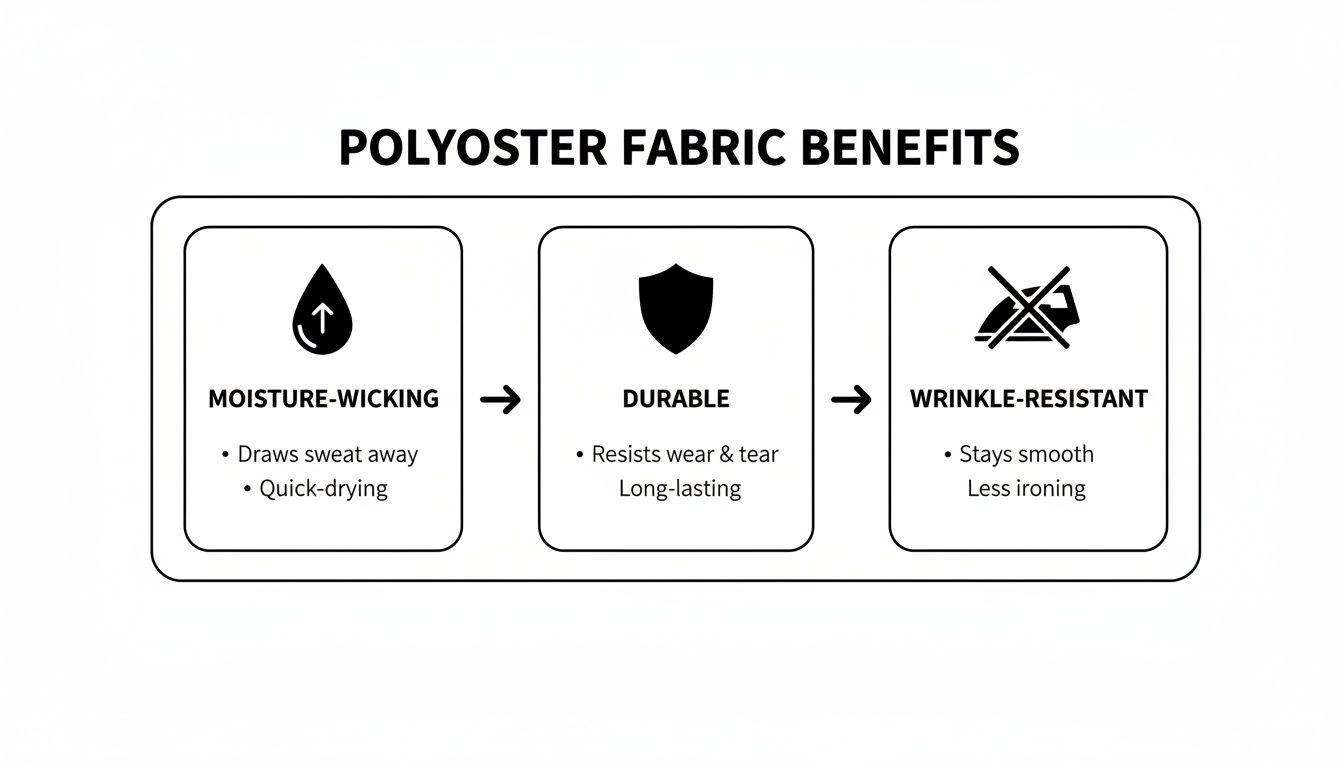
These three attributes—moisture management, strength, and easy care—are exactly why it dominates the sportswear and workwear markets.
Overall Cost and Value
At the end of the day, the numbers have to work. The price of your blank shirt is a huge factor in your profit margins, whether you’re selling merch or outfitting a team.
- 100% Cotton: Usually your most budget-friendly option, especially for basic carded cotton. Even higher-end ringspun cotton offers amazing value.
- 50/50 Cotton/Polyester Blend: Priced very close to basic cotton, sometimes a fraction more. Given its added durability, it often presents a better long-term value, especially for uniforms.
- 100% Polyester: The price range here is wide. A basic poly tee can be cheap, but a high-performance, moisture-wicking shirt from a major brand will cost you more.
- Tri-Blend: This is consistently the most expensive of the four. You're paying a premium for that ultra-soft feel and fashionable drape, making it the right choice for high-end retail projects where feel is everything.
How to Match the Right Fabric to Your Project
Knowing the specs of a fabric is one thing, but the real craft is pairing the right material with the right project. The best t-shirt fabrics aren't a one-size-fits-all solution; they’re the ones that perfectly match your goal, your audience, and your budget. This decision is huge—it shapes how people see your brand, how comfortable they feel, and whether your project truly succeeds.
To make the right call, you have to think beyond a simple pro/con list and step into the real world. A premium fabric that’s perfect for a high-end fashion line would be a total mismatch for a massive promotional giveaway.
Let's break down how to choose wisely for your specific needs.
For Emerging Apparel Brands
When you're building a brand from the ground up, every single detail screams quality—or the lack of it. Your goal is to create something that doesn't just look good on a hanger but feels incredible to wear. That premium feel is what justifies a higher price tag and turns first-time buyers into loyal fans. The fabric is where it all starts.
Your best bets are:
- Combed and Ringspun Cotton: This is your go-to for a luxurious, soft hand-feel. Its smooth, tight-knit surface feels instantly high-quality, and the classic comfort and breathability have universal appeal.
- Tri-Blends: If your brand has a modern, vintage, or just plain stylish vibe, nothing beats a tri-blend. That signature softness, lightweight feel, and perfect drape give the shirt a "favorite tee" feel right out of the box.
Choosing a premium fabric like a tri-blend or combed cotton isn't just a cost—it's an investment in your brand's equity. The superior hand-feel is the first thing a customer notices, immediately signaling that they are holding a quality piece of apparel, not a disposable promo item.
When selecting fabric for an apparel brand, especially for pieces worn directly on the skin, choosing gentle and comfortable materials for sensitive skin can be a major selling point. High-end cottons and specialty blends often fit this bill, reinforcing a commitment to both quality and customer well-being.
For Promotional Merchandise and Events
With promotional gear, the game changes. You need a shirt that makes your brand look good and is tough enough to last, but the bottom line is cost. It's all about hitting that sweet spot between quality and budget to get the most bang for your marketing buck.
For this, the 50/50 Cotton/Polyester Blend is the undisputed champion.
This blend is the workhorse of the promo world for good reason. The polyester brings serious durability to the table, fighting off shrinking and wrinkling so your logo stays crisp, wash after wash. At the same time, the cotton keeps it soft and comfortable enough that people will actually want to wear it—which is the whole point.
For Sports Teams and Performance Wear
When people are moving, sweating, and competing, fabric performance is everything. Comfort is no longer about softness; it’s about moisture management, durability, and letting the body move freely. This is where cotton, with its tendency to soak up sweat like a sponge, completely fails.
Here, your only real contender is 100% Polyester.
Modern performance polyester is engineered to be incredibly lightweight and breathable. Its superpower is moisture-wicking—it actively pulls sweat away from the skin to the fabric's surface, where it evaporates in a flash. This keeps athletes cool, dry, and focused. On top of that, polyester's sheer durability means uniforms can survive brutal games, endless practices, and constant washing without falling apart.
For Crafters and DIY Projects
For hobbyists and small-batch creators, versatility and reliability are king. Whether you're making shirts for a family reunion or stocking a small Etsy shop, you need a fabric that’s easy to work with and gives you consistent, professional-looking results with your DTF transfers.
100% Ringspun Cotton is the perfect place to start. It's affordable, easy to find, and its natural fibers create an incredibly forgiving surface for a heat press. The DTF adhesive grabs onto cotton fibers beautifully, resulting in vibrant, durable prints without a lot of guesswork. That dependability makes it the ideal canvas for creators who are perfecting their process.
Your T-Shirt Fabric Questions, Answered
Once you start digging into the best t shirt fabrics for printing, the questions pop up fast. This is especially true when you're dialing in your DTF process. Let's tackle some of the most common hurdles printers face, so you can stop troubleshooting and start creating.
Getting these details right is what separates a decent print from a fantastic one that people love to wear.
How Do I Prevent Scorch Marks on Polyester?
Scorching polyester is all about heat management. At its core, polyester is a plastic, and it will absolutely melt or discolor if your heat press is cranked up too high. The trick is to dial back the temperature and adjust your press time to compensate.
For most 100% polyester shirts, I've found the sweet spot to be between 250-275°F (121-135°C). Beyond that, a couple of habits will save you a lot of grief:
- Use a Teflon Sheet or Protective Cover: Never press directly onto polyester without a protective sheet between the platen and the garment. It distributes the heat more evenly and acts as a crucial buffer.
- Test First: If you have the chance, always do a quick test press on a hidden part of the shirt, like the inside hem. This gives you a preview of how the fabric will react before you commit to the main graphic.
Why Do My Colors Look Brighter on Polyester Than Cotton?
This is something everyone notices, and it all boils down to how each fiber handles ink and light. Cotton is a natural, thirsty fiber. It tends to absorb a tiny bit of the DTF ink into its surface, which gives you a rich, classic look that can sometimes feel a little more muted.
Polyester, on the other hand, is synthetic and non-absorbent. The ink sits right on top of the fibers. This creates an incredibly smooth, reflective canvas that makes colors look incredibly sharp and vibrant. It's like the difference between painting on a matte, porous canvas versus a glossy, primed one—the glossy surface will always make the colors pop.
While cotton gives you that timeless, deep color saturation, polyester’s smooth surface almost acts like a backlight for your design, boosting its vibrancy. One isn't necessarily better than the other; they just create distinct visual effects.
What Fabric Gives the Softest Print Feel?
If you're chasing that barely-there, super soft print feel (what we call "hand"), your best bet is a high-quality, lightweight tri-blend or a premium 100% combed and ringspun cotton tee. The fabric itself is half the battle; a softer, thinner garment just makes any print feel less intrusive.
The DTF transfer itself matters, too. Our transfers are engineered to be thin and flexible, but they feel their absolute softest on a fabric that shares those same qualities. A thin tri-blend, for example, lets the transfer meld right into the garment. The final print moves with the fabric instead of feeling like a stiff patch sitting on top.
Can I Use DTF on Ribbed or Heavily Textured Fabrics?
You sure can, but it takes a couple of tweaks to get it right. In fact, DTF is one of the best decoration methods for tricky surfaces like ribbed tanks or waffle knits because the adhesive is designed to melt and flow into the fabric's nooks and crannies.
Here’s how to nail it:
- Use a Heat Press Pillow: Slide a flexible heat press pillow inside the shirt. It creates a raised, even surface that allows the platen to apply uniform pressure everywhere, pushing the transfer down into the fabric’s valleys.
- Increase Pressure Slightly: A little bit of extra pressure helps ensure the adhesive gets full contact across the entire uneven surface.
With these common questions cleared up, you can head into your next project with more confidence. You’ll know exactly how to pick the right material and adjust your technique to get professional, long-lasting results every single time.
Ready to create stunning, durable custom apparel? At Raccoon Transfers, we provide premium DTF transfers that bring your designs to life on any fabric. Start your order today and experience the difference quality makes.