
Cotton vs Polyester The Ultimate DTF Printing Guide
When you're weighing cotton vs polyester for your next DTF project, the "best" choice really comes down to what you're trying to achieve. If you need eye-popping, vibrant designs for something like athletic wear, polyester is your go-to. But for a softer, more premium feel with a subtle matte finish on everyday clothing, cotton is king.
Breaking Down the Fabric Choice
To make the right call, you have to understand how these two fabrics actually interact with a DTF transfer. It's a classic matchup: natural fiber versus synthetic. Those core differences shape everything from how the design looks to how it holds up over time.
Cotton is all about breathability and that soft, comfortable feel. This makes it a top pick for fashion brands and anyone aiming for that retail-quality garment. On the flip side, polyester is built for performance. It's the workhorse fabric, known for wicking moisture and resisting stretching and shrinking like a champ.
These characteristics lead to very different results with DTF printing. Polyester has a smooth, non-porous surface, so the ink and adhesive sit right on top. This is why you get that incredible color saturation and a sharp, almost glossy finish.
Cotton, with its natural, absorbent fibers, soaks up a tiny bit of the ink. This creates a softer, more integrated look that many people love, giving the final print a really nice matte appearance.
Comparing Key DTF Performance Attributes
Let's put them head-to-head. This table breaks down the most important factors to consider when you're deciding between cotton and polyester for a DTF job.
Comparing Key DTF Performance Attributes
| Attribute | Cotton | Polyester |
|---|---|---|
| Print Vibrancy | Softer, matte finish | Bright, vibrant, glossy finish |
| Feel and Comfort | Exceptionally soft and breathable | Smooth and durable, less breathable |
| Durability | Good, but can fade slightly over time | Excellent; resists fading, cracking, and peeling |
| Ideal Use Cases | Fashion apparel, brand merchandise, casual wear | Athletic wear, team jerseys, work uniforms |
| Moisture Handling | Absorbent, can become heavy with sweat | Moisture-wicking, dries quickly |
| Wrinkle Resistance | Prone to wrinkling | Highly wrinkle-resistant |
So, what's the verdict? Honestly, neither one is universally "better." The right choice is always dictated by the end use. A high-end t-shirt for a fashion line is going to feel much more premium on cotton. But a soccer jersey absolutely needs the durability and brilliant color that only polyester can deliver.
Knowing these nuances is what separates good results from great ones, ensuring your final product not only looks fantastic but performs perfectly for its purpose.
Understanding the Core Fabric Properties
To really get the best results with DTF, you have to know your canvas. The fundamental differences between cotton and polyester will shape everything from how the final print feels to how it holds up after a dozen washes. These two fabrics couldn't be more different, right down to their very origins.
Cotton is a natural, plant-based fiber, loved for its signature softness and incredible breathability. Think of your favorite, most comfortable t-shirt—it’s probably cotton. Its fibers are porous and absorbent, which is great for comfort but creates a unique challenge for DTF adhesives.
Polyester, on the other hand, is a synthetic, petroleum-based polymer. It was engineered for performance. This gives it fantastic durability, moisture-wicking properties, and resistance to wrinkles. It's the go-to fabric for athletic wear precisely because it can take a beating and still look great.
Natural Feel vs. Engineered Performance
The real choice between cotton and polyester boils down to their fiber structure. Cotton fibers are soft and hollow, making the fabric breathable but also quick to soak up moisture. For a DTF print, this means the adhesive can really sink into the fabric, creating a bond that feels like it’s part of the garment itself.
Polyester fibers are the opposite—they're smooth, solid, and don't absorb a thing. This is why polyester gear wicks sweat away from your skin instead of getting soaked. When you apply a DTF transfer, the ink and adhesive sit right on top of this non-porous surface, which results in incredibly sharp, vibrant colors that really pop.
Key Takeaway: Cotton’s absorbent nature gives you a softer, more integrated print feel with a matte finish. Polyester's non-porous surface is all about maximizing color vibrancy and sharpness, often with a slight sheen. The choice is really about what you're prioritizing: comfort or eye-popping performance.
Production and Global Impact
Choosing between these fabrics also taps into a major shift in the global textile industry. Cotton has been a cornerstone of agriculture for thousands of years. But polyester's growth since the 1950s has been massive, and it now makes up 57% of global fiber production, with an annual output of about 75 million tons.
This explosion in polyester manufacturing, driven by lower costs and performance benefits, has reshaped the market. This move from a natural crop to a petrochemical-based fiber comes with significant economic and environmental considerations.
Getting a handle on these basics is the first step. For a deeper dive into how different materials are used in apparel, check out our guide on common t-shirt materials. The unique traits of each fabric will directly impact your final DTF project.
Digging into Print Adhesion and Visuals
When a DTF transfer meets fabric, the magic is all in the bond. The way the ink and adhesive grab onto the fibers dictates everything about the final look and feel. Cotton’s natural, porous fibers and polyester’s smooth, synthetic surface couldn't be more different, and that’s where the real story of the cotton vs polyester matchup begins.
The hot-melt powder on a DTF transfer is engineered to physically grip fabric fibers. Cotton gives it plenty to hold onto. Its slightly uneven, natural fibers create a fantastic anchor point, allowing the adhesive to sink in and form a deep, mechanical bond. The result feels like the design is truly part of the shirt.
Polyester, on the other hand, is a completely different beast. Its fibers are smooth and non-porous. The adhesive can't really sink in, so it forms an incredibly strong bond right on the surface. It’s a powerful connection, but it’s a surface-level one, not the integrated bond you get with cotton.
Color Vibrancy and The Final Finish
How the adhesive bonds directly affects how the colors look. With polyester, the ink and adhesive sit right on top of that smooth surface. This lets colors pop like you wouldn't believe—they look exceptionally bright, sharp, and saturated. Light bounces right off the ink, giving it a vibrant, often slightly glossy finish that really grabs your attention.
It’s a different look on cotton. Because the fabric is naturally a bit absorbent, it drinks up a tiny fraction of the ink as the adhesive cures. This leads to a softer, more muted color palette with a classic matte finish. The design looks less like it's sitting on the shirt and more like it's woven into it, creating that high-end, retail feel.
Key Insight: If you need maximum color pop and razor-sharp detail, polyester is your champion. It’s perfect for bold logos and athletic apparel. For a softer, more integrated matte finish that feels premium to the touch, cotton is the undisputed winner.
Navigating the Technical Side
Of course, each fabric comes with its own set of challenges you need to master. The biggest headache with polyester is dye migration. This is when the heat from your press basically re-activates the dyes in the fabric, causing them to bleed into your transfer. It’s the reason a crisp white print on a red polyester shirt can turn out a disappointing shade of pink.
There are a few ways to fight back against dye migration:
- Lower the heat: Press at the lowest temperature you can get away with to keep those fabric dyes from activating.
- Shorten the press time: Less time under heat means less opportunity for dyes to bleed.
- Use dye-blocking transfers: Some specialty DTF transfers are built with a layer that stops dye migration in its tracks.
Cotton is way more laid-back in this department—no dye migration to worry about. Its main quirk is that the natural texture of the fibers can sometimes be less uniform. This means you have to nail your pressure settings to make sure the entire design adheres perfectly. Getting your application just right is key, and you can dive deeper into the optimal heat press settings for DTF to ensure you get it right every single time.
Wash Performance and Longevity: The Real Test
A killer DTF design looks great on day one, but what about day 100? The real test is how it holds up after being worn, washed, and dried over and over. This is where the cotton vs polyester choice really matters, because the fabric directly impacts how your print will age.
When it comes to pure, rugged durability, polyester takes the crown. Its synthetic fibers are tough as nails. The DTF ink and adhesive create an incredibly strong bond on top of these non-porous fibers, resulting in a print that just doesn't want to quit.
This means you’ll see incredible resistance to fading, cracking, and peeling. Honestly, a well-applied DTF print on a quality polyester garment will often outlive the shirt itself. Plus, polyester dries fast and doesn't soak up much water, which helps protect the print from the rigors of the washing machine.
How Cotton Prints Evolve Over Time
DTF on cotton is a different story, but a good one. While it's still incredibly durable, it ages in a unique way. After a few washes, the print on a cotton tee tends to soften and almost meld into the fabric, creating that sought-after "worn-in" feel that’s so popular in retail and fashion.
The trade-off is that cotton's natural, absorbent fibers can lead to some subtle fading over dozens of wash cycles. A top-notch transfer will still look fantastic, but it might lose a tiny bit of its original vibrancy compared to its polyester counterpart. The key here is that it ages gracefully—no cracking or peeling, just a gentle softening of the design.
Durability Insight: Polyester is your go-to for maximum wash resistance and colorfastness. Think workwear, team uniforms, or anything that's going to see heavy use and abuse. Cotton offers fantastic durability with a premium, soft feel that actually gets better with age, making it perfect for brands where comfort and style are everything.
Getting the Most Life Out of Your Prints
No matter which fabric you choose, a little TLC goes a long way. Proper care can dramatically extend the life of any DTF print and keep your designs looking sharp.
Here are a few simple rules we always follow:
- Wash Inside Out: This is non-negotiable. Turning the garment inside out protects the print from rubbing against other clothes and the inside of your washing machine.
- Use Cold Water: Hot water is rough on prints and fabrics. Cold water does the job while helping lock in color vibrancy.
- Tumble Dry Low or Hang Dry: High heat is the ultimate enemy. If you must use a dryer, stick to the lowest heat setting. For best results, just hang it up to air dry.
Understanding these differences helps you make the right call for your project and ensures your customers get a product that lasts. For a deeper dive into what you can expect, check out our guide on how long DTF transfers last.
Choosing the Right Fabric for Your Project
Okay, let's turn all this technical talk into a real-world decision. When you're staring down a roll of cotton and a roll of polyester, the right choice isn't about which one is "better" in general—it's about what you're making. The end use of your product is the single most important factor.
Think about it in practical terms. If you're outfitting a sports team, you need jerseys that can take a beating, handle sweat, and keep those logos looking sharp and vibrant. In that arena, polyester is the undisputed champion. Its moisture-wicking capability is a must, and it makes colors pop like nothing else, which is perfect for performance gear or rugged workwear.
Finding the Perfect Fit
But what if you're creating a line of boutique t-shirts or concert merch? Here, the feel of the garment is everything. That’s where cotton shines. Its natural softness and breathability deliver a premium experience. A DTF transfer on cotton settles into the fibers with a beautiful, soft matte finish that feels like part of the shirt, not something sitting on top of it. It’s that retail-quality feel people want.
Sometimes, you need a little bit of both worlds. That's where cotton-poly blends come in. They give you the comfortable, soft hand-feel of cotton plus the durability and color vibrancy of polyester. This makes them a fantastic go-to for daily wear items like company polos or casual brand apparel.
This infographic gives a great visual breakdown of how your fabric choice affects the print's appearance and durability after a few trips through the laundry.
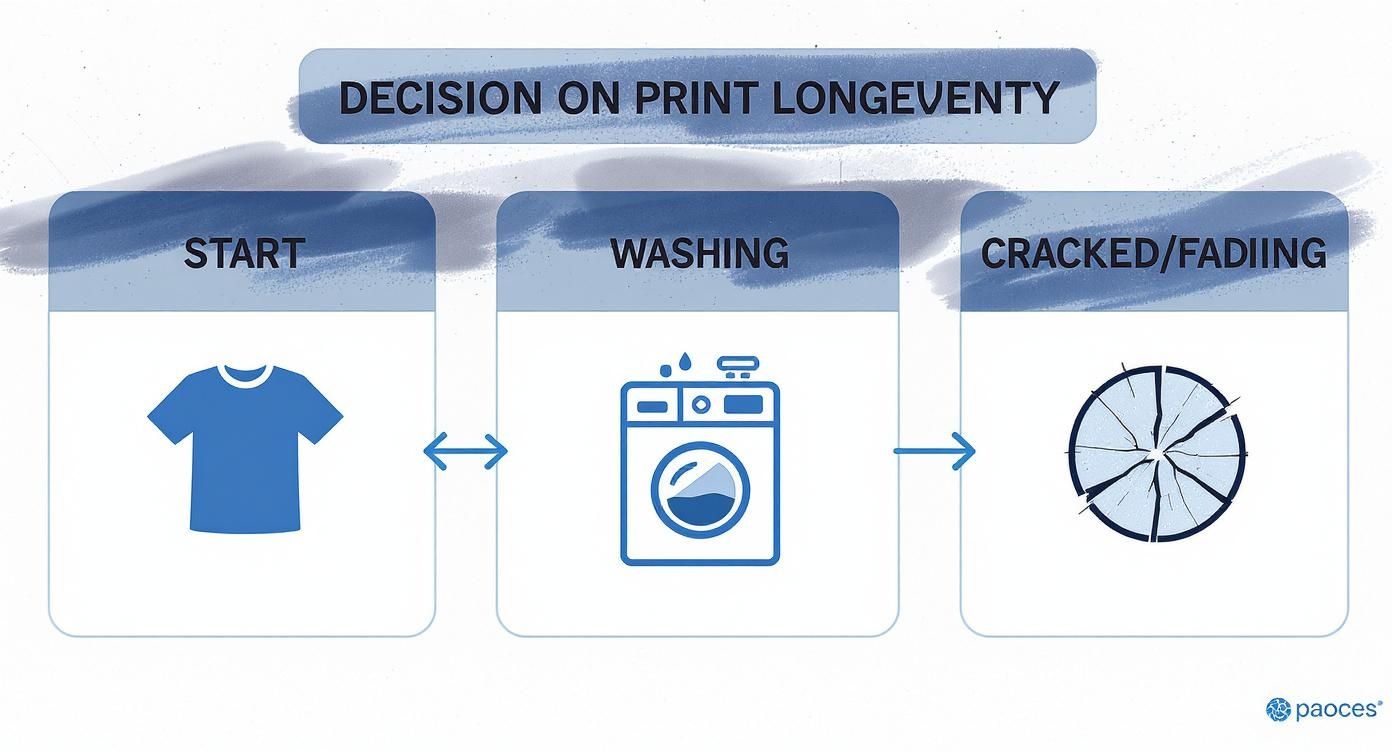
As you can see, both hold up well, but the difference is in the details. Polyester keeps that "just printed" vibrancy for longer, while cotton prints tend to soften and merge beautifully with the fabric over time, giving it a more vintage, lived-in feel.
Of course, fabric choice goes way beyond just t-shirts. If you're curious about how these principles apply elsewhere, like in home decor, this guide on The Best Fabric for Reupholstering a Sofa offers some great insights.
At the end of the day, success comes from matching the fabric's natural strengths with your project's goals. Get that alignment right, and you’ll create something that doesn't just look amazing on day one, but performs exactly how it should for its entire lifespan.
Answering Your Top DTF Printing Questions
When you're dialing in your DTF process, the nuances between cotton and polyester inevitably bring up some questions. Let's tackle the most common ones head-on, so you can press any fabric with confidence.
Can I Print on 50/50 Blends?
You absolutely can. In fact, 50/50 cotton-poly blends are a go-to for many print shops because they hit a sweet spot, merging the best qualities of both materials. You get that soft, breathable feel from the cotton, plus the vibrant color, durability, and wrinkle-resistance that polyester is known for.
The DTF process itself doesn't change, which is great for workflow consistency. This makes blends a fantastic, reliable choice for everything from corporate polos to everyday tees.
Do I Need Different Inks for Cotton and Polyester?
Nope, and this is one of the biggest wins for DTF printing. The same set of DTF inks works beautifully across cotton, polyester, blends, and a whole host of other fabrics. Since the design is first printed onto the film and then transferred, you don't have to juggle different ink types for different materials.
What you do need to change, however, are your heat press settings. Temperature, pressure, and time must be dialed in for the specific fabric you're using. Getting this right is crucial for a transfer that looks great and lasts.
Key Takeaway: The ink is universal, but the application is not. Always adjust your heat press settings to match the fabric's unique needs for a solid, long-lasting bond.
What Is Dye Migration and How Do I Stop It?
Dye migration is a headache unique to polyester. It’s what happens when the heat from your press causes the dye in the fabric (especially in dark colors like red or black) to vaporize and "bleed" into the ink of your transfer. A crisp white logo can suddenly look pinkish or gray.
To stop it from ruining your prints, you have a few options:
- Lower your heat press temperature. Polyester doesn't need as much heat as cotton.
- Shorten the pressing time. Less time under heat means less opportunity for dyes to migrate.
- Use films and powders specifically formulated with dye-blocking properties. These act as a barrier to keep the fabric dye where it belongs.
At Raccoon Transfers, we specialize in high-quality DTF prints that look incredible on any fabric. Start your custom order today and get vibrant, durable results shipped out the next day.