
Eco Friendly Printing Services Guide
Recycled paper and soy-based ink are useful choices, but they don't prove that a print operation is sustainable. A shirt printed with a lower-impact ink can still carry the resource burden of pretreatment, washing, steaming, curing, packaging, and transport. For independent apparel brands, the better question is not “Does this product have a green label?” It's “Which steps does this process eliminate, and what does the printer measure?”
That distinction matters as eco friendly printing services move into mainstream purchasing decisions. The global sustainable printing market was estimated at USD 2.07 billion in 2023 and is projected to reach USD 3.35 billion by 2030, with a projected 7.5% compound annual growth rate from 2024 to 2030, according to Grand View Research's sustainable printing market analysis. Buyers are entering a growing category, but many still receive vague answers about water, energy, chemicals, and waste.
Redefining Sustainable Print Production
The popular advice is simple: choose recycled paper, ask for soy ink, and call the job eco friendly. That approach misses the largest operational questions, especially for apparel and transfer printing. Material substitution matters, but process reduction often matters more.
A printer can change the substrate while keeping a water-intensive workflow. Screen printing may require screens, emulsions, washout, color separations, setup waste, and post-print curing. Direct-to-garment printing may reduce setup waste but still involve pretreatment, ink application, and curing. Direct-to-film transfer production changes the sequence again, because the design is printed and prepared on film before application to the garment.
Measure what the shop eliminates
A credible environmental review starts with the production floor. Ask whether the workflow reduces:
- Water use: Does the process avoid screen reclamation, post-print washing, or steaming?
- Energy demand: Which machines cure the print, and how efficiently do they operate?
- Chemical handling: What happens to pretreatment fluids, cleaning agents, inks, and adhesive powder?
- Material waste: Does the provider print on demand, optimize layouts, and control misprints?
- End-of-life waste: Can the packaging, film, paper, or garment move through a realistic recycling stream?
The eco-friendly printing methods guide is useful for comparing those process choices rather than treating every green claim as equivalent. A sustainable workflow should be described in terms of inputs, outputs, and controls.
Practical rule: A green claim is only useful when the printer can explain the production step behind it.
That mindset also applies to equipment at the end of its service life. Responsible brands should ask how printers, cartridges, and related hardware are handled, and secure printer disposal options can help teams evaluate that part of the operational chain. Sustainability isn't limited to the moment ink reaches fabric.
The Hidden Resource Footprint of Traditional Methods
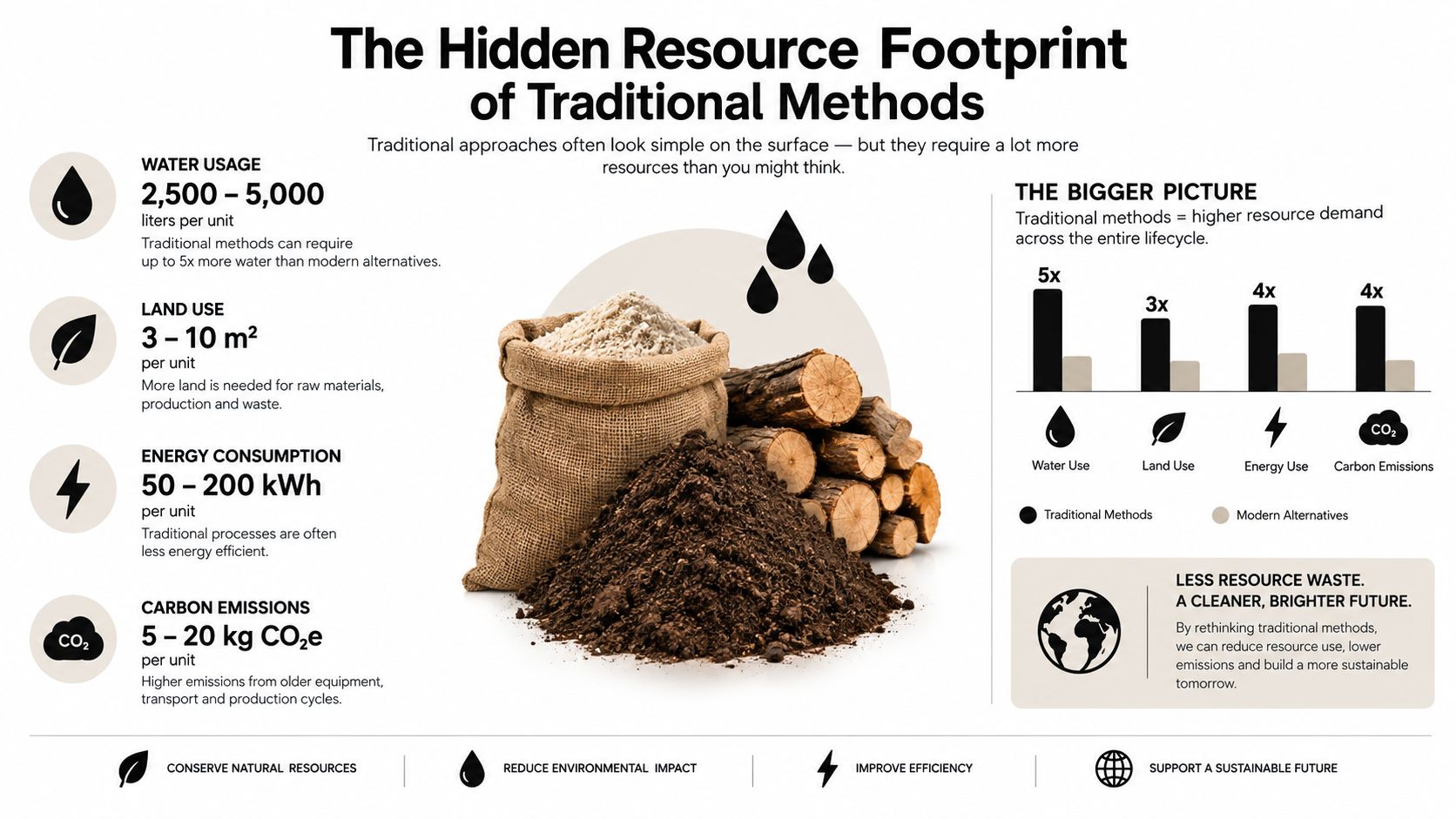
Traditional printing methods often spread their environmental burden across several preparation and finishing stages. Screen printing, for example, uses screens that must be coated, exposed, cleaned, and reclaimed. The design may be efficient for a large repeat run, but short custom jobs still carry setup activity that doesn't scale neatly with the number of garments produced.
The broader printing industry has long focused on water and energy because the resource demand is measurable. The IFC Environmental, Health, and Safety Guidelines for Printing list benchmark energy consumption of 0.52 to 0.77 MWh per ton and water consumption of 0.62 to 2.09 cubic meters per ton of paper used. Separate research cited in the same technical discussion places the water footprint of printing and writing paper at roughly 2 to 13 liters per A4 sheet, depending on feedstock and production conditions.
Why short runs expose the weakness
Bulk analog production can spread screens, setup, and machine preparation across many identical units. Custom work doesn't have that advantage. A small brand ordering varied artwork may create multiple setup requirements, excess ink mixtures, test prints, and leftover materials before the saleable product is complete.
That makes the backend workflow more important than the marketing description. Ask where screen wash water goes, how unused ink is stored or discarded, whether cleaning materials are tracked, and how failed garments are recorded. A printer that can't answer those questions may still use an eco-labeled material, but the label won't describe the full job.
A garment choice also affects the production decision. The Gildan Heavy Cotton T-shirt (Small to XLarge) is described as 100% cotton for solid colors and a 50%-50% cotton-polyester blend for heather colors, with a tear-away label and construction features intended for everyday wear and customization. That product information helps a buyer assess the blank itself, but it doesn't establish the environmental performance of the printing method applied to it.
Digital workflows remove specific stages
Digital systems can structurally eliminate screens, color-specific setup, and some forms of washout. They don't make every impact disappear. Electricity, ink, pretreatment materials, film, adhesive, cleaning, and curing still require management.
The most useful comparison is therefore not old versus new in the abstract. It's which process uses fewer stages for this order, whether the shop controls the remaining inputs, and whether the provider measures them instead of relying on a broad sustainability phrase.
Comparing DTF, DTG, and Screen Printing Sustainability
Direct-to-film, direct-to-garment, and screen printing each move environmental impact to different points in the workflow. Screen printing generally carries the heaviest setup and cleanup burden for varied short runs. DTG avoids screens but typically relies on garment pretreatment before ink application. DTF prints the transfer separately, then uses adhesive powder and heat to apply the finished design.
A VTT life-cycle study measured a 257-liter Water Availability Footprint for screen printing compared with 196 liters for digital printing in the studied textile product, while also noting that screen printing was more dye-, energy-, and water-intensive and that digital printing shifted some impact toward pretreatment materials and energy. The VTT study is a useful reminder that digital doesn't mean impact-free. It means the burden is distributed differently.
| Print Method | Water Usage | Chemical Waste | Energy Profile |
|---|---|---|---|
| Screen printing | Screen washing, reclamation, and related wet processing can create substantial water demand. | Inks, emulsions, cleaners, and washout residues require controlled handling. | Drying and curing are added to a setup-heavy process. |
| DTG | Pretreatment and possible post-print processing affect water demand. | Pretreatment fluids, textile inks, and cleaning solutions remain part of the workflow. | The printer must cure the garment, and energy use depends on equipment and settings. |
| DTF | The transfer workflow can avoid garment pretreatment and extensive wash-off, though film and process inputs still matter. | Ink, adhesive powder, film waste, and cleaning materials need management. | Printing and heat fixation shift energy demand toward the film and application stages. |
DTF is efficient when the workflow stays disciplined
Industry technical comparisons place digital textile printing's potential water reduction at roughly 50% to 95% and energy reduction at up to about 75% compared with conventional analog or rotary screen methods, depending on the ink system and process design, as summarized by Texintel's technical comparison. The same evidence warns that digital systems can use more energy or ink in some configurations.
The practical advantage of DTF appears when the printer removes washing and steaming stages, controls pretreatment, and consolidates designs efficiently. It becomes less compelling if the shop discards large amounts of unused film, misprints repeatedly, or runs curing equipment inefficiently.
For a fuller technical discussion of application differences, see DTF versus DTG printing. Match the method to the order rather than choosing a process because it has the newest name.
Verifying Green Credentials and Certifications
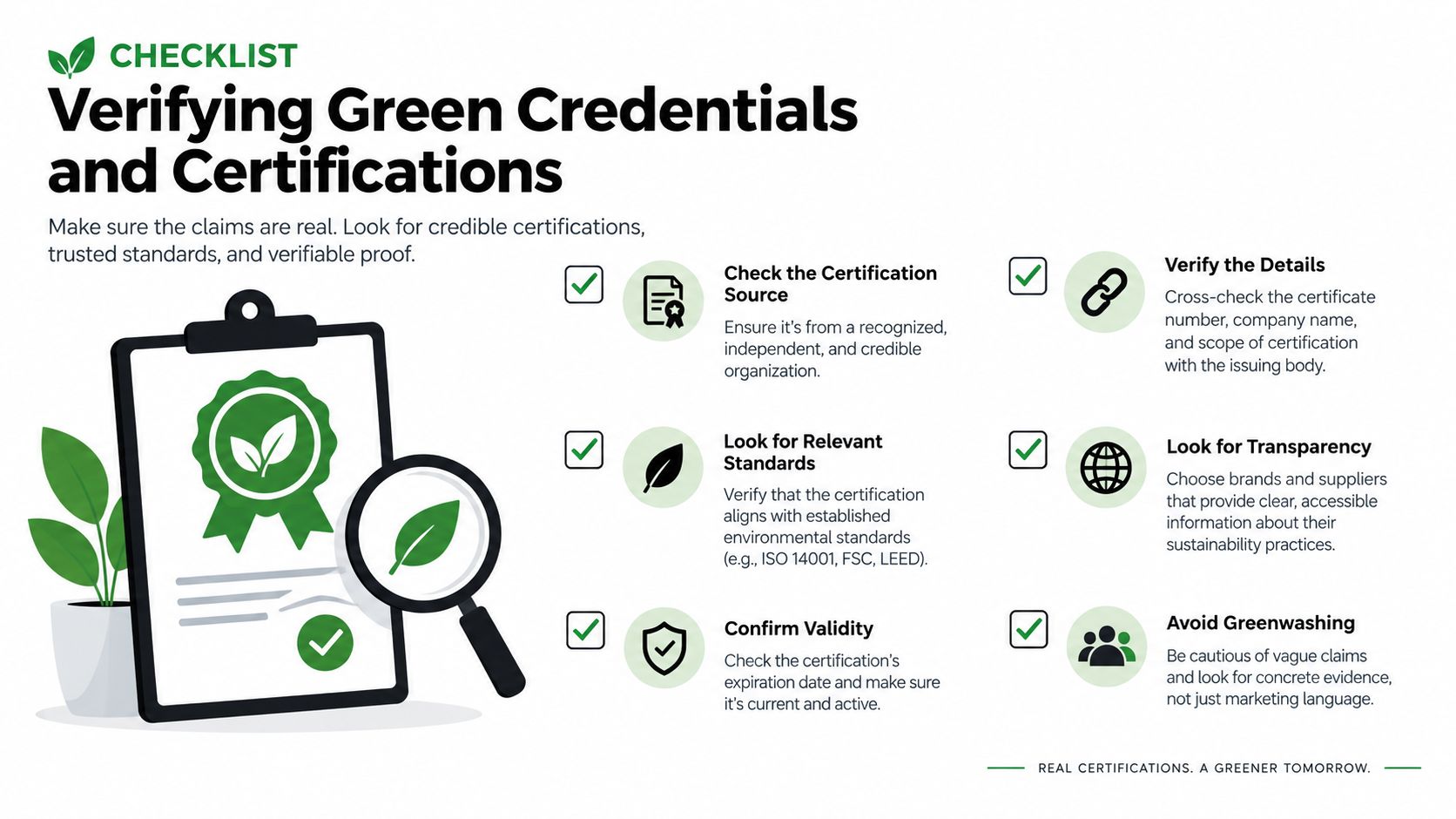
A website badge isn't an environmental audit. Before selecting eco friendly printing services, ask the provider to define exactly what the badge covers. A textile certification may address the garment or chemical inputs, while a facility certification may say more about management systems, wastewater, worker safety, or supply-chain controls.
Common names deserve careful interpretation. GOTS is associated with organic textile processing and broader supply-chain requirements. OEKO-TEX programs focus on testing and harmful-substance controls for specified products or production stages. bluesign is used in textile production to address input management and resource-conscious chemical handling. None of these names, by themselves, proves that a particular print job used the lowest water or energy pathway.
Ask for scope, not just logos
A useful vendor review asks for documents and operational explanations:
- Certification scope: Is the certificate for the blank garment, ink, facility, chemical input, or finished product?
- Current status: Can the provider show the issuing organization, certificate number, covered site, and validity period?
- Ink and adhesive controls: What products are used, and how does the facility store, clean, and dispose of them?
- Wastewater controls: Does the operation generate wash water, and what happens before discharge?
- Energy reporting: Can the printer describe its power source and track equipment consumption?
- Waste records: How are rejected garments, film, packaging, cartridges, and chemical containers managed?
Look for measurable language
“Non-toxic,” “green,” and “planet positive” are incomplete unless the company explains the boundary of the claim. A credible provider should distinguish between certified inputs, facility practices, and job-specific outcomes. It should also admit trade-offs, such as digital printing's potential energy or pretreatment burden.
Independent research on printing-related processes shows that water and electricity use can vary widely between facilities. One study found that energy use was the main driver of greenhouse-gas intensity in print-adjacent wastewater treatment, accounting for 33% of emissions, as reported in the peer-reviewed analysis of printing-related environmental impacts.
That figure is a reason to ask better questions, not a universal prediction for every printer. The facility's equipment, wastewater system, energy mix, production volume, and waste controls all matter.
The Downstream Impact of Packaging and Fulfillment
A low-water print process can lose much of its practical value if the finished order travels in unnecessary packaging. Apparel brands should evaluate the package as part of the product experience, not as a separate logistics detail. The right choice depends on protection, recyclability in the destination market, material separation, and the amount of packaging required.
Recyclability is the most consistently valued sustainability factor in recent global consumer research, and 40% to 80% of consumers report willingness to pay more for sustainable packaging, according to McKinsey's packaging sustainability analysis. Those figures describe consumer research, not a guarantee that every buyer will accept a higher price. They do show why brands need to explain packaging decisions clearly.
Choose the simplest package that protects the order
Biodegradable mailers can sound attractive, but their disposal requirements may not match local infrastructure. Recycled polybags can protect garments from moisture and abrasion, yet they remain a plastic format. Paper wrapping can be easier for some recycling systems, but excessive paper adds material and may provide less protection during fulfillment.
Before selecting an option, ask:
- Can customers identify the disposal route?
- Does the package combine materials that are difficult to separate?
- Does it protect the print and garment from damage?
- Can the pack size be reduced without increasing returns or replacements?
- Does the supplier provide clear material information instead of a generic green label?
The packaging bags for shirts guide can help brands think through garment protection and presentation. The objective isn't to use the most fashionable packaging material. It's to avoid unnecessary material while keeping the product clean, intact, and easy to handle.
Fulfillment choices affect the total result
A brand should also review order batching, shipping distance, inserts, and return handling. Printing on demand can reduce unsold inventory, but splitting orders into multiple shipments can create additional packaging and transport activity. Consolidation may be preferable when delivery speed allows it.
A sustainability promise becomes credible when the print, pack, and fulfillment choices tell the same story. If the product page highlights responsible materials while the parcel contains layers of mixed, hard-to-recycle packaging, customers notice the contradiction.
Navigating the Economics of Sustainable Printing
Sustainable production isn't automatically expensive, and it isn't automatically cheap. The economics depend on setup time, material yield, labor, equipment utilization, order size, rework, and the value of avoiding unsold inventory.
Digital transfer workflows can support small brands because they don't require a separate screen for every design variation. A shop can print only what the order requires, then apply the transfer when the garment is ready. That reduces the risk of holding decorated inventory that may never sell.
Waste reduction starts in the file
Gang sheet optimization is a practical production decision. Multiple designs can be arranged on one sheet, reducing unused film between jobs and improving the amount of printable area used. The savings aren't guaranteed, because they depend on artwork dimensions, spacing, sheet format, and the printer's operating rules, but a careful layout usually gives the production team more control than printing each design in isolation.
Good file preparation also protects margin:
- Remove accidental background elements before submission.
- Check transparent areas so the printer doesn't produce unwanted white layers.
- Confirm final dimensions before production.
- Use consistent naming for versions and colorways.
- Approve a digital proof before requesting a physical sample.
A misprint consumes garment material, transfer material, labor, energy, and shipping capacity. Preventing that error is often more economical than trying to offset it later with a premium substrate.
Price sustainability as a system
Certified organic blanks, specialty inks, and alternative packaging may carry a higher unit cost. A brand can still build a viable offer by deciding where certification adds customer value and where process efficiency delivers the stronger result.
McKinsey's buyer framework is useful here because it emphasizes price, performance, availability, regulation, and the effect of packaging on the final product, rather than treating sustainability as a single feature. For an independent brand, that means comparing complete order economics, including waste and rework, instead of comparing blank garment prices alone.
A sensible policy is to measure the inputs that affect cash flow first. Track rejected units, unused transfer area, repeat samples, packaging consumption, and rush replacements. The result gives you a clearer business case than a generic promise that green printing will reduce costs.
Selecting and Onboarding Your Green Print Partner
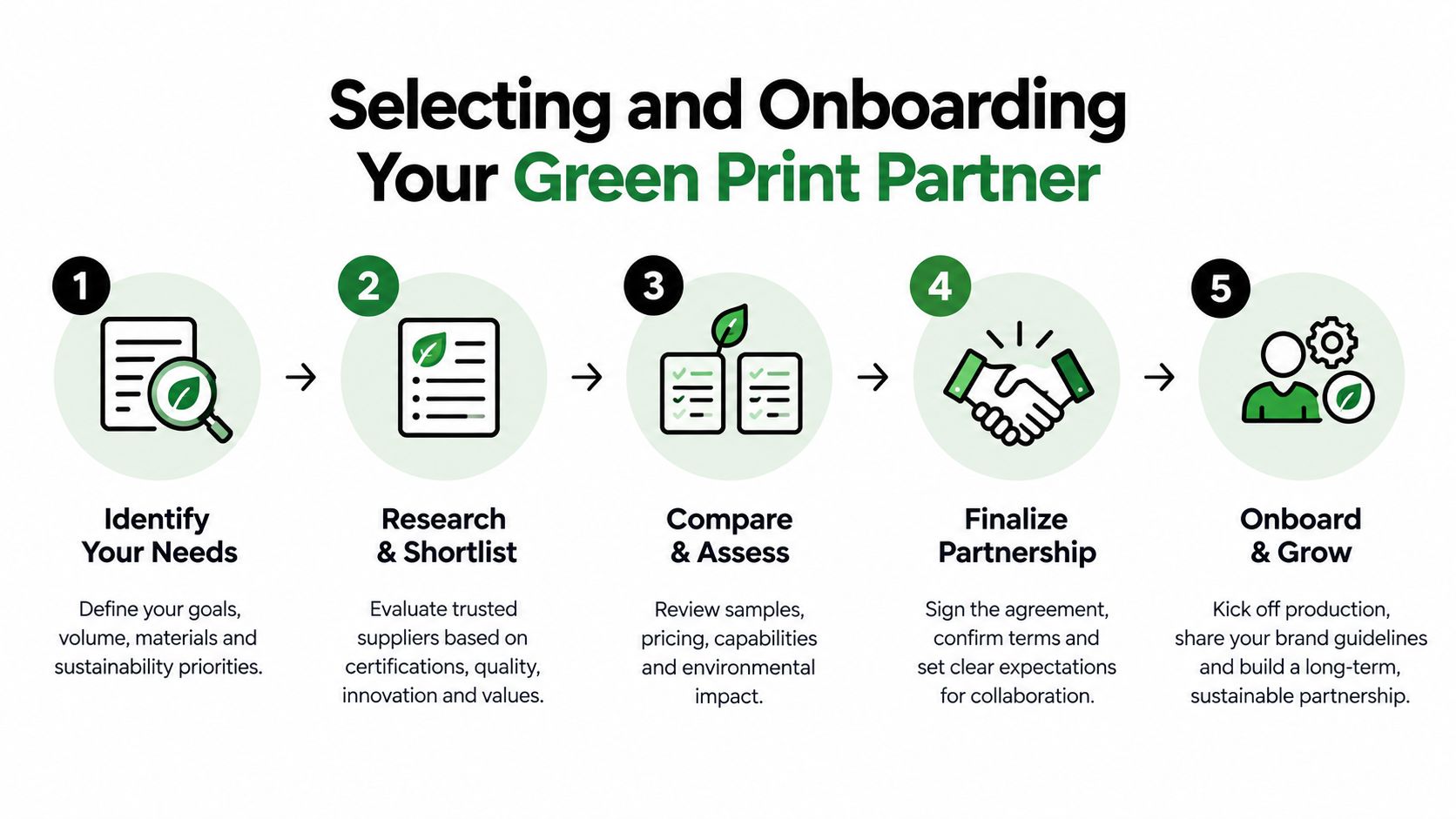
Start vendor discovery with operational questions, not marketing language. Ask which printing method fits your order profile, whether the workflow uses garment pretreatment, how the provider handles wash water and chemical waste, and what data it can share about energy and material use.
Then test the partnership with a controlled sample order. Use the same artwork, garment type, and packaging requirements you expect to use commercially. Evaluate color, adhesion, hand feel, wash performance, packaging quantity, communication, and the provider's willingness to explain trade-offs.
Build a practical onboarding sequence
- Define the job: Record garment fibers, artwork sizes, order volume, color requirements, and delivery needs.
- Audit the process: Ask where water, energy, ink, adhesive, film, and cleaning materials enter the workflow.
- Approve artwork: Use clean files, accurate dimensions, transparent backgrounds, and a documented version-control process.
- Set measurements: Agree on what the printer can report, such as misprints, material waste, packaging format, or process inputs.
- Review after production: Compare the approved result with the delivered order and update the workflow before scaling.
Treat artwork quality as environmental control
A clean production file reduces clarification emails, test prints, and avoidable remakes. Keep a master file, label approved versions clearly, and confirm whether the provider needs a gang sheet or individual transfer file. If you use DTF, review spacing and nesting so the printable area isn't wasted.
Raccoon Transfers offers DTF and UV-DTF transfers for apparel and hard-surface applications, with artwork uploads, custom gang sheet building, heat-press instructions, customer support, and local pickup options. Those features can fit a small brand that wants to consolidate designs and use a transfer workflow, but you should still ask for the process data that matters to your sustainability goals.
Visit Raccoon Transfers to upload artwork, build a custom gang sheet, or review DTF and UV-DTF transfer options for apparel and hard surfaces. Use the same practical standard discussed here, ask how the workflow handles water, energy, waste, and packaging, then choose the production setup that fits both your brand and your environmental commitments.