
Relaxed Fit T Shirt Guide: Sizing, Style, and Printing
You're comparing two blank T-shirts for a new collection. One is labeled “relaxed,” the other “classic.” The relaxed shirt looks wider, but the classic one is just longer, and neither supplier explains the shoulder, sleeve, or chest measurements. If you choose by the label alone, you may print a design on a silhouette that doesn't match the product description.
A relaxed fit T shirt isn't just a larger shirt. It's a measured construction choice involving positive ease, proportion, fabric behavior, and the way the garment hangs on the body. That distinction matters whether you're shopping for everyday comfort, building a clothing line, ordering uniforms, or placing DTF transfers on blank apparel.
What a Relaxed Fit T Shirt Actually Means
The modern T-shirt grew from practical clothing. The history of the T-shirt includes the U.S. Navy's formal issue of short-sleeved, white cotton crew-neck undershirts to sailors in 1913. Its simple T-shaped construction supported movement, light weight, and easy production. Military and workwear use helped establish those qualities before the garment became accepted as everyday outerwear.
That background explains why relaxed silhouettes feel natural. A looser T-shirt extends the original priorities of the garment, especially comfort, mobility, and straightforward construction, while adding deliberate fashion proportions.
The useful vocabulary
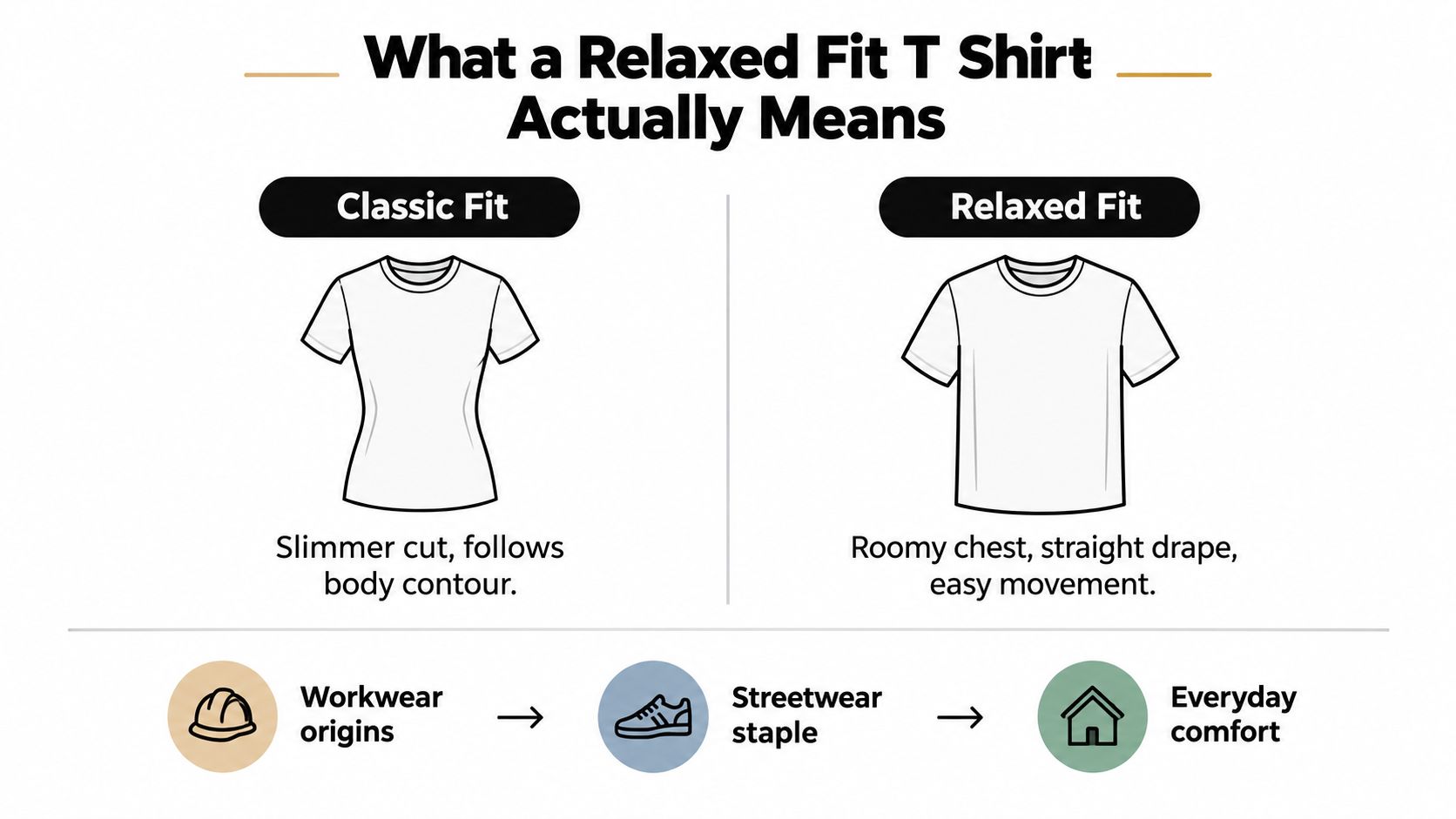
A slim-fit T-shirt follows the body closely. It usually has less room through the chest and waist, narrower sleeves, and a more shaped side seam.
A classic or regular fit leaves moderate room without making looseness the main visual feature. The shoulder usually sits near the wearer's natural shoulder, and the body often has a familiar straight or lightly tapered profile.
A relaxed fit adds intentional room through the chest, torso, shoulders, and sleeves. The body often falls straighter, the sleeve opening is wider, and the shoulder may be slightly dropped. The shirt should look easy rather than shapeless.
An oversized T-shirt pushes the proportions further. It commonly has substantially more chest width, longer sleeves, a lower shoulder, and a longer or more exaggerated body. A relaxed cut can look roomy without becoming dramatically large.
Working definition: Relaxed means balanced positive ease across the garment. It doesn't mean buying a regular shirt in a larger size.
That balance is why the word causes confusion. Two garments can both be called relaxed while one adds width and the other only adds length. A brand may also use “relaxed” to describe a soft visual impression rather than a documented specification.
For shoppers, the practical question is simple: where did the extra room go? If it's distributed across the chest and torso while the length remains controlled, you're probably looking at a genuine relaxed cut. If the hem drops low, the neckline widens, and the shoulder falls well past the body, the garment may be oversized instead.
Measuring Relaxed Fit by Numbers Not Vibes
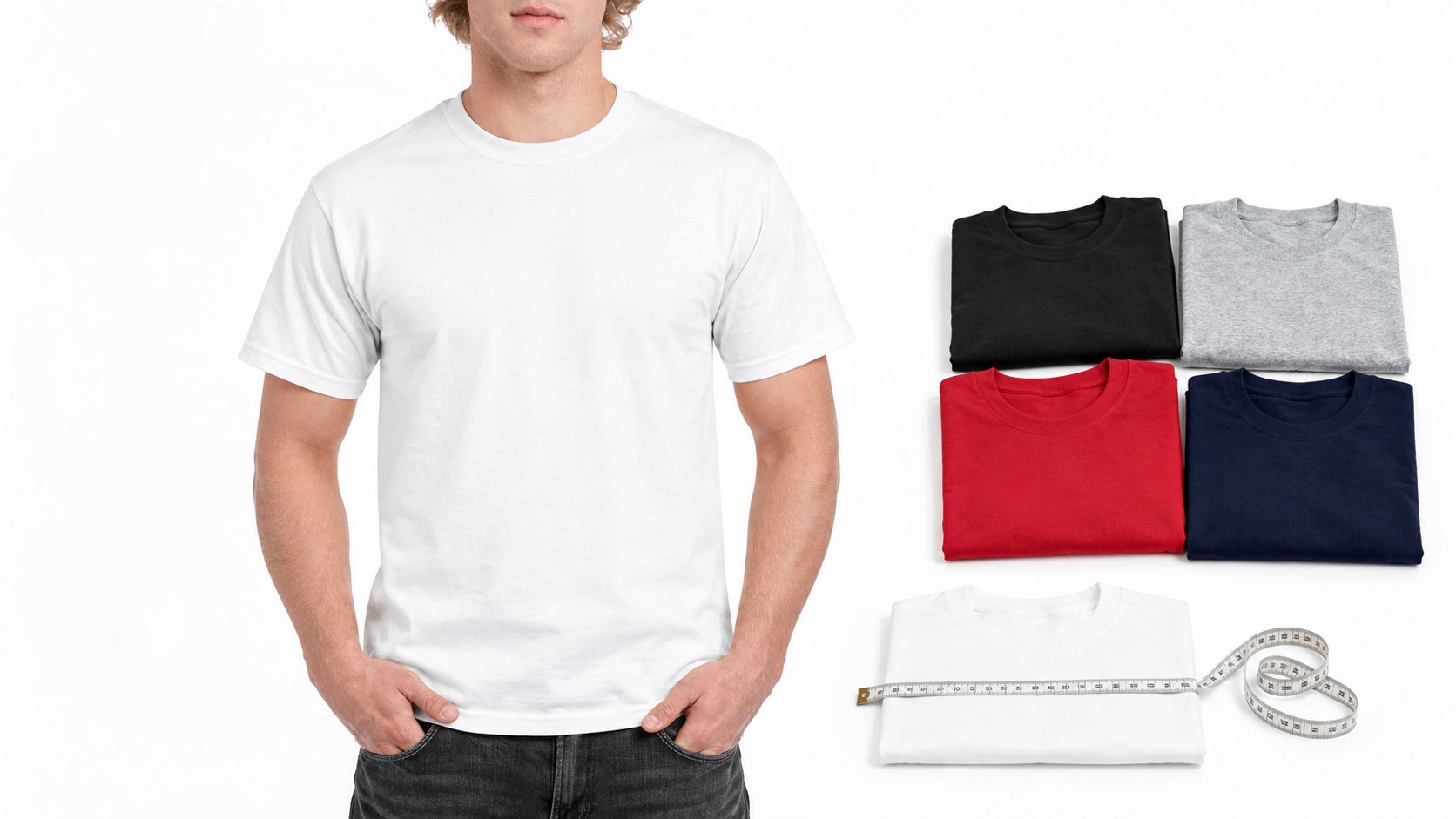
A shirt can look relaxed on a product photo and feel tight across the chest in person. Measurements show why. Lay a T-shirt you already like flat without stretching it, then measure pit to pit, shoulder to shoulder, high shoulder point to hem, along the sleeve, and across the bottom hem.
Record the results in a comparison sheet:
- Pit-to-pit: Double this measurement to estimate finished chest circumference.
- Shoulder width: Measure seam to seam. For dropped shoulders, measure between the corresponding shoulder points.
- Body length: Measure from the high shoulder point to the hem.
- Sleeve length: Follow the sleeve from the shoulder seam to the opening.
- Hem width: Measure across the hem to see whether the body stays straight or narrows.
Finished chest circumference provides the clearest starting point. Add the intended ease to the wearer's body chest measurement. Practical sizing references place relaxed silhouettes at roughly 4–10 cm of chest ease, while oversized garments commonly exceed 12 cm, according to this guide to measuring relaxed and regular fits.
For example, a person with a 100 cm body chest and a target of 8 cm ease needs a finished garment chest of about 108 cm. Divide that circumference by two to set a flat pit-to-pit target. Then check the shoulders, sleeve, body length, and hem. A chest number alone cannot create a balanced silhouette.
How to read a supplier's chart
A supplier chart may list width and length without showing how the shirt distributes its volume. A generous chest can still feel restrictive when the shoulder is narrow. A long body can look untidy without providing useful room through the torso.
The Gildan Heavy Cotton T-shirt (Small to XLarge) is documented as a classic-fit blank with 100% cotton construction for solid colors, double-needle stitching, a clean finish, taped neck and shoulders, and a tear-away label. Those specifications describe the blank, not a relaxed silhouette. Compare its actual garment measurements with the target before choosing it for a relaxed design.
For ecommerce teams, publish garment measurements beside body measurements. A practical size guide integration for ecommerce brands can organize the information so shoppers compare a favorite shirt instead of guessing from S, M, or L.
A useful product page should show:
- Finished chest or pit-to-pit measurement, with instructions for measuring the garment flat.
- Shoulder width, especially for a dropped-shoulder cut.
- Body length, because relaxed does not necessarily mean long.
- Sleeve length and opening, which affect the visual balance.
- Fabric and care information, including whether measurements are taken before or after washing.
These fields turn “relaxed” from a marketing description into a measurable specification. They also show whether the extra room sits in the torso, sleeves, or both, and whether the garment has been made larger by design rather than by accident.
Fabric Choices That Hold a Relaxed Silhouette
A relaxed pattern can lose its intended character when the fabric behaves differently after production. A light, fluid jersey may drape softly and collapse toward the body. A heavier knit may hold a straighter side seam and make the same pattern appear more boxy.
Cotton jersey remains a practical starting point for casual blanks because it offers a familiar hand feel and a printable surface. Ringspun cotton can feel smoother, while cotton-polyester blends may alter drape, recovery, and laundering behavior. Fleece-backed fabrics create more structure and warmth, but they can make a relaxed T-shirt concept read closer to a sweatshirt.
| Fabric | Typical Weight | Drape on Relaxed Cut | Shrinkage Risk |
|---|---|---|---|
| Lightweight cotton jersey | Light | Soft, fluid, and more likely to collapse at the side seams | Higher if untreated |
| Mid-weight cotton jersey | Medium | Balanced drape with clearer chest and hem shape | Moderate, depending on finishing |
| Cotton-polyester blend | Varies | Often steadier after washing, with a different hand feel | Construction and fiber dependent |
| Fleece-backed knit | Heavy | Structured, warmer, and more boxy | Depends on pre-shrinking and care |
The key production risk is dimensional change. In a study of 100% cotton jersey T-shirts, measured length shrinkage after 20 washes ranged from 6.3% to 8.8%, while width shrinkage ranged from 3.8% to 8.4%, depending on construction, as reported in this cotton jersey laundering study.
That change can remove part of the intended ease. A shirt that starts with a comfortable chest may feel closer after washing, while a shortened body changes where the graphic sits relative to the neckline and hem.
Choose by use case
For a lifestyle drop, a softer jersey may create the relaxed movement customers expect. For a streetwear collection, a denser knit can hold a squarer body and support a larger graphic. For uniforms, a blend may be preferable when teams need a consistent appearance after repeated care.
Don't treat quilting fabric as an interchangeable T-shirt material. Resources such as sewing with quilting cotton are useful for understanding apparel fabric selection, but a woven quilting cotton won't behave like a stretch jersey blank.
A guide to T-shirt materials can help you compare fiber content and surface behavior before you approve a blank. If you need a warmer, roomier option rather than a conventional T-shirt, the Gildan Heavy Blend Sweatshirt 18000 is documented as an 8.0 oz., pre-shrunk 50/50 cotton-polyester sweatshirt with a roomier fit, air-jet spun yarn, athletic rib knit, and double-needle stitching.
Before production, wash-test every serious candidate using the care process your customer will use. Record chest, length, and print alignment before laundering and after laundering. A pre-shrunk label helps, but only your own measurement check tells you whether the finished silhouette still matches the design.
Styling a Relaxed Fit T Shirt for Real Audiences
A relaxed T-shirt doesn't dictate one aesthetic. The same measured cut can support a clean uniform, a graphic-heavy streetwear piece, or an everyday outfit with layered pieces.
Independent brands can balance volume rather than adding more volume everywhere. Pair a roomy tee with tapered trousers, straight denim, or a cropped jacket. A partial tuck can define the waist without defeating the relaxed shape, while a full knot usually creates a sharper interruption in the drape.
Promotional teams should decide whether everyone needs the same silhouette or whether different cuts will serve the group better. A consistent relaxed blank can create a cleaner visual identity across staff, especially when the artwork is centered and the hem and sleeve lengths are controlled. Teams should still photograph and fit-test the garment on people with different proportions before approving a large order.
Lifestyle shoppers have several reliable formulas:
- Wide-leg denim: Let the shirt sit naturally, then use a small front tuck to keep the outfit from becoming one uninterrupted volume.
- Open overshirt: Choose a relaxed tee as the base layer and leave the outer shirt open, allowing the crew neck and graphic to remain visible.
- Structured blazer: Use a clean, moderate relaxed cut under the blazer. A very long or heavily dropped tee can bunch at the waist and sleeves.
The category has commercial importance as well. One market estimate valued the global relaxed-fit T-shirt market at $16.8 billion in 2024 and projected it to reach $28.5 billion by 2033, with online stores representing more than 38% of 2024 sales, according to this relaxed-fit T-shirt market estimate. The figures are directional market-research projections, but they reinforce the need for clear digital merchandising.
Online product photography should show the shirt flat and worn. A flat image communicates proportions. A worn image shows how the shoulder, sleeve, hem, and graphic behave in motion.
How Relaxed Fit Changes DTF Printing Decisions
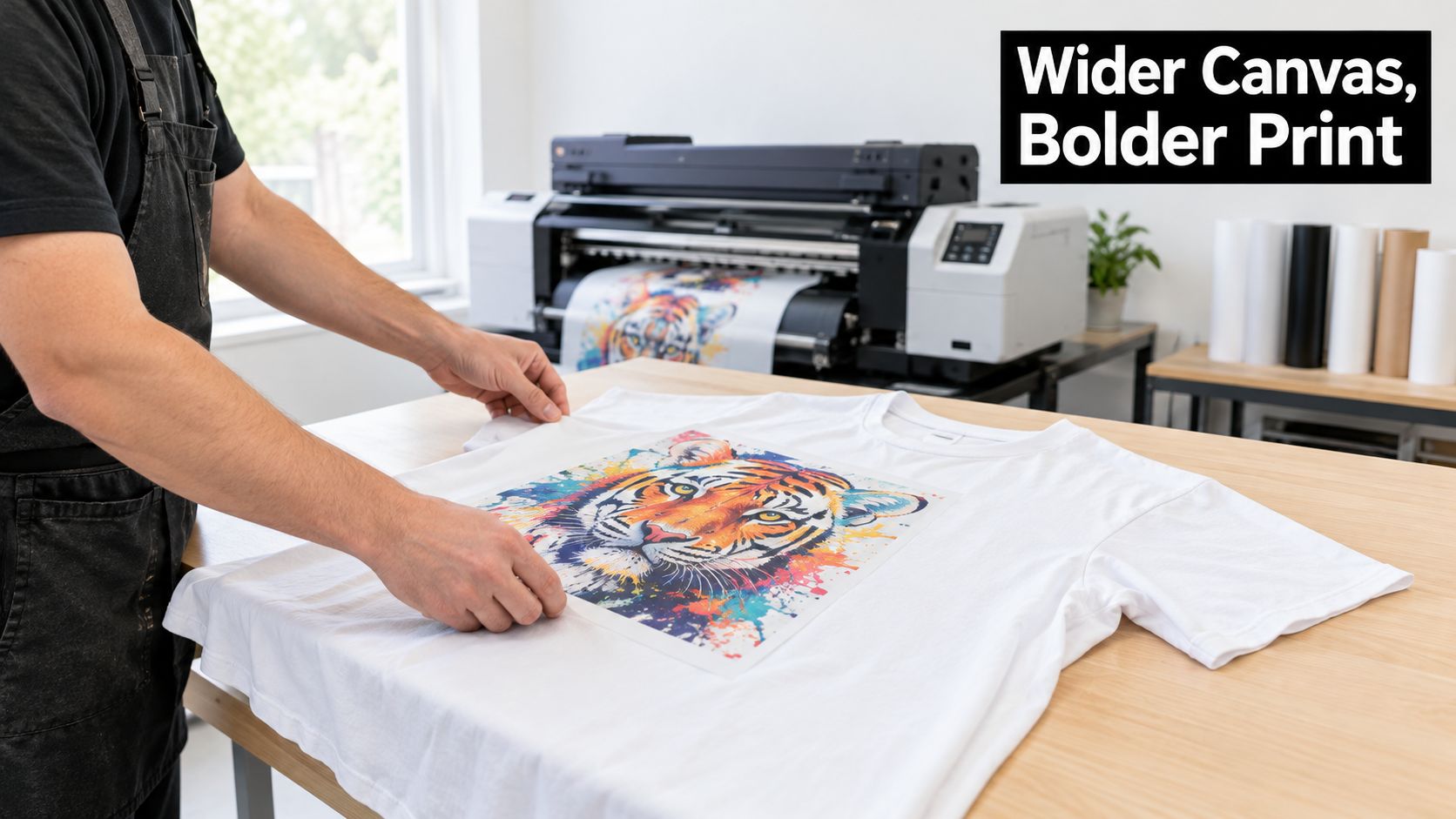
A relaxed front gives artwork more usable room, but the garment's shape changes how that artwork sits. A design that looks centered on a table can appear lower or wider once the body hangs from a dropped shoulder. Treat the print area as part of the garment's construction, not as an empty rectangle.
Start with the blank, not the artwork. Lay the shirt flat and smooth the chest without stretching it. Find the actual center between the side seams, then position the design from that point. The wearer's navel, shoulder line, and neckline can help with a final visual check, but none should serve as the only alignment reference.
Keep the print on the stable panel
A relaxed shirt may provide a generous chest area, while its edges become less predictable near seams and curved construction points. Artwork crossing a side seam can split visually as the garment wraps around the body. A design reaching into the armhole may distort when the sleeve moves.
Use the flat chest as the primary decoration zone. Keep important text, faces, and fine borders away from side seams, armholes, collar ribbing, and sharply curved areas. The same rule applies to large back prints, particularly when a dropped shoulder changes how the upper back hangs.
Pressing requires the same attention to stability. Place the blank on a firm, level surface, smooth the fabric, and avoid folds or seams beneath the press. Drapey relaxed blanks can shift more readily than structured ones, so alignment marks and a test application help catch placement problems before production.
Raccoon Transfers documents DTF and UV-DTF prints for cotton, synthetics, leather, glass, metal, and plastic. The prints are described as wash-resistant and scratch-resistant, with full-color output and adhesive powder applied for consistent bonding and edge definition. For apparel, confirm that the selected transfer and application instructions match the blank's fiber content and surface.
Evaluate the best T-shirt fabrics for printing alongside the fit. A smooth surface can support clean edges, while a textured or unstable knit may change how the design sits after pressing and laundering.
If a collection includes several small graphics, Build Your Own DTF Gang Sheet can arrange multiple designs on one sheet before application. This suits a relaxed blank carrying different chest, back, sleeve, or accessory graphics. Each design still needs its own placement test.
Why Sizing Up One Size Is Not the Same as Relaxed
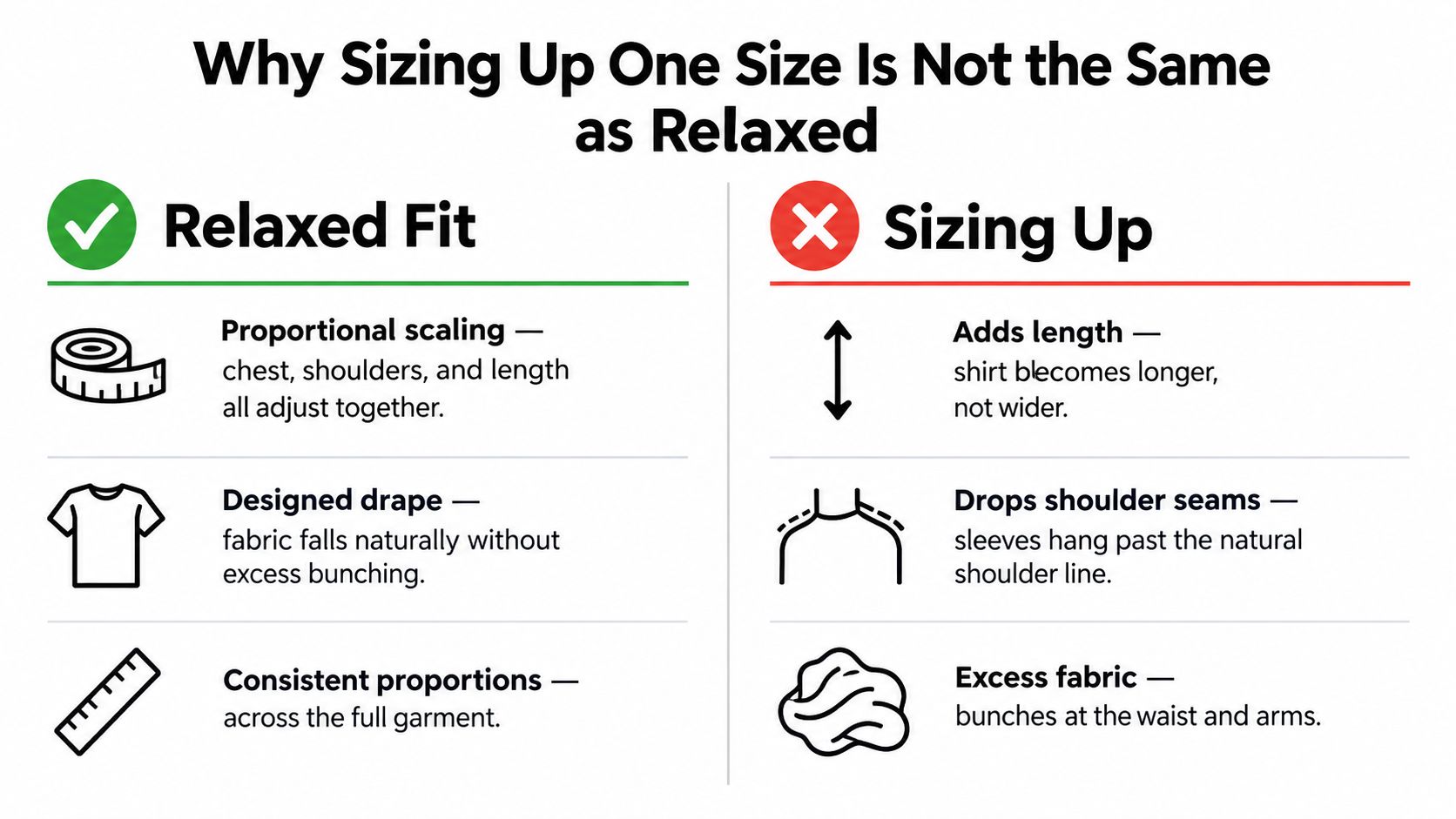
Buying one size larger feels like an easy answer. It isn't a reliable substitute for a relaxed pattern because a size step changes several dimensions at once, often without preserving the proportions you want.
The extra room may arrive as a longer body, a deeper neckline, a lower shoulder, and longer sleeves. The chest may become wider, but the hem can fall too low and the sleeve can hang past the natural shoulder. The result often looks oversized or unbalanced rather than calmly relaxed.
Test the proportions directly
For shoppers, compare the shoulder seam with your actual shoulder edge. If the seam extends far beyond it, check whether that is intentional or just the result of sizing up. Then compare body length and sleeve length with a shirt you already wear comfortably.
For brands, grade the pattern deliberately. Add the desired ease through the chest, torso, and sleeve while controlling the neckline, shoulder, and hem. A product can have the same visual identity across sizes only when the proportions are adjusted together.
The commercial consequences are significant. A Coresight Research survey found that 53% of apparel brands and retailers identified size and fit as the leading reason for online returns, while the estimated U.S. online apparel return rate was 24.4%, according to this report on virtual fitting and apparel returns.
Sample-room check: Measure the chest, compare the shoulder position, then wash the decorated garment before approving the full run.
Run three checks on every candidate blank:
- Flat measurement check: Confirm pit-to-pit, shoulder, length, sleeve, and hem against the intended specification.
- Worn proportion check: Photograph the shirt on more than one body shape and inspect sleeve and hem balance.
- Post-wash check: Repeat the measurements and inspect whether the artwork moved, warped, or now sits too close to the neckline or hem.
More ease can improve comfort for some bodies, but it doesn't automatically solve every fit issue. A broad shoulder, fuller midsection, shorter torso, or larger chest may need different proportions rather than the same amount of extra fabric everywhere.
A Practical Spec and Sourcing Workflow for Brands
A relaxed-fit product becomes repeatable when the blank is treated as a measured component rather than an interchangeable commodity. Start with a specification that connects fit, fabric, washing, and decoration.
- Define target ease. Record the intended body chest, finished chest, shoulder, length, sleeve, and hem measurements. These figures give the pattern a clear destination.
- Choose fabric before finalizing shape. Decide whether the shirt should drape softly, hold a structured body, or support warmer layering. Fabric weight and recovery affect how the same measurements look on the body.
- Compare blanks flat. Request measurement sheets, then measure physical garments yourself. Supplier labels can describe similar silhouettes differently, so compare the actual chest, shoulder, length, sleeve, and hem.
- Wash-test samples. Record pre-wash and post-wash dimensions using the intended care process. Include a decorated sample because pressing and laundering can change the final result.
- Run a small DTF test. Check chest and back placements, edge quality, and visual centering on the worn garment. A print can be mathematically centered on a flat shirt yet appear low or shifted after the fabric drapes.
- Publish garment measurements. Show finished dimensions, not only body-size labels. Explain how customers can measure a favorite T-shirt for comparison.
For each color and size, keep a production record covering the blank, fabric composition, measurements, wash result, transfer type, artwork dimensions, press settings, and final placement. This record lets the approved sample guide the production run instead of relying on memory.
Sourcing research can help identify candidate vendors through a wholesale blank apparel suppliers guide, but your own measurements should decide what reaches the sample stage. After the fit is validated, photograph the garment flat, worn, and decorated. For visual discovery and content planning, use Pin Generator's Pinterest guide.
A practical approval sequence is simple: measure the blank, wash it, decorate it, wash it again, and inspect the print on a body. Check the garment proportions and artwork together because a relaxed silhouette changes how placement is perceived.
The goal is a blank you can specify: the ease, the fabric that preserves it, the post-wash result, and the print geometry you approved.
Raccoon Transfers provides DTF and UV-DTF transfers for apparel and hard surfaces, including full-color designs intended for cotton, synthetics, blends, leather, glass, metal, and plastic. Build a gang sheet or prepare a small decorated sample, then visit Raccoon Transfers to match your relaxed-fit blank with a transfer workflow you can measure and repeat.