
Types of heat transfers: DTF, HTV & Sublimation Guide
So, you're ready to get your designs onto custom apparel? Awesome. The first thing to figure out is which type of heat transfer is right for you. Think of them as high-tech, permanent decals for fabric, all applied with heat and pressure. They're the magic behind a massive amount of the custom t-shirts, jerseys, and promo gear you see every day.
Your Guide to Modern Heat Transfer Methods
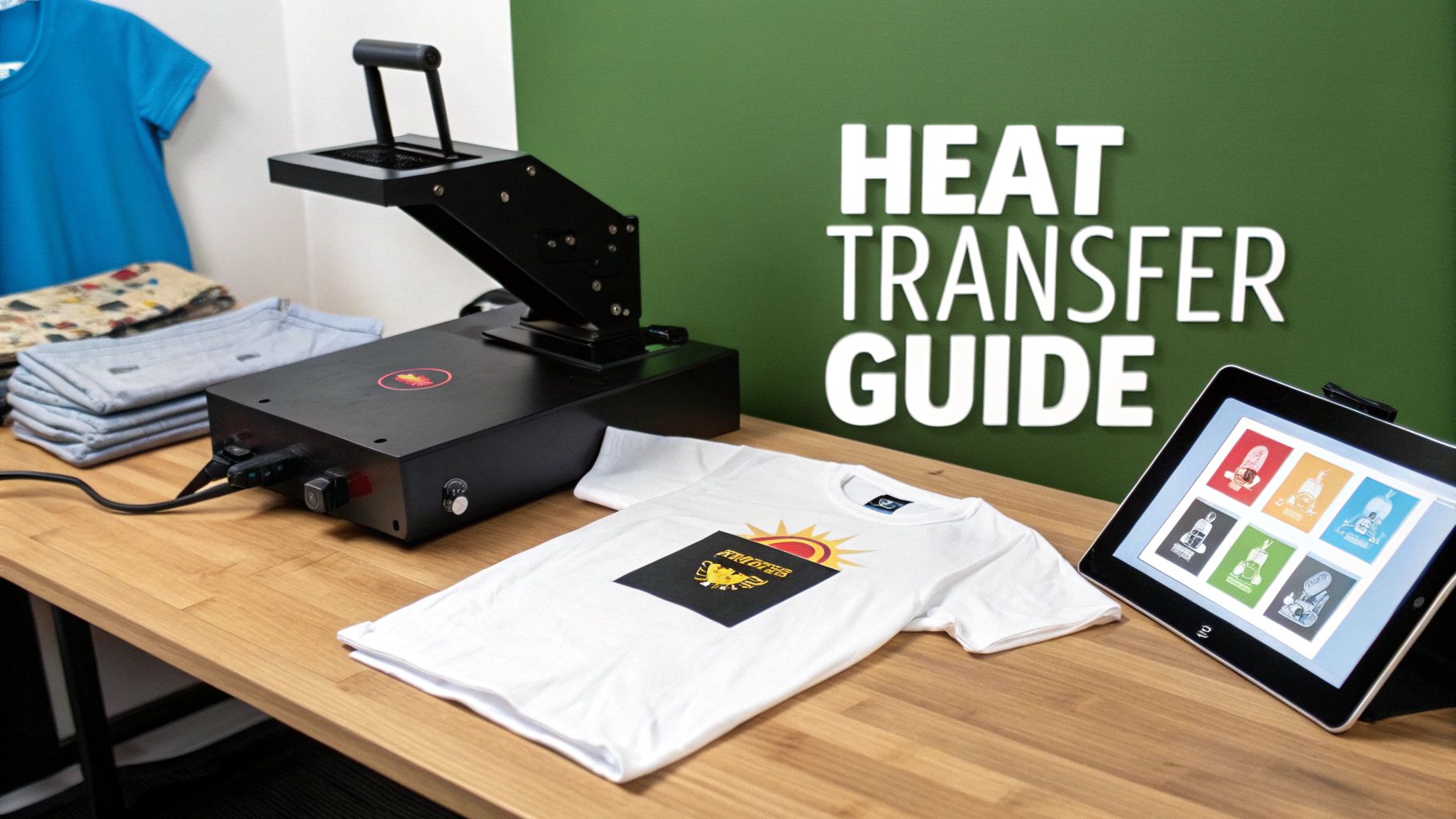
If you’ve ever used a simple iron-on patch, you've already got the basic idea down. The concept is straightforward: heat and pressure activate a special adhesive that bonds a design to a surface. Of course, modern methods have come a long, long way from those stiff patches, now offering professional quality, incredible color, and durability that's good enough for retail.
This guide is here to walk you through the most popular options out there today. Each method has its own process, its own materials, and its own sweet spot. Once you get a feel for how each one works, you'll be able to pick the perfect one for your next project without any guesswork.
The Three Pillars of Heat Application
No matter which of the types of heat transfers you end up using, success always boils down to three key variables. I like to think of them as the legs of a stool—if one is off, the whole thing wobbles.
- Heat: The temperature needs to be just right. Hot enough to activate the adhesive, but not so hot it burns the shirt or messes up the transfer. A polyester performance tee and a heavy cotton hoodie need totally different heat settings.
- Pressure: You need to apply enough force to get the design to stick evenly and securely. Too little pressure and you'll see it peeling after the first wash. Too much, and you can smudge the ink or leave a permanent press box on the garment.
- Time: How long you press is just as crucial. Some transfers are a quick press—just a few seconds. Others need to "cook" a bit longer for the chemical bond to fully set.
At its heart, every successful heat transfer is a science experiment where you control the variables. Getting the formula of heat, pressure, and time just right is the key to a perfect, long-lasting print every single time.
This guide will break down these variables for each method, putting them head-to-head so you can go from an idea to a finished product you're proud of. We'll dive into the big players—DTF, HTV, sublimation, and screen-printed transfers—and lay out their pros, cons, and what they're truly best for. My goal is to give you the practical knowledge you need to choose the perfect transfer that fits your creative vision, your budget, and the quality you're after.
To get started, here’s a quick-glance table to help you compare the different methods we'll be covering.
Quick Comparison of Heat Transfer Methods
| Transfer Type | Best For | Feel on Fabric | Durability |
|---|---|---|---|
| DTF Transfers | Full-color graphics on any fabric type or color | Soft, flexible, slightly raised feel | Excellent (50+ washes) |
| UV-DTF Transfers | Hard, non-porous surfaces (glass, metal, plastic) | Smooth, glossy, sticker-like | High (permanent adhesive) |
| Heat Transfer Vinyl (HTV) | Simple, single-color text and logos | Thicker, layered feel | Good to Excellent (30-50 washes) |
| Sublimation | White/light 100% polyester fabrics | Zero feel (ink becomes part of the fabric) | Permanent (will not crack or peel) |
| Screen-Printed Transfers | Bulk orders with limited colors | Soft and thin, similar to screen printing | Excellent (50+ washes) |
This table gives you a great starting point, but the real magic is in the details. Let's dig into each one.
Direct-to-Film (DTF) Transfers: The All-in-One Solution
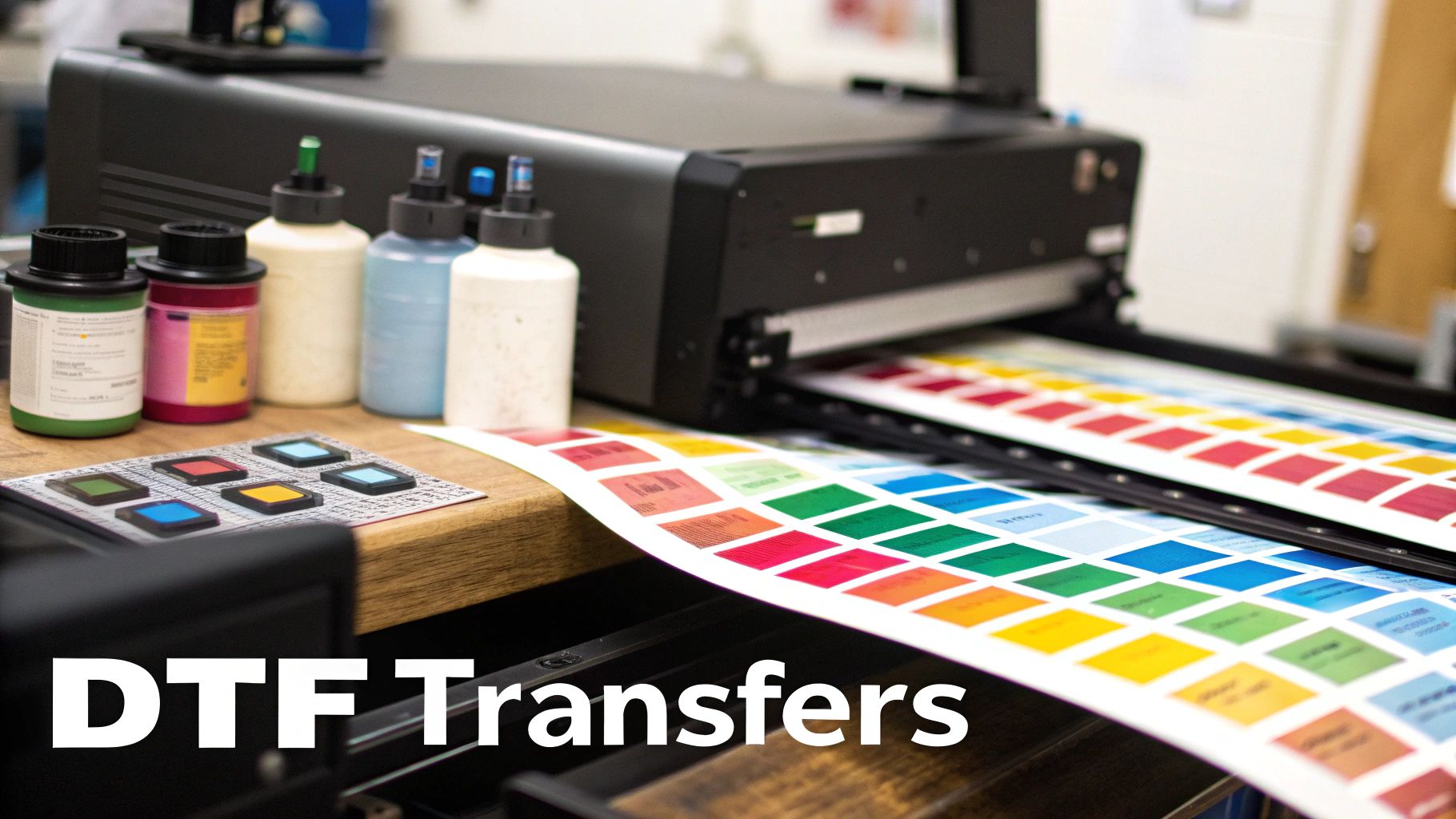
Out of all the heat transfer methods out there, Direct-to-Film (DTF) has become a true powerhouse in the custom apparel world. Think about it: what if you could print a vibrant, full-color photograph or a super-detailed logo and press it onto almost any fabric you can imagine? That’s the magic of DTF.
The process itself is pretty ingenious. It starts by digitally printing your design onto a special sheet of PET film. While the ink is still wet, a fine adhesive powder is sprinkled over it. This sheet then takes a trip through a curing oven, where the powder melts and fuses to the back of the ink, creating a solid, smooth layer. The final transfer is then ready to go—you just need a standard heat press to apply it.
The DTF Advantage: Versatility and Vibrancy
So, what’s all the fuss about? The reason DTF has gotten so popular is its incredible flexibility. A lot of other methods come with a long list of rules about what fabrics or colors you can use, but DTF pretty much throws that rulebook out the window.
- Fabric Freedom: DTF plays nicely with a massive range of materials. We're talking 100% cotton, polyester, cotton/poly blends, and even trickier stuff like leather and nylon. The transfers just stick.
- Color Without Compromise: This is a huge one. DTF excels on both light and dark garments. A base layer of white ink is printed under your design, which makes the colors pop just as brightly on a black hoodie as they do on a plain white tee.
- No Pre-Treatment Needed: One of the biggest time-savers is that you don't have to spray your garments with any chemical pre-treatment before pressing. This simplifies the whole workflow, saving you time, money, and a bit of a mess.
This unique combination makes DTF a fantastic go-to for shops that handle all kinds of different jobs. Whether you're doing complex, multi-color logos for a corporate client or photorealistic graphics for a fashion brand, DTF delivers amazing, consistent results every time.
Understanding the Feel and Durability
People always ask, "What does it feel like on the shirt?" A finished DTF design has a soft, flexible hand that’s much thinner than old-school vinyl. You can definitely feel that it's there, but it’s not stiff or heavy, and it moves with the fabric instead of fighting against it.
When it comes to longevity, DTF is a real champion. The adhesive creates a powerful bond with the fabric fibers, so these transfers are built to last. A properly applied DTF print can easily handle 50+ washes without showing signs of cracking, peeling, or fading. It's a truly retail-quality finish.
The key to getting that incredible durability is all in the application. You have to get the temperature, pressure, and time just right to create a permanent bond. Too little heat and the adhesive won't fully activate; too much and you can scorch the print or the shirt.
If you want to master the process, our guide on heat press settings for DTF breaks down everything you need to know for a perfect press, every single time.
The Rise of UV-DTF for Hard Goods
Building on the same core idea, UV-DTF is like DTF's cousin, but it’s designed for hard, non-porous surfaces. Instead of a heat-activated powder, this method uses UV-curable inks and adhesive to create what is essentially a high-quality, permanent decal.
You can stick these on all sorts of things:
- Glassware and mugs
- Metal water bottles
- Plastic phone cases
- Wood and acrylic signs
This opens up a whole new world for branding and customization beyond clothing. The application couldn't be simpler: just peel, stick, and remove the carrier film. No heat press needed. It’s an easy way to add durable, scratch-resistant graphics to a huge variety of promotional products.
Heat Transfer Vinyl: The Crafter's Choice
For so many people, Heat Transfer Vinyl (HTV) is their first step into the world of custom apparel. It’s the method that makes personalizing a t-shirt or tote bag feel completely within reach. If you've ever seen a sports jersey with a crisp, bold name on the back or a shirt with a punchy, single-color quote, chances are you were looking at HTV.
Think of HTV as a specialty, heat-activated sticker made just for fabric. It comes on a sheet or roll with a clear plastic carrier on one side. The whole process is very hands-on and tactile, which is a huge part of its charm for crafters and small business owners.
The HTV Creation Process
Going from a digital idea to a finished shirt is a really satisfying journey. It’s less about printing and more like cutting and assembling a puzzle right onto the fabric.
- Cut the Design: First, you'll send your digital file to a vinyl cutter. This machine precisely cuts your design's outline into the vinyl sheet, but it doesn't cut through the clear carrier sheet.
- Weed the Excess: This is the most famous—or infamous—step, called weeding. Using a small, sharp tool, you'll meticulously peel away all the extra vinyl that isn't part of your design.
- Heat Application: Once weeded, you place the design onto your garment, cover it with a protective sheet, and press it with a heat press. The heat and pressure activate the adhesive on the vinyl's back, locking it permanently into the fabric's fibers.
This method is absolutely perfect for simple, bold graphics—things like text, logos, and silhouettes. You can do multi-color designs, but it means cutting and layering each color of vinyl individually, which can get complicated and time-consuming fast.
The Strengths and Weaknesses of Vinyl
HTV is so popular because it has some clear advantages, especially for smaller projects. The initial equipment cost is pretty low, and the vinyl itself is affordable for one-offs or small runs, making it a go-to for Etsy sellers and hobbyists.
But maybe the biggest draw is the incredible variety of finishes you can get. This is where HTV really blows other methods out of the water. Beyond standard colors, you can find:
- Glitter HTV for designs that need to sparkle and pop.
- Holographic and iridescent vinyl that magically shifts color as it catches the light.
- Flock HTV, which has a soft, fuzzy, suede-like texture you can feel.
- Glow-in-the-dark vinyl for fun, novelty projects.
Of course, HTV has its downsides. That weeding process can become a real chore with super detailed or intricate designs. You can also feel the design on the shirt; it's a distinct layer sitting on top of the fabric, unlike other methods that dye the fibers. If you're looking for the perfect material, check out our guide on choosing the best vinyl for a heat press to find the right fit for your project.
In the world of heat transfers, HTV is the undisputed champion of texture and special effects. No other method can easily replicate the tactile feel of flock or the dazzling sparkle of glitter vinyl, making it the go-to choice for designs that need to stand out both visually and physically.
At the end of the day, Heat Transfer Vinyl is the star player when you need bold, simple graphics and unique finishes. It's also surprisingly durable, often lasting 30-50 washes when applied correctly, making it a fantastic and creative choice for personalizing everything from team jerseys to one-of-a-kind gifts.
Sublimation Transfers for Unmatched Vibrancy
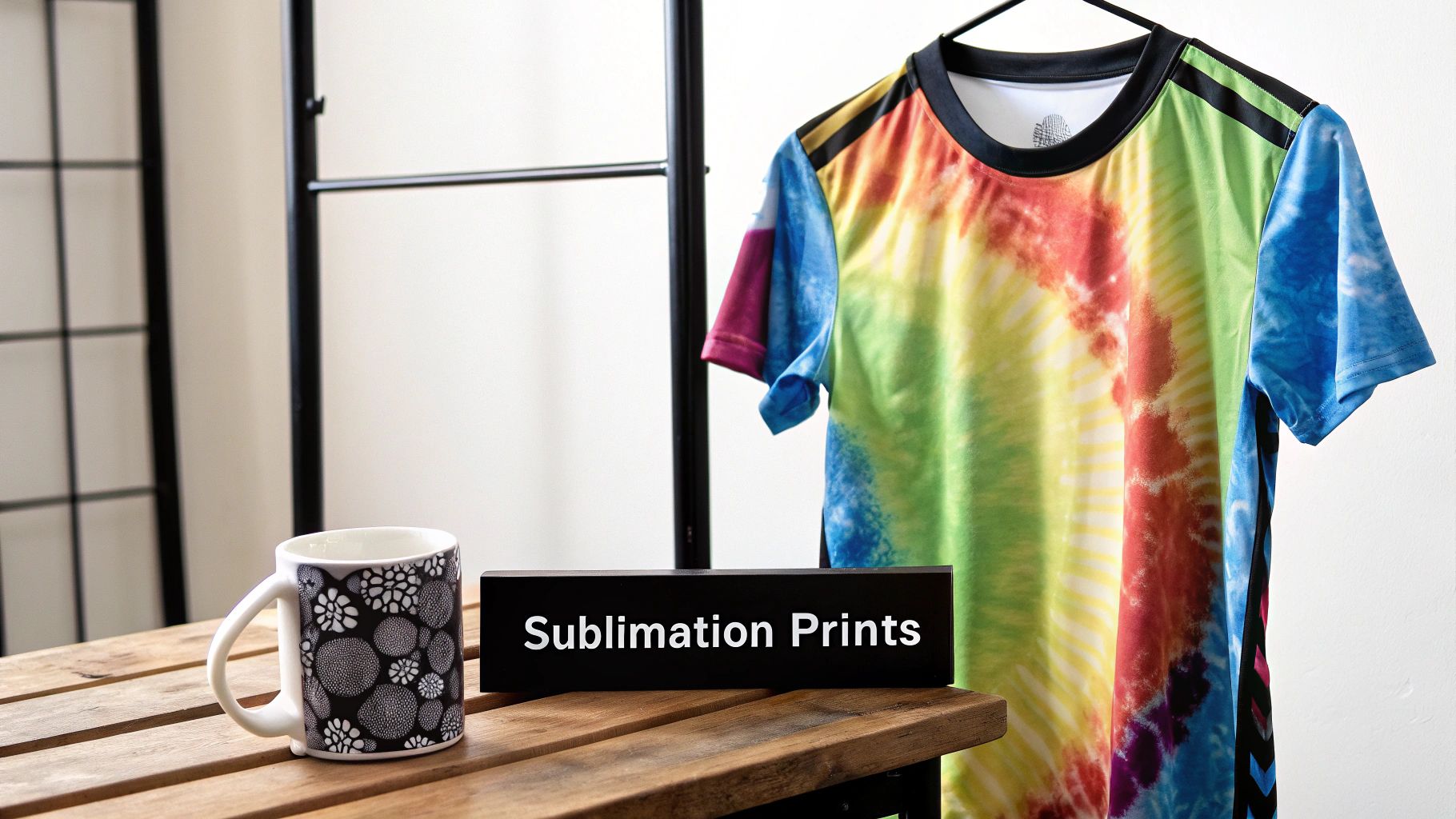
When we talk about the different types of heat transfers, sublimation really is in a class of its own. It's less about sticking a design on a shirt and more like performing a bit of fabric magic. The result is a print you literally cannot feel—because it has become a permanent part of the material itself.
The science here is pretty cool. Sublimation uses special inks that, under high heat (think 375-410°F), go straight from a solid to a gas, completely skipping the liquid phase. This gas then seeps into the polyester fibers of the garment, dyeing them from the inside out.
Once you remove the heat, the ink turns back into a solid, but now it’s trapped inside the fibers. The best way to think of it is tattooing the fabric instead of slapping a sticker on it. The design is now a permanent, inseparable part of the shirt.
The Magic of Polyester and Special Coatings
Sublimation's unique process has some very specific ground rules. This method is a no-go for natural fibers like cotton because the gaseous ink needs polymer-based fibers to latch onto.
This is why sublimation is strictly for:
- High-Polyester Content Fabrics: To get those rich, vibrant colors on apparel, you need at least 65% polyester. For jaw-dropping results, 100% polyester is the gold standard.
- Specially Coated Hard Goods: You've probably seen sublimated mugs, mousepads, and phone cases. These items work because they're treated with a special polymer coating that acts just like polyester, ready to soak up the ink.
Another key thing to remember: since the process dyes the fibers, it only works on white or very light-colored materials. Trying to sublimate on a black shirt is like using a watercolor marker on black construction paper—the design just vanishes.
This need for specific materials is part of a larger trend where specialized gear is pushing the industry forward. The global heat transfer equipment market was valued at around USD 11.1 billion in 2025 and is projected to climb past USD 15.4 billion by 2032. This isn't just about t-shirts; it shows a massive demand for advanced thermal tech across many sectors. You can dig into more data on the heat transfer equipment market to see how these technologies are evolving.
Unbeatable Durability and a Soft Finish
The hands-down biggest selling point for sublimation is its incredible durability. Because the ink is infused right into the fibers, the design will last as long as the garment. You'll never see it crack, peel, fade, or wash away.
With sublimation, the design isn't just on the shirt; it is the shirt. This creates a finish that is not only permanent but also completely breathable, making it the top choice for performance and athletic apparel where comfort is everything.
This soft, breathable finish is something you just can't get with other methods that add a physical layer on top of the fabric. The sublimated area feels exactly like the rest of the shirt, which is a huge plus for all-over prints or performance sportswear.
Sublimation is the perfect pick for full-color, photorealistic images on performance tees, custom promo items like mugs, and any project where a premium, permanent, and weightless design is the goal. While its material restrictions make it a niche tool, for the right job, the results are simply unmatched.
Screen Printed Transfers for Commercial Quality
If you're after that classic, retail-quality screen print finish but need the flexibility of heat pressing on demand, screen printed transfers are your answer. Often called plastisol transfers, this method is the perfect middle ground between printing directly on a shirt and using a heat press. It truly gives you the best of both worlds.
Think of it this way: you get the exact same durable, professional print you’d find on a graphic tee at the mall. But instead of being printed right onto the fabric, the design is first printed onto a special sheet of release paper. This lets you stock up on designs and press them onto any garment you want, whenever you need them.
How Plastisol Transfers Are Made
The process for creating a plastisol transfer starts just like traditional screen printing. It uses plastisol ink—a thick, plastic-based ink—which is pushed through a mesh screen onto the release paper. The catch is that every single color in your design needs its own dedicated screen, making the setup pretty involved.
After the ink is laid down, a special powdered adhesive is sprinkled over the wet design and then cured with heat. This locks everything in place, creating a transfer that's ready to press. All the vibrant, opaque quality of screen printing is baked right in, so you can get that premium result without owning a full-blown screen printing setup yourself.
The Perks of This Hybrid Approach
This method is a hands-down favorite for anyone doing large production runs, and for good reason. It’s incredibly efficient and delivers a top-tier look. Once you get past the initial setup, churning out hundreds or even thousands of identical transfers becomes very cheap per piece.
- Authentic Retail Feel: The finished print feels soft and flexible, almost identical to a direct-to-garment screen print. It’s not a thick, heavy layer.
- Built to Last: Just like traditional screen printing, these transfers are tough. They can easily handle 50+ washes before showing any signs of cracking or fading.
- Bold, Punchy Colors: Plastisol ink sits right on top of the fabric instead of soaking in. This means your colors stay bright and solid, even on black or dark-colored shirts.
Screen printed transfers give you the time-tested durability and premium feel of classic screen printing, but with the on-demand convenience of a heat press. It's the go-to for brands that need flexibility without sacrificing an ounce of quality.
What to Watch Out For
As great as they are, plastisol transfers aren't the right fit for every job. The biggest hurdle is the setup. Creating a screen for each color is both complex and costly, which makes this method a poor choice for small batches, one-of-a-kind pieces, or designs loaded with a dozen different colors.
This method is a great example of efficient heat management, a technology that's seeing huge growth on an industrial scale. The global market for heat exchangers—a core part of heat transfer tech—was valued at USD 18.73 billion in 2024 and is projected to hit USD 38.6 billion by 2034. That growth shows just how much demand there is for effective thermal solutions, which is exactly what plastisol transfers offer the apparel industry. You can dig deeper into these market expansion insights on gminsights.com.
At the end of the day, screen printed transfers are the undisputed champ for big, standardized orders where top-notch quality and a low cost-per-item are what matter most. They deliver a commercial-grade product that’s made to last.
How to Choose the Right Heat Transfer Method
Walking into the world of heat transfers can feel a bit like staring at a wall of tools—so many options, where do you even start? But don't get overwhelmed. Picking the right method really just comes down to answering a few straightforward questions about your project. Once you know your fabric, your design, and your quantity, the best choice usually becomes crystal clear.
Think of it this way: you wouldn't grab a sledgehammer to hang a picture frame. In the same way, the perfect transfer for a vibrant, full-color photo on a black cotton tee (hello, DTF) is a completely different beast than what you'd use for putting names and numbers on a team's polyester jerseys (HTV is your player here). It's all about matching the tool to the job.
Start with Your Fabric and Color
This is the big one. Your material is the single most important factor, as it instantly rules certain methods in or out.
-
Working with Cotton and Blends (Any Color)? If your project involves cotton, poly/cotton blends, or a mix of light and dark garments, you'll want to look at DTF, HTV, or Screen Printed Transfers. These are your go-to options because they sit on top of the fabric, ensuring your design looks bold and bright no matter the color of the shirt.
-
Using 100% Polyester (White or Light Colors Only)? This is where sublimation shines. If you want a design that has absolutely no feel to it—literally becoming one with the fabric—Sublimation is the only way to get there. Just remember its two golden rules: it needs a high polyester count and a light-colored canvas to work its magic. To really get into the weeds on these two, check out our guide comparing sublimation vs. heat transfer printing.
Nailing down your fabric first really helps narrow the field and makes the rest of the decision-making process much easier.
Evaluate Your Design's Complexity and Colors
Next up, take a good, hard look at your artwork. Are we talking about a simple, one-color logo, or is it a photorealistic masterpiece with a million different shades and gradients?
For those complex designs packed with colors, fine details, or smooth gradients, DTF is a game-changer. It can reproduce unlimited colors perfectly without any extra setup fees for each one. Sublimation is also fantastic for full-color images, but again, only on the right type of material.
If your design is simpler—think bold text, solid shapes, and just a handful of colors—then HTV is a fantastic and reliable choice. And for big runs of the same design, Screen Printed Transfers are incredibly economical, though the cost can climb quickly as you add more colors to the mix.
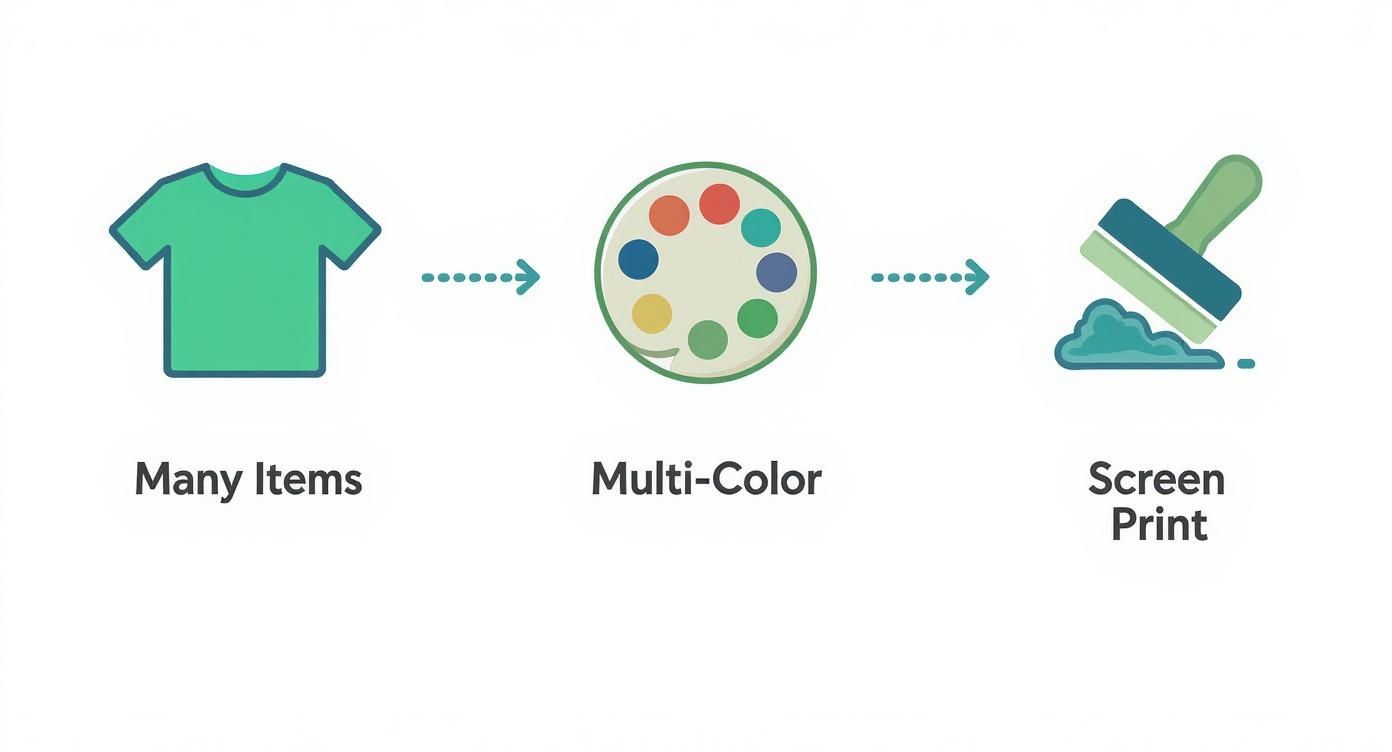
This kind of decision tree shows you exactly where screen printed transfers hit their sweet spot: producing lots of multi-color items efficiently.
Consider Your Production Volume and Budget
Last but not least, how many are you making? The answer here will steer you toward the most budget-friendly method for your specific situation.
For one-of-a-kind custom pieces, prototypes, or super small batches, DTF and HTV are the undisputed champs. There's virtually no setup involved, so you can create a single, amazing item without breaking the bank. This makes them perfect for personal projects, Etsy sellers, or just trying out a new idea.
Choosing the right transfer method is a strategic balance of material compatibility, design fidelity, and production scale. Your goal is to find the intersection where your project's needs meet the technology's strengths.
On the flip side, Screen Printed Transfers are built for volume. The initial setup can be a bit of an investment, but the cost per piece plummets as the quantity goes up. This is why it’s the go-to method for large events, band merch, or any business needing 100+ identical items.
By asking yourself these three simple questions—what’s my fabric, what’s my design, and how many do I need?—you can stop guessing and start choosing the perfect heat transfer with confidence every single time.
Common Questions About Heat Transfers (And Our Answers)
Diving into the world of heat transfers can feel a little overwhelming. You've got questions, and that's a good thing—it means you're on your way to getting professional-level results. Let's tackle some of the most common things people ask, so you can skip the trial-and-error and get right to making great stuff.
Which Heat Transfer Is the Most Durable?
When you’re talking about pure, unmatched durability, sublimation is king. The ink literally becomes part of the polyester fabric, so there's nothing to crack, peel, or fade. The design will outlive the shirt itself.
But for most everyday apparel, DTF and screen printed transfers are right up there. They form a seriously strong bond with the fabric. When you apply them correctly, you can easily expect them to hold up for 50+ washes, which is exactly what you want for retail-quality gear. HTV is no slouch either, usually good for 30-50 washes, but you might see some peeling on really fine, intricate designs over time.
What Equipment Do I Absolutely Need to Start?
I know it's tempting to grab a home iron, but if you're serious about your results, a good heat press is non-negotiable. It’s the single most important piece of equipment you'll buy. A heat press delivers the consistent, even heat and pressure needed for a permanent transfer—something an iron just can't do.
From there, your other essential gear depends on which path you take:
- For HTV: You'll need a vinyl cutter to bring your designs to life and a weeding tool to get rid of the extra vinyl.
- For Sublimation: This method requires a special sublimation printer, sublimation inks, and the right kind of paper.
- For DTF & Screen Printed Transfers: Here's a great shortcut. You can order the transfers pre-made. This means the heat press is your only big equipment purchase to get started.
Can I Use Heat Transfers on Any Type of Fabric?
This is a huge one. Fabric choice is everything. DTF transfers are the most forgiving and versatile option by a long shot. They work great on cotton, polyester, blends, and even trickier stuff like leather and nylon. They're pretty much a safe bet for any project you can dream up.
HTV is also a solid choice for standard cotton and poly-blends. Sublimation, on the other hand, is extremely picky—it only works on high-content polyester fabrics (think 100% poly for the best results) or specially coated hard goods. If you try to sublimate on cotton, you'll end up with a faint, washed-out image that disappears after the first wash.
Always double-check the fabric requirements for your transfer method before you buy your blank apparel. Mismatching the transfer and the fabric is probably the most common—and expensive—mistake a beginner can make.
How Do I Prevent the Outline of the Press from Showing on My Shirt?
Ah, the dreaded press box! That faint square outline on your shirt is a classic sign of too much pressure or heat, especially on sensitive fabrics like polyester.
The best way to avoid it is to start with the lowest pressure setting that still gets the job done. You can also slip a heat press pillow or a foam pad inside the shirt. This raises the area where your design is, so the heat platen only makes firm contact there instead of squishing the surrounding fabric. Another pro tip: after you've peeled the transfer, do a quick final press for just a few seconds with a protective sheet. This often helps relax the fibers and makes any lines disappear.
Ready to skip the guesswork and get vibrant, durable transfers that work on almost any fabric? Raccoon Transfers specializes in premium DTF prints that deliver stunning results every time. Upload your design and create your custom gang sheet today!