
Best Custom Clothing Printing: A Complete 2026 Guide
You've got a design ready. Maybe it's a streetwear graphic, a school club logo, a merch drop for your podcast, or ten different left-chest logos for local clients. Then you start shopping for production and hit the usual wall: screen printing, DTG, DTF, sublimation, HTV, embroidery. Every shop seems to recommend the method they already sell.
That's where the process often stalls. They aren't confused about the design. They're confused about which printing method fits the job.
The timing matters because custom apparel isn't some tiny hobby category anymore. The custom T-shirt printing market was valued at USD 5.16 billion in 2024 and is projected to reach USD 9.82 billion by 2030, growing at 11.5% CAGR, according to Grand View Research's custom T-shirt printing market analysis. More people are launching brands, testing small collections, ordering event merch, and personalizing uniforms without wanting to commit to huge inventory.
What that means for you is simple. You need a print method that matches your fabric, artwork, quantity, and budget. Not the method that sounds the most impressive.
Your Guide to Custom Clothing Printing
A lot of first-time buyers ask the wrong question. They ask, “What's the best custom clothing printing?” The better question is, “What's the best custom clothing printing for this specific job?”
If you're printing 500 shirts with a simple two-color logo, your answer will be different from someone printing 12 hoodies, 8 polyester jerseys, and 6 tote bags with the same full-color art. That's why generic advice leads people into expensive mistakes.
Why the choice feels confusing
Most comparisons stop at old-school categories. They frame the choice as screen printing versus DTG, then mention embroidery as a premium add-on. That leaves out the modern transfer methods that many small businesses actually need.
Here's where people usually get tripped up:
- They mix up print quality with print method. A sharp result depends on both the method and the file.
- They ignore fabric type. Cotton, polyester, blends, nylon, and hard goods don't all behave the same way.
- They compare unit price without setup realities. A cheap bulk method can be a bad fit for short runs.
- They assume more colors always means higher cost. That's true in some methods, less true in digital ones.
Practical rule: Start with the garment and order size, then match the print method. Don't start with whatever term sounds most modern.
What small brands usually need
Most new apparel businesses don't need the “best overall” method. They need one that handles short runs, multiple SKUs, detailed art, and quick testing without forcing a large minimum order.
That's why newer workflows have become more important. Shops and sellers are moving toward flexible digital decoration because buyers want faster turnaround and more customization. You can see that shift in the broader market discussion around digital print methods, but the useful takeaway is much simpler: if your order is varied, colorful, and small, your best option is often not the same one a large promo company would choose.
The Main Custom Printing Methods Explained
A small business owner usually hits this section after the first real quote surprise. One printer recommends screen printing because it is cheaper in bulk. Another recommends DTG for detail. Then a third brings up DTF, and now the choice feels more confusing than before.
The easier way to sort it out is to ask a simple question: how does the image get onto the garment, and what does that process need to work well?
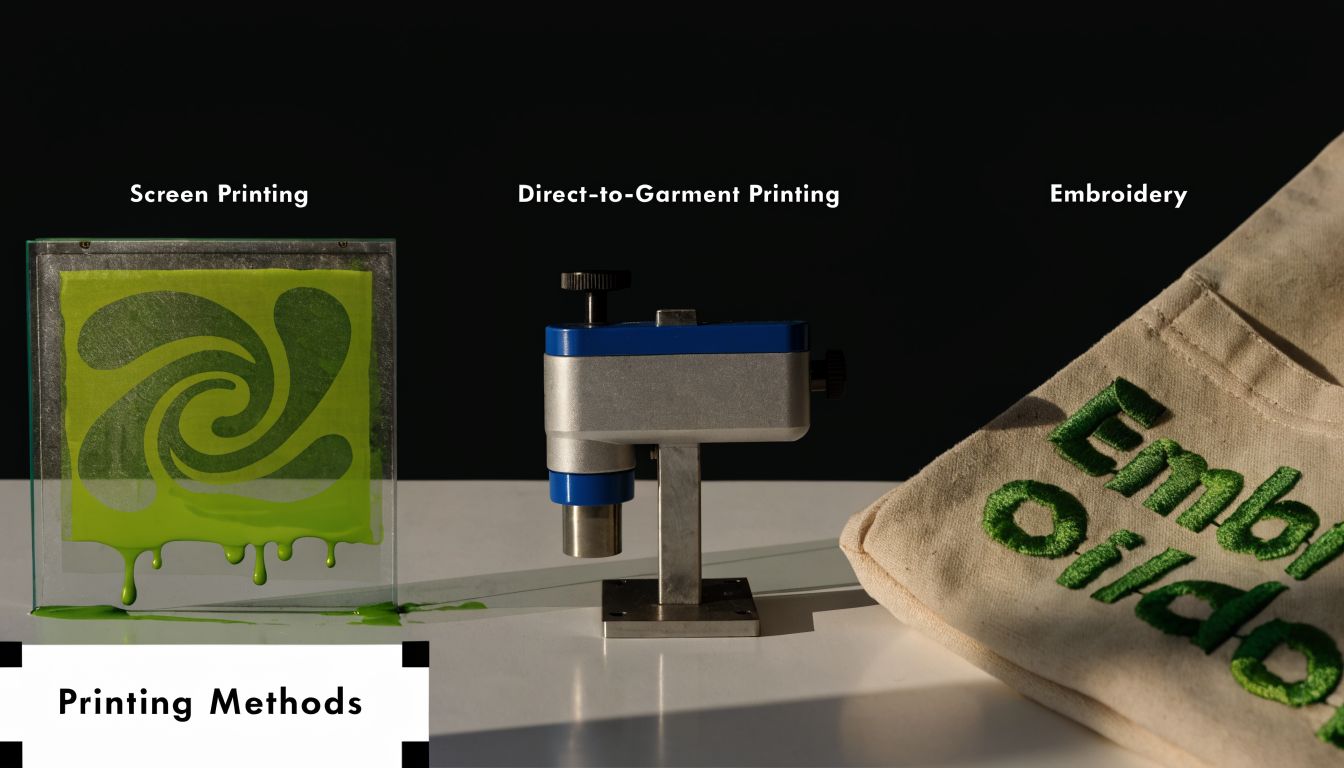
If you want a broader primer before choosing, this guide to different types of T-shirt printing gives helpful background alongside the method-by-method breakdown below.
Screen printing
Screen printing uses a mesh screen and pushes ink through selected openings onto the garment. In practical terms, it behaves a lot like professional stenciling. Each color is laid down in its own step, which is why simple logos and bold graphics are such a natural fit.
This method earns its reputation on larger runs. Once the screens are prepared, repeating the same design across many shirts is efficient and usually cost-effective. The prints also hold up well and have a strong, solid look that works nicely for event shirts, staff uniforms, and workwear.
The weak spot is setup complexity. Multi-color artwork, gradients, and photo-style images take more prep, more screens, and more time. For a small brand testing several designs in short runs, that setup can feel like paying to start the car before you even begin the trip.
DTG
Direct-to-garment, or DTG, prints straight onto the shirt using water-based ink. The closest comparison is an inkjet printer, except the surface is fabric instead of paper.
DTG does a nice job with detailed illustrations, shading, and photographic images, especially on cotton shirts. It is popular for one-offs and small orders because there are no screens to build first. If you sell art-heavy tees and want a soft print on the right garment, DTG can be a very good match.
Fabric choice matters here. DTG performs best on high-cotton garments, and it is less flexible than newer transfer methods when your order includes polyester pieces, fleece, or mixed apparel styles. That limitation is where many small businesses start looking beyond the usual screen printing versus DTG conversation.
DTF
Direct-to-film, or DTF, prints the design onto a film, adds adhesive powder, and then heat presses that print onto the garment. It solves a problem that comes up constantly for smaller brands. You want full-color artwork, but you also want to print on more than just one type of shirt.
That is why DTF has become so useful. It works well across cotton, polyester, and many blends, and it handles detailed, full-color art without the setup burden of screen printing. If your design needs to go on black tees, athletic shirts, hoodies, and tote bags in a short run, DTF often gives you the cleanest path.
For many creators, DTF fills the gap older method comparisons miss. Screen printing favors volume. DTG favors cotton. DTF sits in the middle and gives small businesses a practical way to run colorful, mixed-fabric orders without high minimums.
Sublimation
Sublimation uses heat to turn dye into gas so it bonds with the fibers. The color becomes part of the material rather than sitting as a layer on top.
That is why sublimation feels so soft. There is no raised print surface to notice with your hand. It is excellent for polyester performance wear, sports uniforms, and all-over prints where coverage and comfort matter.
Its limitation is strict. Sublimation needs polyester or a polymer-coated surface to work properly, so it is not the right answer for a standard cotton tee line.
HTV
Heat transfer vinyl, usually called HTV, starts with solid-colored vinyl that is cut into shapes and pressed onto the garment with heat. It is straightforward and dependable for the right kind of job.
Names on jerseys, player numbers, small chest logos, and simple one-color graphics are where HTV makes sense. It is often used when each item needs different wording or numbering.
HTV is less suited to complex artwork. A photo print, fine shading, or a soft retail-style fashion print usually points you toward a different method.
Embroidery
Embroidery decorates a garment with thread instead of ink. The result has texture, dimension, and a more structured look than a printed design.
That makes embroidery a strong option for polos, hats, jackets, and left-chest logos on uniforms. If you want branding that feels more like a finished garment and less like a printed graphic, embroidery often gets you there.
Thread has limits, though. Tiny details, gradients, and photo-real artwork do not translate cleanly into stitches.
UV-DTF
UV-DTF is worth separating from standard apparel methods because it serves a different purpose. It creates a durable transfer for hard surfaces such as cups, packaging, notebooks, and other branded items, rather than fabric.
For a small business, that matters more than it may seem at first. Many brands do not stop at shirts. They also need stickers on drinkware, logo marks on gift boxes, or matching branding across merchandise. UV-DTF gives creators a way to carry full-color artwork onto hard goods without ordering huge quantities or changing to a completely different decoration strategy.
It is not a clothing print method, but it belongs in the modern conversation because small brands often need both apparel and branded extras. Standard comparisons rarely mention that wider production reality.
Comparing Printing Methods Head to Head
A customer walks into the shop with one logo, one photo-heavy back graphic, and three garment types: cotton tees, polyester hoodies, and a few nylon pieces for staff. The question sounds simple. “What's the best custom clothing printing method?” The honest answer is that print methods solve different problems, and the wrong match usually costs money in reprints, stiff garments, or boxes of extras you did not need.
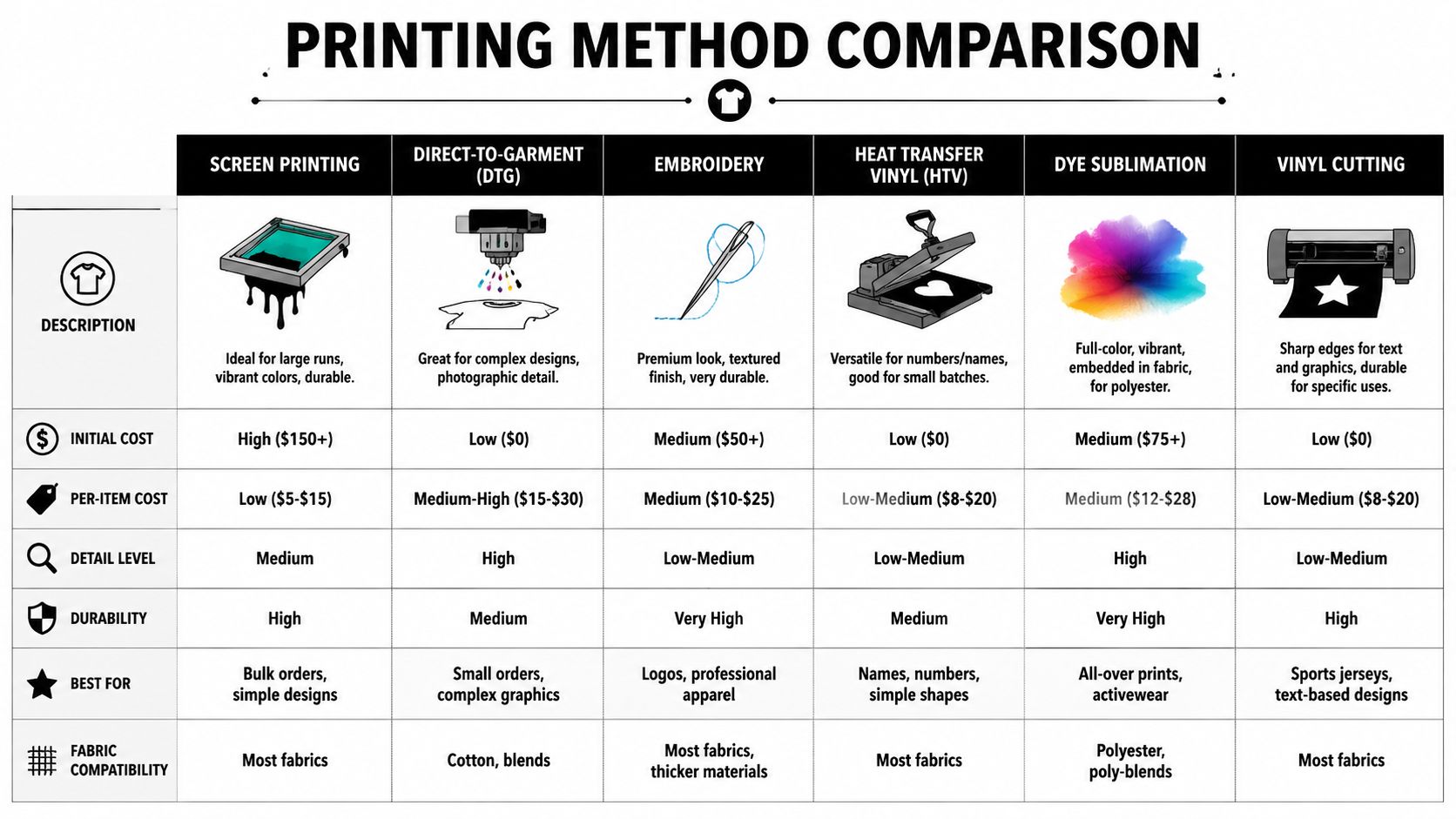
If you are weighing two digital options side by side, this comparison of DTF vs DTG printing is a useful next read.
Quick comparison table
| Method | Detail | Durability | Fabric range | Best order size | Feel on garment | Best use |
|---|---|---|---|---|---|---|
| Screen printing | Strong with bold graphics and spot colors | Strong | Broad, especially common apparel fabrics | Medium to large | Noticeable ink layer | Bulk logos, event shirts, workwear |
| DTG | Excellent for photo detail and soft gradients | Moderate with proper care | Best on high-cotton garments | One-offs to small runs | Soft on the shirt | Art-heavy cotton tees |
| DTF | Strong full-color detail | Good for everyday wear | Cotton, polyester, blends, and many mixed garments | Small to medium runs | Light transfer layer | Small brand orders across mixed fabrics |
| Sublimation | High detail on the right garment | Very strong on proper fabric | Polyester-focused | Small to medium | Very soft, dye-in-fabric feel | Sportswear, performance apparel, all-over looks |
| HTV | Best for simple shapes and text | Moderate to good | Broad | Small runs, names, numbers | Cut-material feel | Personalization and basic graphics |
| Embroidery | Limited for tiny detail or photo art | Very strong | Broad, especially structured garments | Small to medium | Raised stitched texture | Logos on polos, caps, jackets |
The real tradeoffs buyers feel
Screen printing works like stenciling. You build each color into a screen, press ink through it, and cure that ink onto the garment. That setup takes time, but once it is ready, repeating the same design over and over gets efficient. That is why screen printing stays strong for event shirts, staff uniforms, and larger runs with simpler art.
DTG works more like an inkjet printer for shirts. It handles shading, painterly artwork, and photo detail well, especially on cotton. The tradeoff is fabric preference and production speed. If your order mixes cotton tees, polyester hoodies, and oddball garments, DTG starts to feel narrow.
DTF fills a gap that older comparisons often miss. It gives small businesses a practical way to print full-color designs across different fabric types without building screens or committing to high minimums. For a creator testing new products, or a shop ordering twenty pieces spread across tees, hoodies, and bags, that flexibility matters as much as print quality.
Why prices can look backwards
The cheapest shirt on paper is not always the cheapest order in real life.
Screen printing often wins the unit price race on larger runs because setup gets spread across many pieces. On a short run, that same setup can make the order feel expensive fast. DTG and DTF flip the math. They usually cost more per piece at scale, but they avoid the front-loaded prep that pushes small orders into awkward minimums or overordering.
That overordering problem hits new brands hard. If you buy fifty extra shirts just to make a method “worth it,” those leftovers are part of your print cost too. For a broader look at how larger merch programs handle those production decisions, FLYP's enterprise merch guide is a useful reference.
Feel matters as much as the artwork
Customers do not wear a mockup. They wear the finished garment.
A soft print on the wrong fabric can still fail. A durable print can still disappoint if it feels thick and plasticky for the style you are selling. That is why I tell small business owners to judge methods with two questions: how will this look after washing, and how will it feel after eight hours on the body?
- Choose screen printing for bold graphics, repeat orders, and jobs where durability and volume matter most.
- Choose DTG for detailed cotton prints where soft hand feel and image detail matter more than fabric versatility.
- Choose DTF when you need one full-color design to work across cotton, polyester, and blends in smaller quantities.
- Choose sublimation for polyester garments where you want the print to become part of the fabric.
- Choose HTV for names, numbers, and simple one-off personalization.
- Choose embroidery when you want texture, structure, and a more premium uniform look.
If you remember one thing from this comparison, make it this: the best method is usually the one that fits your order shape, not the one with the strongest reputation. For many modern small brands, that is exactly why DTF has become such a useful middle ground between old-school bulk printing and cotton-only digital printing.
How to Choose the Right Method for Your Project
The easiest way to choose is to stop thinking in print jargon and start thinking in job types.
If you're launching a small brand
You've got several designs, not one. Some customers want tees, others want hoodies. You don't want to order a huge batch of each color and size before demand is proven.
That's where DTF stands out. It handles full-color artwork, works across multiple common fabric types, and avoids the setup burden that makes small experimental runs expensive. If you're planning larger merch operations later, FLYP's enterprise merch guide is a useful resource for thinking through production efficiency and cost control at a broader level.
If you're ordering for a big event
A fundraiser, company outing, school field day, or staff uniform order usually has one thing in common: repeat the same art many times.
Go with screen printing when the design is relatively simple and the quantity is high enough to justify setup. This is the old workhorse for a reason. It's built for repetition.
If your design looks like a photo or painting
That's a clue that DTG should be on your shortlist, especially if the shirt is high-cotton. Fine shading, texture, and lots of colors are where DTG feels most natural.
Use it when the garment itself supports the method. Don't force it onto fabric it doesn't like.
If you're printing activewear or polyester uniforms
Fabric rules the decision here. Sublimation is often the best fit for polyester-heavy sportswear because the color bonds into the material instead of sitting like a patch on top.
For personalized numbers and names, HTV can also make sense, especially if each piece needs different lettering.
If you need a polished company look
For polos, jackets, quarter-zips, and hats, embroidery usually looks more appropriate than printed ink. It signals permanence and structure.
That doesn't make it better for every job. It just makes it better for logo presentation on certain garments.
Preparing Your Artwork for a Perfect Print
Most print problems don't start on the press. They start in the file.
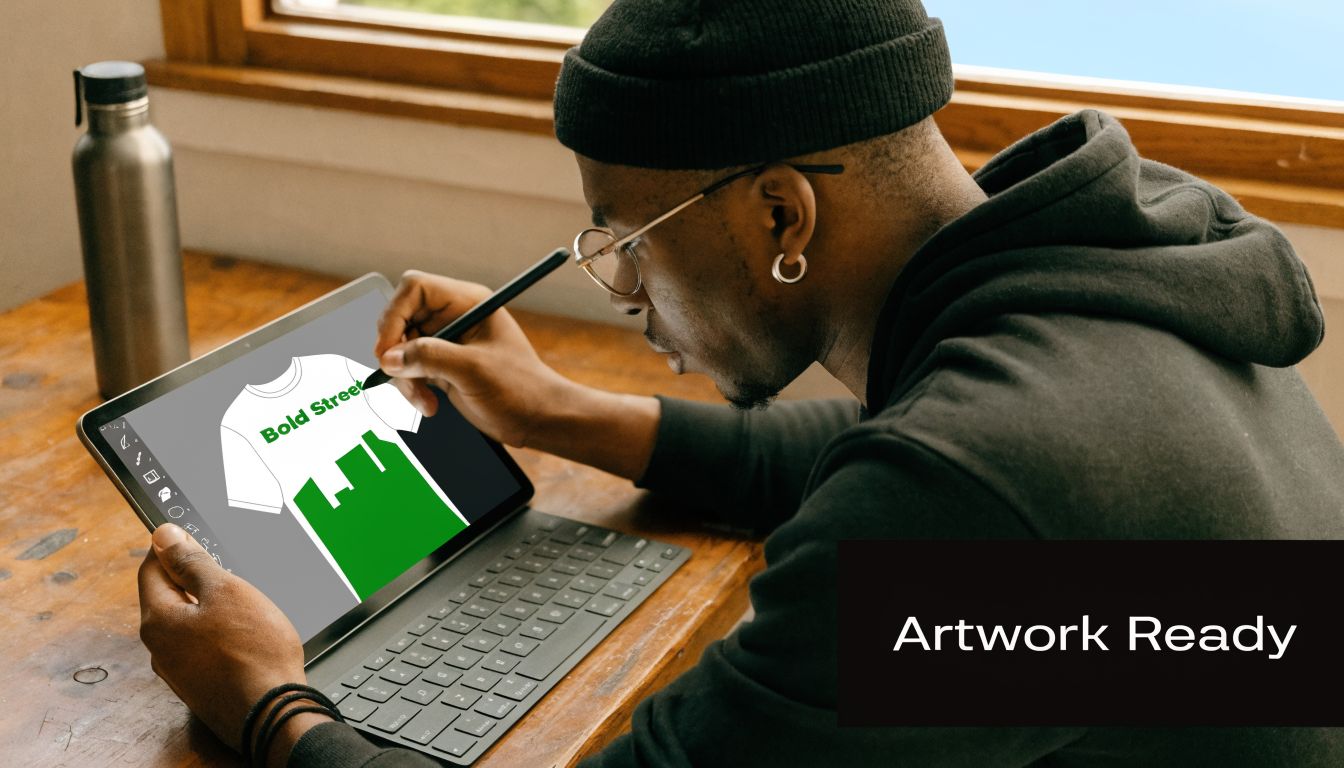
A blurry print, fuzzy edge, white box around the design, or jagged text usually points back to artwork prep. If you understand just a few file basics, you can avoid most of that.
The non-negotiable file rule
For sharp, professional results, artwork should be created or exported at 300 DPI. Lower-resolution files, such as 72 DPI web images, tend to look pixelated and blurry on fabric, and PNG is the preferred format when you need a transparent background, according to Transfer Kingdom's guide to print-ready file formats and resolution.
If the file came from a social post, website screenshot, or compressed download, it's usually not production-ready.
Raster versus vector
You don't need to be a designer to understand this. You just need to know which type of file behaves better for which job. This explanation of raster vs vector artwork is worth bookmarking if those terms still feel fuzzy.
Here's the simple version:
- Raster files are made of pixels. PNG, JPG, PSD, and TIFF live here.
- Vector files are made of scalable paths. AI and SVG are common examples.
Raster is fine for photo-based artwork if it's high resolution. Vector is better for logos, line art, and anything that may need resizing or color separation.
Send the largest clean file you have. Don't drag a tiny web image into a bigger canvas and assume it became high resolution. It didn't.
A short prepress checklist
Before you upload artwork, check these:
- Resolution first. Make sure the final print size still holds 300 DPI.
- Background cleanup. If you need no background, use a PNG with transparency.
- Text edges. Zoom in. If small letters look rough on screen, they'll look worse on fabric.
- Color intent. Neon effects and glowing screen colors often won't print exactly as they appear on a backlit monitor.
- Layout efficiency. If you're ordering transfers, gang sheets can help you fit multiple designs on one sheet and reduce waste.
Finding a Quality Printing Partner
The method matters. The vendor matters just as much.
A bad shop can make a good method look terrible. A good shop can warn you before your file, garment choice, or sizing plan turns into a costly problem.
What to check before you place the order
Start with the basics:
- Ask for a sample or test piece if the job is important.
- Request a proof so you can confirm placement, size, and artwork orientation.
- Read recent reviews carefully and look for patterns, not one-off praise or complaints.
- Clarify turnaround versus shipping because those are not the same thing.
- Test support responsiveness before you buy. If they're hard to reach now, they won't become easier later.
The broader digital printing space for custom T-shirts is projected to grow at a 12% CAGR from 2023 to 2030, driven by demand for speed and personalization, according to Printful's print-on-demand statistics roundup. In plain terms, customers expect fast answers and fast production. Shops that can't communicate clearly tend to create the most expensive mistakes.
What a good partner will tell you
A reliable print partner won't just accept any file and move on. They'll flag concerns.
They should tell you if your artwork is too small, if your thin lines may disappear, if your shirt fabric clashes with your chosen method, or if your deadline is unrealistic. That's not a sales obstacle. That's quality control.
For example, if you're ordering transfers rather than finished garments, one option in that category is Raccoon Transfers, which provides DTF and UV-DTF transfers, gang sheet ordering, artwork upload workflows, and application guidance for apparel and some hard-surface uses. That's useful when you already own a heat press or want flexibility across multiple items.
Extra tools can save money before printing starts
Small brands often waste money before a garment is even ordered. They approve weak mockups, choose the wrong placement, or commit to a look they haven't previewed properly.
If you create visual concepts for marketing or merch planning, tools that help you transform video outfits with AI can be useful for testing styling ideas before production. That kind of preview won't replace a real sample, but it can help you catch direction issues earlier.
A proof tells you whether the order is correct. A sample tells you whether the product is right.
Conclusion Making Your Final Decision
The best custom clothing printing isn't one method. It's the method that matches the job.
If you remember only three things, remember these. Screen printing is usually the smart play for larger runs with simpler art. DTG is a strong fit for detailed graphics on high-cotton garments. DTF fills a very important gap for small businesses that need full-color prints across different fabric types without the setup burden that comes with more traditional methods.
Then consider the tradeoffs carefully:
- Volume versus flexibility
- Durability versus softness
- Simple art versus complex color
- Low setup versus low bulk cost
That's how you find the best custom clothing printing for your situation. Not by chasing one universal winner, but by choosing the tool that fits the garment, the artwork, and the way you plan to sell.
If you need full-color transfers for apparel or hard surfaces, Raccoon Transfers offers DTF and UV-DTF ordering with gang sheets, custom sizing, artwork upload, and application guidance, which can be helpful for small brands, print shops, and DIY sellers managing short runs or mixed-product orders.