
Best material for shirt: Find Your Ideal Fabric for Comfort and Durability
So, what's the best material for a shirt? If you're looking for everyday comfort, a soft feel, and a perfect canvas for printing, you can't go wrong with cotton or a high-quality poly-cotton blend. They really hit that sweet spot between breathability and durability, making them the go-to choice for everything from your favorite daily tee to your brand's merchandise line.
Your Quick Guide to the Best Shirt Materials
When you're picking out a shirt, the fabric is everything. It’s the foundation. Think of it like an artist choosing a canvas—the material you start with dictates how the final piece will look, feel, and perform. Your choice impacts not just comfort and durability, but also how the shirt hangs on your body and, most importantly for us, how well a custom design prints on it.
The world of textiles is massive, but for most shirts, it really boils down to three main players: cotton, polyester, and the blends that combine them. Each one brings something different to the table, and understanding them is key.
The Core Contenders: Cotton, Polyester, and Blends
Cotton is the undisputed king of comfort. It's a natural fiber that's soft, breathable, and just feels good against the skin. This is why it’s the classic choice for casual t-shirts and everyday wear. Its popularity is no joke—cotton holds a massive 72% market share in the global shirt fabric game, with more than half of all t-shirts being made from it. You can dig into fabric market trend data to see just how dominant it is.
Polyester, on the other hand, is the workhorse. This synthetic powerhouse is known for being incredibly durable, great at wicking moisture away, and tough against wrinkles and shrinking. It's the clear winner for athletic wear, team jerseys, or any uniform that needs to take a beating and still look sharp.
Then you have the poly-cotton blends, which really do offer the best of both worlds. By mixing the softness of cotton with the strength and resilience of polyester, you get a shirt that’s comfortable, built to last, and super easy to care for. This versatility makes them a fantastic option for just about anything, from corporate polos to trendy brand merch.
Understanding these fundamental differences is the first step in choosing the perfect material. The fabric not only defines the shirt's character but also determines its ideal use and how it will perform over time.
This decision gets even more crucial when you're adding custom graphics. Modern printing methods like Direct-to-Film (DTF) work beautifully on these materials—especially cotton and its blends—producing designs that are vibrant, sharp, and durable. The right fabric ensures your print looks professional and holds up wash after wash.
Understanding the Everyday Fabric Champions
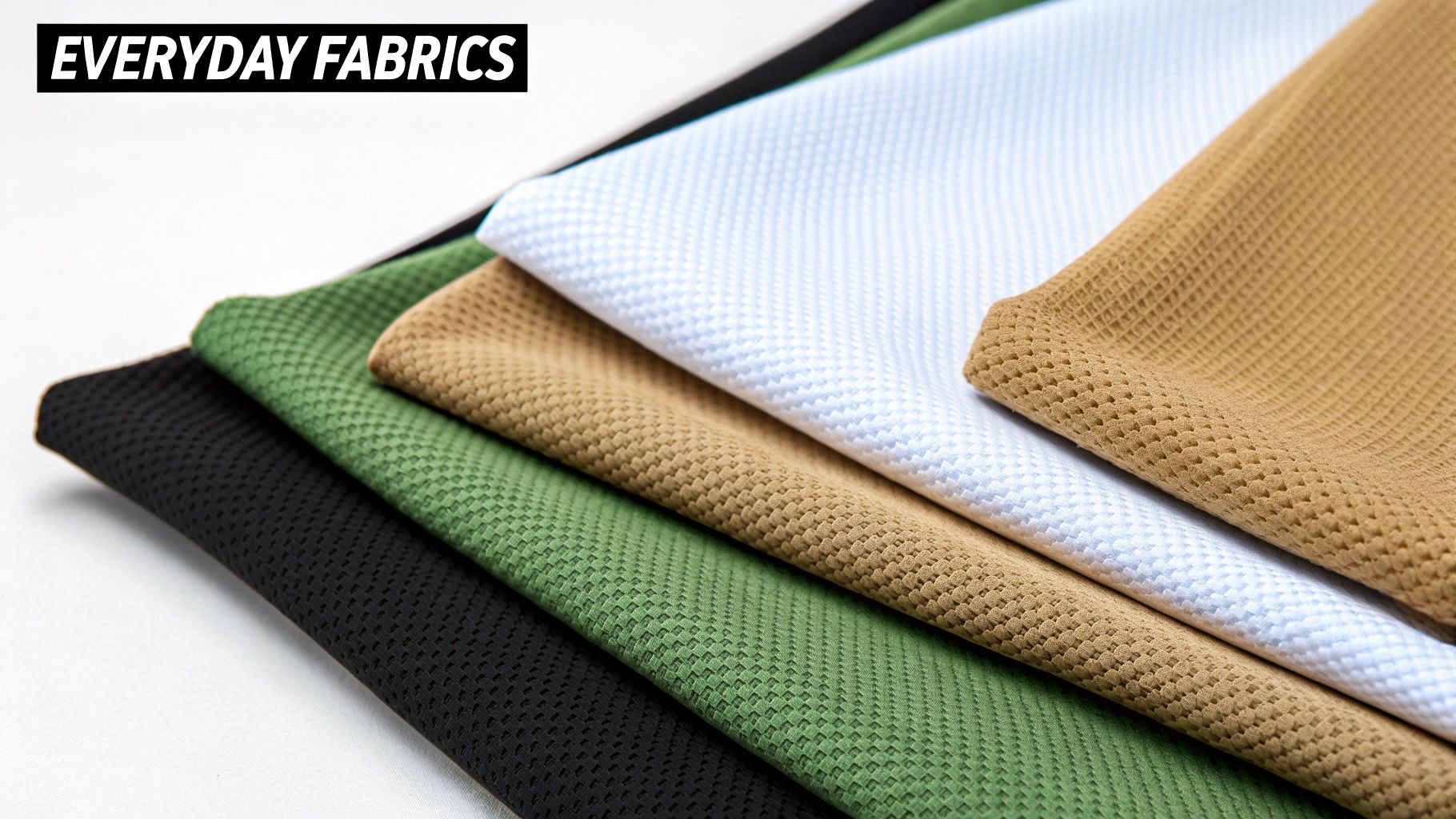
When you start digging into the best materials for shirts, you'll quickly notice a few names pop up again and again. These are the tried-and-true workhorses of the apparel industry, each with its own personality and a unique mix of comfort, performance, and price. Getting to know them is the first step to choosing the right fabric with confidence.
Cotton: The King of Comfort
Let's start with the undisputed king: cotton. Think of it as the ultimate comfort food of fabrics—it’s familiar, soft, and just feels right. As a natural fiber, its biggest win is breathability. Cotton lets air move freely, so it feels cool and gentle against your skin, which is exactly why it dominates the world of casual t-shirts.
But here’s the thing—not all cotton is the same. Standard cotton is great for your basic tee, but premium versions take the feel to a whole new level.
The secret often lies in the "staple length," which is just a fancy way of saying how long the individual cotton fibers are. Longer fibers can be spun into a yarn that's smoother, stronger, and noticeably softer.
- Pima and Supima Cotton: These are the luxury sedans of the cotton world. Their extra-long staple fibers create a fabric that's incredibly soft and durable. They hold up much better to pilling and fading, making them a go-to for high-end shirts.
- Combed Cotton: This type gets an extra step in processing where fine brushes pull out short, prickly fibers and any impurities. What's left are only the longest, straightest fibers, resulting in a material that’s a clear step up in softness and strength.
While cotton is a champion of comfort, its one downside is how it handles moisture—it's an absorber. That means it can get heavy and takes a while to dry, making it a poor choice for a sweaty gym session. For printing, though, its smooth surface is a dream canvas for DTF transfers, allowing designs to come out crisp, vibrant, and bonded for the long haul.
Polyester: The Durable Athlete
If cotton is all about comfort, polyester is built for performance. This synthetic fabric is an engineering marvel. Its fibers are hydrophobic, which means they're designed to repel water, not soak it up.
This is the magic behind polyester's famous moisture-wicking ability. When you sweat, the fabric pulls that moisture away from your skin and pushes it to the outer surface where it can evaporate in a flash. That's what keeps you feeling dry and light, whether you're mid-workout or just navigating a hot day.
Polyester’s resilience is its defining trait. It resists shrinking, stretching, and wrinkling, and it holds its color exceptionally well over time, making it the ideal choice for athletic jerseys, workwear, and any garment that needs to withstand rigorous use.
Poly-Cotton Blends: The Versatile Hybrid
So, what if you could get the best of both worlds? That’s exactly what a poly-cotton blend does. This fabric is the ultimate jack-of-all-trades, designed to give you a perfect compromise.
By weaving cotton’s natural softness and breathability together with polyester’s durability and easy-care nature, you get a shirt that’s both comfortable and tough as nails. A classic 50/50 blend feels great to the touch but fights off wrinkles and shrinking way better than 100% cotton. This hybrid approach makes poly-cotton blends an incredibly popular and budget-friendly option for everything from company uniforms to band merch, striking a fantastic balance between quality and cost.
Beyond the Basics: Specialty Fabrics for a Unique Feel
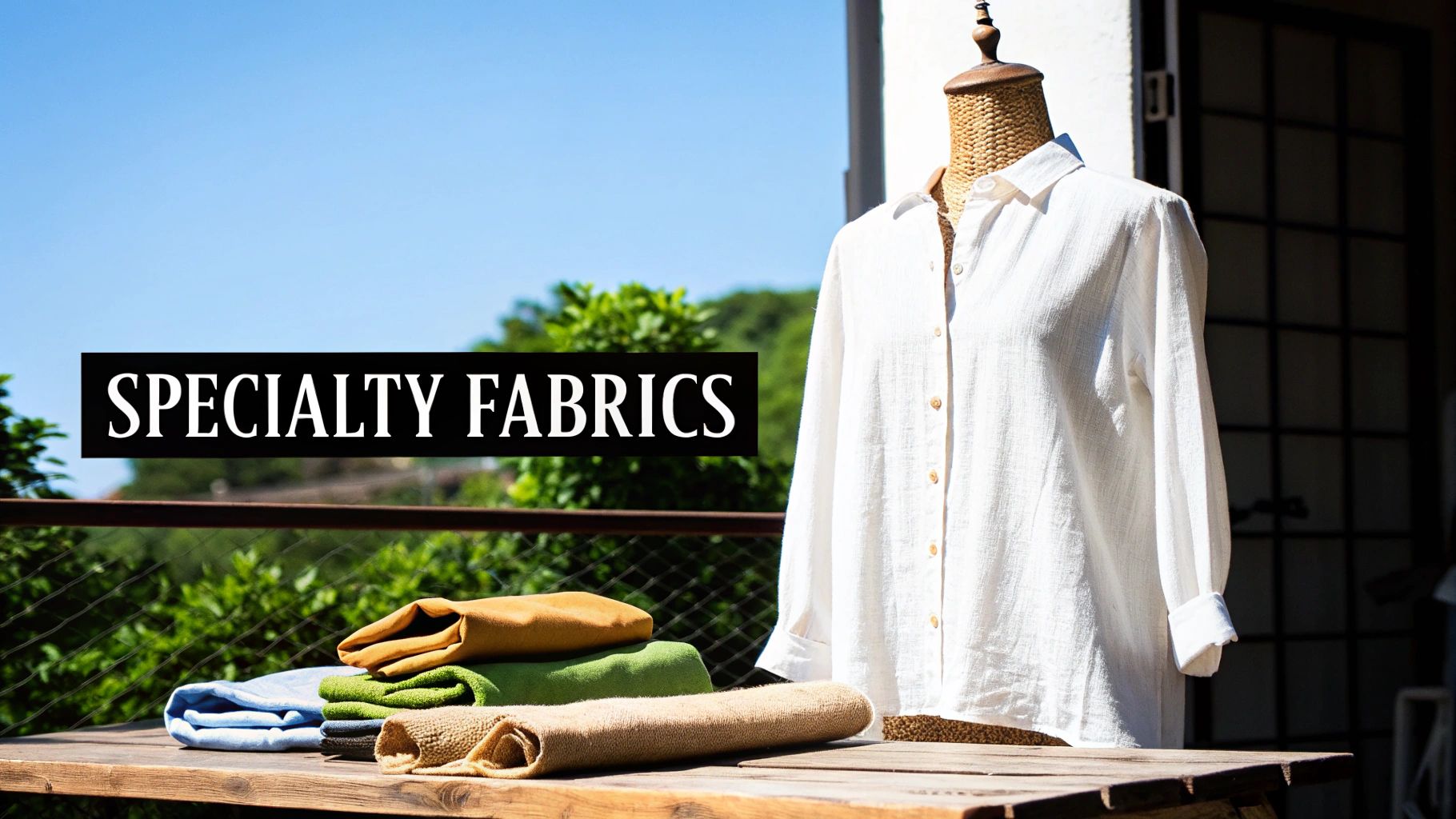
Sure, cotton and polyester get the job done, but sometimes a project needs something with a little more... personality. This is where specialty fabrics come in. They bring unique textures, drapes, and even stories to the table, turning a simple shirt into something memorable.
These materials aren't chosen just for function; they're chosen for character. Whether it's a luxurious feel, a commitment to sustainability, or top-tier performance, these fabrics help a shirt stand out from the crowd. Let's look at three options that bring something truly special to your designs.
Linen: The Epitome of Effortless Cool
Think of the perfect shirt for a hot day—lightweight, breezy, and impossibly chic. That's linen. It's made from the flax plant and is one of the oldest textiles known to humanity, famous for being both incredibly breathable and surprisingly strong. Its fibers are literally hollow, which lets air flow right through and wicks moisture away in a flash.
What really makes linen special, though, is its texture. It has that naturally rumpled look that says "relaxed elegance" better than anything else. Instead of fighting for a perfectly smooth surface, linen embraces its subtle wrinkles as part of its charm. The best part? It just gets softer and more comfortable every time you wash it, aging like a fine wine.
Linen is the go-to for high-end summer button-downs, resort wear, or any shirt that needs a breezy, lived-in vibe. It’s a fabric that’s perfect because of its natural character, not in spite of it.
Rayon: The Silky and Smooth Drape Master
If you could wear liquid, it would probably feel a lot like rayon. It's a semi-synthetic fiber made from natural sources like wood pulp, and the result is a material known for its silky feel and incredible drape. Rayon doesn't cling; it flows and hangs beautifully, moving with you.
That smooth surface is also a fantastic canvas for color. Rayon takes dye exceptionally well, producing deep, vibrant hues that are hard to get on other fabrics. This, plus its luxurious feel, makes it a favorite for fashion-forward pieces like flowy blouses and upscale casual shirts. If you need a shirt to feel expensive and look incredibly vibrant, rayon is a serious contender.
Hemp: The Sustainable Powerhouse
Hemp is quickly becoming the hero of eco-conscious fashion, and for good reason. This natural fiber is a workhorse—it’s incredibly durable and far more sustainable to produce than conventional cotton, requiring way less water and no pesticides to grow. It's a plant that actually improves the soil it grows in.
From a practical standpoint, hemp feels a lot like linen. It’s very breathable, wicks moisture, and even has natural antimicrobial properties that keep odors at bay. It starts off feeling sturdy and textured, but with every wash and wear, it softens up beautifully, becoming a rugged yet comfortable favorite. Choosing hemp sends a clear message about both durability and sustainability.
How Fabric Choice Impacts Your Custom Print Quality
Picking the right fabric for a shirt is about so much more than just how it feels. It's the single biggest factor that determines how your custom design will look, feel, and hold up over time.
Think of the fabric as the canvas for your art. A flimsy or poorly prepped canvas can make even a masterpiece look dull and faded. But the right one? It makes your design pop, keeps the colors vibrant, and ensures it lasts for years. This is especially true when you're working with modern printing methods like Direct-to-Film (DTF).
The magic of a DTF transfer lies in its adhesive layer, but its success depends entirely on how well that adhesive can grip the fabric's fibers. A shirt's texture, material, and even its weave can be the difference between a perfect bond and a print that peels off after one wash.
Why Cotton and Blends Are DTF Superstars
When it comes to DTF, natural fibers are king, and cotton sits on the throne. Its fibers are just porous and textured enough to give the transfer's adhesive something to really sink its teeth into. This creates a strong mechanical bond, resulting in a print that feels soft and flexible—almost like it’s part of the shirt itself, not a stiff sticker sitting on top.
Poly-cotton blends are just as fantastic. They give you the print-friendly surface of cotton married with the durability and wrinkle-resistance of polyester. This dream team creates an ideal surface for DTF transfers to lock onto, giving you the best of both worlds. For a closer look at these two, our guide on cotton vs. polyester has you covered.
The bottom line: The microscopic texture of cotton and blended fibers allows DTF adhesive to interlock with the fabric. This creates a bond that can handle stretching, washing, and all-around daily abuse without cracking or peeling.
Conquering Tricky Synthetics with DTF
This is where DTF technology really pulls away from the pack. For years, printing on 100% polyester was a huge headache for custom apparel decorators. Screen printing often required special inks and chemical blockers to stop the dye from bleeding through the design, and Direct-to-Garment (DTG) printing just doesn't work well—its water-based inks simply get repelled by polyester's moisture-wicking fibers.
DTF sidesteps these issues completely. Since the design is printed on a separate film and then heat-pressed onto the garment with a strong adhesive, it doesn't have to fight with the fabric. The adhesive is specifically designed to bond to those slick synthetic surfaces, allowing you to put crisp, full-color graphics on performance wear, team jerseys, and other polyester apparel that used to be off-limits.
Printing Method and Fabric Compatibility
So, how do the most popular printing methods stack up on different fabrics? This table breaks it down, and you’ll quickly see why DTF has become a go-to for its incredible versatility.
| Fabric | DTF Printing | Screen Printing | DTG Printing |
|---|---|---|---|
| 100% Cotton | Excellent | Excellent | Excellent (with pretreatment) |
| Poly-Cotton Blend | Excellent | Very Good | Good (can be inconsistent) |
| 100% Polyester | Very Good | Challenging | Not Recommended |
| Linen / Rayon | Good | Fair (texture can be an issue) | Not Recommended |
As you can see, DTF is a reliable performer across the board. By matching your fabric to your printing method from the start, you’re setting yourself up for a final product that looks and feels incredible, wash after wash.
Picking the Right Shirt for Your Project
Okay, we’ve covered the nitty-gritty of each fabric. Now for the fun part: putting that knowledge to work. Think of it this way—you wouldn't use the same canvas for a watercolor painting as you would for an oil painting. The best material for a shirt works the same way; it’s all about matching the fabric's personality to your project's goal.
Whether you're slinging merch for your band, kitting out a sports team, or dropping a new fashion line, the fabric you choose is the foundation. It dictates not just how your design looks, but how the shirt feels and performs. Let's walk through some common scenarios to find your perfect match.
For Brand Merchandise and Everyday Tees
When you're making merch or a go-to daily tee, you're juggling three things: comfort, durability, and a great printing surface. You need a shirt that people will actually love to wear, not one that gets stuffed in the back of a drawer.
This is the sweet spot for 100% cotton and well-made poly-cotton blends. Cotton is the undisputed king of soft, breathable comfort. A poly-cotton blend, on the other hand, brings a bit more toughness to the table, fighting off wrinkles and shrinkage like a champ. Both are fantastic canvases for DTF transfers, giving you sharp, vibrant prints that hold up wash after wash.
For Athletic Teams and Performance Apparel
For anything sports-related, performance is everything. You need a fabric that can handle sweat, movement, and a whole lot of punishment. The clear MVP here is 100% polyester.
Its moisture-wicking power is legendary. Instead of soaking up sweat like a sponge, polyester pulls it away from the skin, keeping athletes cool and dry when it matters most. It’s also incredibly tough, holding its shape and color through intense games and frequent washing. For jerseys, workout clothes, or any gear where function is the top priority, polyester is the only way to go.
For Premium Fashion and Eco-Conscious Brands
If your brand is all about a high-end feel or a commitment to sustainability, your fabric choice has to tell that story. For a more luxurious, fashion-forward vibe, look at materials like Pima cotton, rayon, or linen. Pima offers an incredible softness, rayon gives you that silky, elegant drape, and linen has a naturally relaxed and breathable quality that just feels expensive.
For a deeper dive into specific blanks that hit this mark, check out our guide on the best blank t-shirts for printing.
If sustainability is your North Star, organic cotton and hemp are your best friends. These fabrics not only feel great but also send a clear message about what your brand stands for.
Once your design is printed and your shirt is ready, you need to show it off. To really bring your apparel to life without a full-blown photoshoot, a product to model AI service can create stunning, realistic images of your designs on models.
To help tie all this together, this quick decision tree can point you in the right direction.
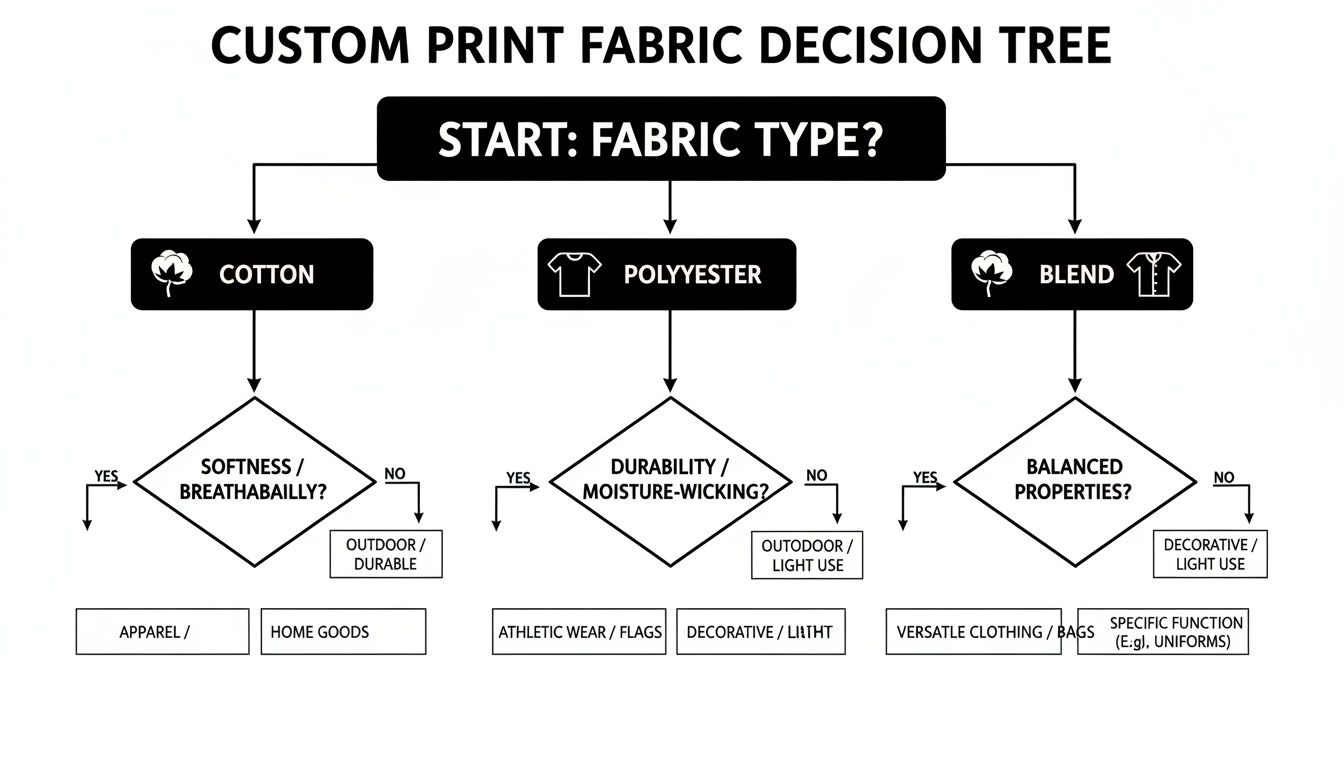
It’s a simple visual guide that traces the path from fabric to function, making it easy to see which material lines up with what you’re trying to create.
Let's Get Pressing: Nailing Your DTF Application
So you've picked the perfect shirt fabric. Now comes the fun part: turning that blank canvas into a piece of custom art that lasts. With Raccoon Transfers, this whole process takes less than a minute.
The magic happens when you get three things just right: time, temperature, and pressure. Your goal is to melt the transfer's adhesive backing just enough so it grabs onto the fabric fibers for good. This simple step is what makes the final design pop with color, feel great, and stand up to countless wash cycles.
Starting Point: Heat Press Settings for Your Fabric
Think of these as your go-to recipes for the most common shirt materials. But remember, every heat press and every garment can be a little different, so if you're ever in doubt, always run a quick test on a scrap piece or a hidden area first.
- Cotton & Cotton/Poly Blends: These are the easiest to work with. Set your press to 300-320°F (149-160°C) and press with medium pressure for 10-15 seconds. They bond beautifully.
- 100% Polyester: Polyester is sensitive to high heat. To avoid scorching or leaving that dreaded shiny press box, drop your temperature to 270-290°F (132-143°C) and shorten the press time to 8-12 seconds. You'll still get a fantastic, strong bond.
Once that first press is done, let the transfer cool down completely. Seriously, walk away for a minute. This is called a cold peel, and it's the secret to getting a sharp, clean release every single time.
After peeling the film, do a quick second press for 2-5 seconds with a parchment sheet over the design. This locks everything in and gives it a professional, matte finish. For a deeper dive, check out our complete guide to heat press settings for DTF transfers.
Common Questions We Hear About Shirt Fabrics
When you're picking out the perfect shirt, it's easy to get bogged down in the details. After helping countless people choose materials, we've found that a few questions come up time and time again. Let's clear them up so you can choose with confidence.
What Actually Makes a Shirt Durable?
You might think durability is just about the fiber itself, but it's a bit more than that. It's a team effort between the fiber's strength and the tightness of the weave.
Some natural fibers are absolute workhorses—think hemp and linen. They're known for their rugged strength. On the synthetic side, polyester is engineered to take a beating, resisting scrapes and stretching out of shape. But the weave is the other half of the story. A fabric with a tight, dense weave will always be tougher than one that's loose and airy. That's why a Pima cotton tee with a tight knit will easily outlast a cheap, loosely woven one.
How Should I Care for My Shirts to Make Them Last?
You've got the perfect shirt with a great design; now you want to keep it that way. The secret is knowing how to treat the fabric right, especially after adding a custom print.
- Cotton & Blends: Your best bet is to machine wash cold with like colors. Tumble dry on a low setting. High heat is the arch-nemesis of both the cotton fibers and your DTF transfer, causing shrinking and potential damage to the print.
- Polyester: This one's easy. Wash it cold and either tumble dry on the lowest setting or just hang it up. Polyester is a fast-drying fabric, so there's no need to blast it with heat that could melt or damage the synthetic fibers.
- Linen & Rayon: These fabrics need a gentler touch. We always recommend using the gentle cycle with cold water. Skip the dryer altogether and hang them up to air dry—it's the best way to keep their original shape and signature drape.
Is 100% Cotton Always the Best Choice?
Honestly, no. While 100% cotton is king when it comes to pure softness and that classic, breathable feel, it’s not the MVP for every single job.
The "best" material really comes down to the shirt's mission. If you’re hitting the gym, you'll be much happier with 100% polyester and its moisture-wicking magic. For a work shirt that needs to look good all day or a daily tee that can handle wrinkles, a poly-cotton blend often strikes that perfect balance between comfort and toughness.
Now that you're armed with this insider knowledge, you're all set to pick fabrics for custom apparel that not only looks fantastic but is also made to last. And when it's time to bring your designs to life, Raccoon Transfers delivers those flawless, vibrant prints that work beautifully on any material.
See the difference for yourself and explore our user-friendly DTF transfers.