
A Guide to the Highest Quality T Shirts for Printing
For years, the gold standard for a "good" t-shirt was simple: thick, heavy cotton from a brand you recognized. But in the world of modern custom apparel, especially with methods like DTF printing, that definition has completely changed. Today, the highest quality t-shirts for printing are all about creating the perfect canvas.
What does that mean? It means a shirt with a smooth, tight-knit surface that lets your designs pop and ensures they last. The blank you choose is the foundation of your final product, and getting it right is everything.
What Defines a High-Quality T-Shirt for Printing
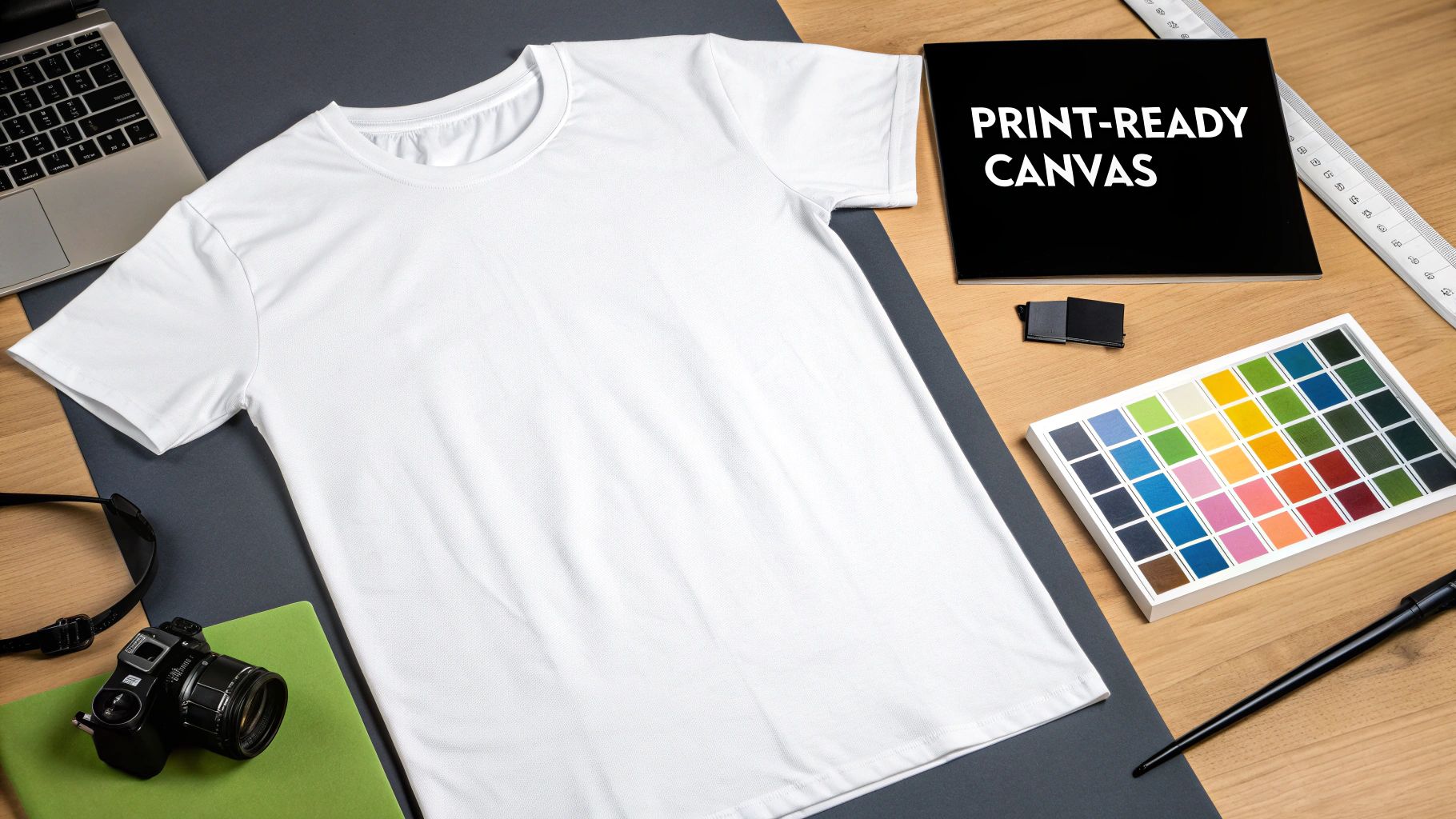
Think of a blank t-shirt like the primer you'd use before painting a wall. If you use a cheap, gritty primer, the paint will look blotchy and uneven. But a high-quality, smooth primer ensures every color is vibrant and true. The exact same logic applies to t-shirts, particularly for detailed print methods like Direct-to-Film (DTF).
The idea of "quality" has evolved. A decade ago, a heavy, almost stiff shirt felt durable and premium. Now, with small brands and creators driving the on-demand printing boom, the focus has shifted to print readiness. A shirt that feels incredibly soft might actually have too many loose fibers, which can prevent a DTF transfer from adhering properly and ruin the final look.
The New Standard of Print Readiness
This change isn't happening in a vacuum. The global custom t-shirt printing market is exploding, projected to jump from around $5.68 billion in 2025 to nearly $9.82 billion by 2030. That growth is fueled by countless e-commerce brands that depend on print clarity and consistency to build their reputation.
For them, a high-quality blank is one that performs flawlessly under a heat press. Things like stable 100% ringspun cotton or predictable cotton blends are now far more critical than just a heavy feel.
A great blank t-shirt doesn't just feel good—it performs predictably. It provides a stable, smooth surface that allows your printing technology to shine, ensuring your design looks as good on the shirt as it did on the screen.
When you're choosing blanks, it can be tough to know what to prioritize. This quick table breaks down the essentials.
Quick Guide to Print-Ready T-Shirt Qualities
This table summarizes the key factors to look for in a blank t-shirt to ensure it's a great canvas for your designs.
| Quality Factor | What to Look For | Why It Matters for Printing |
|---|---|---|
| Fabric Type | 100% ringspun cotton or high-cotton blends (e.g., 60/40) | Provides a smooth, stable surface for ink/film to adhere to. Reduces "fibrillation" (fuzzy fibers poking through the print). |
| Knit Density | A tight, dense knit with minimal gaps | Prevents ink from bleeding and ensures fine details in your design are sharp and clear. |
| Surface Smoothness | Low "fuzz" or stray fibers. Look for combed and ringspun cotton. | A smoother surface allows for a cleaner transfer and a brighter, more vibrant final print. |
| Construction | Side-seamed construction, shoulder-to-shoulder taping | Helps the shirt hold its shape after printing and washing, preventing your design from twisting or warping. |
| Pre-Treatment | Labeled as "PFP" (Prepared for Print) or pre-shrunk | Ensures consistent sizing and minimizes shrinkage that can distort the print after the first wash. |
Paying attention to these details from the start will save you a world of printing headaches later on.
Key Factors of a Print-Ready T-Shirt
To really understand what makes high-quality graphic t-shirts stand out, you need to look at fabric, printing, and construction together. For anyone running a heat press, this boils down to a few core elements:
- Fabric Composition: The fiber itself—whether it's cotton, polyester, or a blend—and how it's spun matters immensely. Ringspun cotton is smoother and stronger than standard carded open-end cotton, which directly impacts how well ink or adhesive grips the surface.
- Knit and Surface: A tight, uniform knit creates that perfect canvas we're talking about. It gives you crisp lines and brilliant colors instead of a design that looks fuzzy or muted.
- Construction Quality: Little details make a huge difference. Features like side seams and shoulder taping aren't just for comfort; they ensure the t-shirt keeps its structure, so your print doesn't end up crooked after a few washes.
Getting a handle on these components is the first step to making smarter choices. It takes you from guessing which blank might work to confidently selecting one that will make your artwork look incredible and elevate your brand with every shirt you sell.
Choosing the Right Fabric for Superior Prints
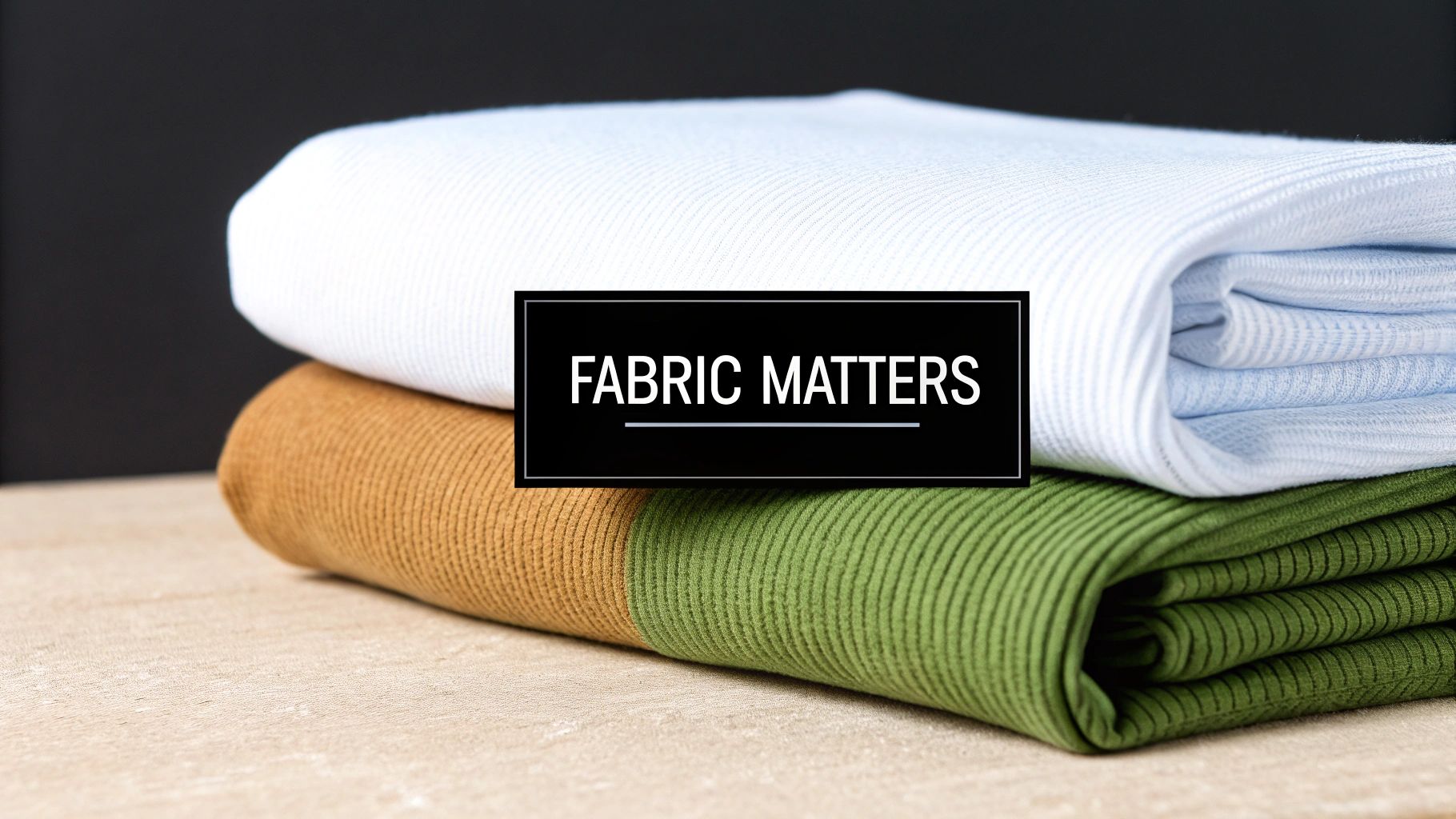
Think of your blank t-shirt as the canvas for a painting. If you start with a rough, uneven canvas, the final piece will look muddy and undefined, no matter how much skill you put into the artwork. The exact same principle applies to printing on apparel. The fabric you choose is single-handedly the most important factor in whether your design looks sharp and professional or disappointingly amateur.
To get it right, you first need to understand the core materials—cotton, polyester, and the blends that mix the two. Each one reacts to heat and DTF transfers in its own unique way, bringing a different set of advantages and challenges to the table.
The Gold Standard: 100% Ringspun Cotton
When it comes to DTF printing, 100% ringspun cotton is the undisputed champion. It’s best to picture regular cotton fibers as a bundle of frayed ropes—sure, they’re strong, but the surface is fuzzy and all over the place. The ringspun process takes those fibers and tightly twists them into a single, smooth, uniform strand.
This creates an incredibly smooth and dense surface, which is the perfect foundation for a DTF transfer to grab onto. The adhesive can bond securely and evenly across the entire design without getting snagged on loose fibers. The result is a print that truly stands out.
- Exceptional Detail: Every fine line and bit of intricate text comes out looking crisp and clear.
- Vibrant Colors: The ultra-smooth surface reflects more light, which makes your colors seriously pop.
- A Soft "Hand": The final print feels flexible and soft to the touch, not like a stiff plastic patch sitting on top of the shirt.
It's no surprise that shirts like the Bella+Canvas 3001 are so popular. They are famous for their Airlume combed and ringspun cotton, making them a go-to choice for brands who refuse to compromise on a premium feel and flawless print quality.
Versatile and Durable: Poly-Cotton Blends
Poly-cotton blends, often in a 60/40 cotton/polyester mix, offer a compelling middle ground. You get the best of both worlds: the softness and breathability of cotton combined with the durability, stretch, and moisture-wicking power of polyester.
These blends are a fantastic option for athletic wear or for anyone wanting a shirt with a slightly different texture and drape. But be warned, they introduce a critical challenge for printers: dye migration.
What is Dye Migration?
This is what happens when the dye in a polyester fabric heats up during the pressing process and "bleeds" into your transfer's ink. That crisp white print you planned for a red 50/50 blend shirt can quickly turn into a disappointing shade of pink.
While DTF is generally less prone to this issue than other print methods, it's still a real risk, especially with brightly colored blends. Always, always press a sample first. For high-risk colors like red, maroon, or navy, you should seriously consider using transfers that come with a built-in blocker layer.
The Challenge: 100% Polyester
Printing on 100% polyester garments—the kind you see everywhere in sportswear—presents the biggest hurdle. This material is extremely prone to dye migration and can be very sensitive to the high heat needed to cure DTF transfers. If your heat press is even a little too hot, you can scorch or even melt the fabric, leaving a permanent, glossy mark around your design.
For these reasons, working with 100% poly requires special low-temperature adhesives and very careful temperature control. If you have to print on polyester, your best bet is to partner with a transfer provider who has deep experience with performance wear. For a deeper dive, check out our guide on selecting the best fabric for t-shirts.
A Modern Definition of Quality Fabric
Not long ago, the definition of the "best" t-shirt was simple: a heavyweight, 100% cotton garment, typically around 180–200 g/m², was the go-to for screen printing. But the rise of digital methods like DTF has completely changed the game.
Today, the highest quality t-shirts for printing are judged on their performance across a whole spectrum of materials. We're talking cotton, polyester, and versatile blends used in everything from high fashion to high-performance sportswear. Since custom shirts are now a major branding tool, a quality blank needs a tight knit for fine detail, consistent color, and a fabric composition that won't let dyes migrate under heat.
Ultimately, choosing a fabric is about striking the right balance between the feel you want, the performance you need, and the technical demands of your printing method. When you're sourcing garments, knowing exactly how the material will behave is critical. For a complete rundown, you can review the details on what fabrics can be used with DTF transfers. Understanding these nuances is what gives you the power to select the perfect canvas for every single project.
How T-Shirt Construction Impacts Your Final Product
If the fabric is your canvas, the construction is the frame holding it all together. A poorly built t-shirt can completely ruin an amazing fabric and a perfect print. It's what separates a shirt that becomes a go-to favorite from one that twists into a weird, shapeless rag after a single wash.
You don't need to be a tailor, but knowing a few key construction terms is critical when you're sourcing high-quality t-shirts for printing. These details dictate how a shirt fits, how it feels, and—most importantly—how well your design will hold up. Getting this right means your customers get a product they love, and your brand looks as good as it should.
Side-Seamed vs. Tubular: A Tale of Two Fits
The biggest difference in how a t-shirt is built comes down to one simple question: does it have seams running up the sides? This small detail changes everything about the garment’s fit and structure.
Tubular construction is the quick and cheap method. A machine knits a literal tube of fabric, which is then lopped into torso-sized pieces. Cut a neck hole, attach some sleeves, and you’ve got a shirt.
While that's great for mass production, it comes with a major catch. Because the fabric tube is cut with no regard for the grain, it has a natural desire to twist. After a few washes, you’ll notice the side of the shirt slowly creeping toward the front, taking your perfectly centered design along for an awkward, skewed ride.
On the other hand, side-seamed construction is the mark of a well-made garment. The front, back, and sleeve pieces are all cut out individually and then sewn together. Yes, this process takes more time and uses more fabric, making these shirts a bit more expensive.
But the payoff for choosing side-seamed shirts is huge. This tailored approach allows the garment to follow the natural shape of the body, creating a much more modern and flattering fit for way more people. Most importantly, it completely prevents that dreaded twisting that plagues tubular tees, ensuring your print stays straight and true for the life of the shirt.
The Unsung Heroes of Durability
Beyond the big seams, a few smaller details signal that a blank is built to last. These features are easy to spot once you know what you’re looking for and are clear signs of a shirt that won’t fall apart on you.
One of the most important is shoulder-to-shoulder taping. This is just a thin strip of fabric sewn over the seams connecting the front and back panels at the shoulders.
- Why It Matters: This simple strip of fabric reinforces a major stress point on the garment. It keeps the shoulder and neck area from stretching out or tearing over time, helping the shirt hold its original shape through countless wears and washes.
Next, take a look at the collar. A quality t-shirt will have a rib-knit crewneck that's stretchy enough to pull over your head but snaps right back into place. Better yet, look for collars with a little spandex blended in, as this massively improves shape retention. A cheap, flimsy collar that turns into "bacon neck" after one wash is a dead giveaway of poor construction.
Understanding Fabric Weight (GSM)
Fabric weight, usually measured in grams per square meter (GSM) or ounces per square yard (oz/yd²), simply tells you how thick the material is. There’s a common myth that heavier always means better, but that's not true. The right weight depends entirely on who you're selling to and what the shirt is for.
Here’s a quick rundown of what those numbers mean:
-
Lightweight (Under 160 GSM / < 5 oz): Think soft, breathable, and drapey. These are perfect for fashion-forward brands or summer apparel. Just be aware that very light colors can sometimes be a bit sheer.
-
Midweight (160-200 GSM / 5-6 oz): This is the sweet spot for most projects. Midweight tees give you a fantastic balance of durability and comfort, making them a workhorse for everything from band merch to company staff shirts.
-
Heavyweight (Over 200 GSM / > 6 oz): These are your thick, durable, classic-fit tees. They have a more structured feel and are ideal for streetwear, skate brands, or anyone in a colder climate who wants a truly substantial shirt.
Picking the right weight is a strategic choice. A 200+ GSM heavyweight tee from a brand like Comfort Colors gives you that rugged, vintage vibe that’s perfect for bold screen prints. In contrast, a lightweight 142 GSM tee like the Bella+Canvas 3001 is killer for soft, detailed DTF prints where you want a smooth surface and a modern drape. The "best" choice is the one that perfectly matches your brand's style and what your customers expect.
Mastering Print Compatibility for Flawless DTF Results
You can have the best fabric and construction in the world, but if your t-shirt isn't a great partner for your printing method, you’re in for a headache. This is where theory crashes into reality. The best shirts for printing need a surface that’s truly optimized for Direct-to-Film (DTF) transfers to stick perfectly.
Think of it like trying to put a sticker on a rough, dusty wall—it’s just not going to hold. The same principle applies here. The microscopic bond between the DTF adhesive and the shirt's fibers is everything. If the knit is too loose or the surface is fuzzy with stray fibers, that adhesive can't get a solid grip. The result? A print that peels, cracks, or feels rough after just a couple of washes.
This decision tree helps visualize that first big choice between construction types based on what matters most to you.
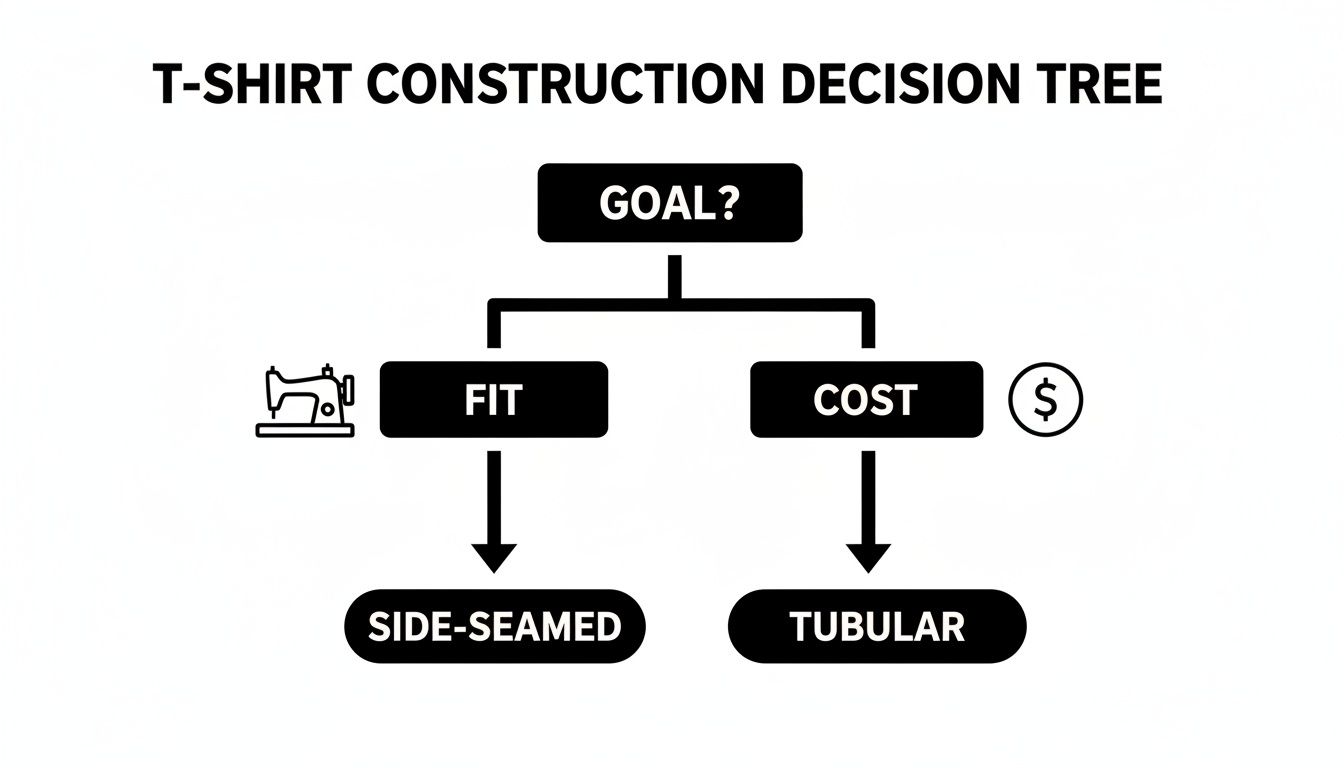
As you can see, if a modern, tailored fit is your priority, side-seamed construction is the only way to go. If keeping costs down is the main goal, tubular shirts are the go-to.
Preventing Common Print Failures
One of the most frustrating things you'll encounter is dye migration. This is when dye from the shirt itself—almost always a polyester blend—heats up and "bleeds" into your transfer ink. Suddenly, your crisp white design on a red shirt looks like a blotchy pink mess.
While 100% cotton shirts completely avoid this problem, you don't have to give up on blends. Just be smart about it. Look for shirts specifically made with "low-bleed" polyester, or use DTF transfers that come with a built-in dye-blocking layer. Pro tip: always run a quick test press on a single shirt from a new batch of colored blends before you start a full production run.
Another classic issue is the dreaded "heavy hand," where the finished design feels stiff and plastic-like. This is a dead giveaway that the transfer didn't properly meld with the fabric fibers.
The goal is always a 'soft-hand' feel where the design feels like a natural part of the fabric, not a sticker on top of it. Achieving this requires perfect synergy between the blank's surface and your heat press technique.
Getting your application settings dialed in is just as important as the shirt you choose. For a deep dive, check out our guide on the ideal heat press settings for DTF to make sure your transfers bond perfectly without scorching the garment.
How Different Fabrics Handle DTF
Not all fabrics react the same under the heat press. Understanding their unique characteristics is key to getting the results you want. This table breaks down how the most common t-shirt materials perform with DTF transfers.
Fabric Performance with DTF Transfers
| Fabric Type | Vibrancy & Detail | Durability & Washability | Ease of Application | Best For |
|---|---|---|---|---|
| 100% Ringspun Cotton | Excellent. The smooth, tight weave allows for crisp lines and incredibly vibrant colors. | Very good. When applied correctly, the transfer bonds deeply and holds up well to washing. | Easiest. A very forgiving fabric that provides a consistent surface for adhesion. | High-end apparel, detailed graphics, and retail-quality merch where feel is paramount. |
| Cotton/Poly Blends (50/50, CVC) | Good to great. Colors are bright, but the polyester content can slightly soften detail. Risk of dye migration on dark colors. | Excellent. The polyester adds strength and shrink resistance, often making the print last longer. | Moderate. Requires precise temperature control to avoid scorching the polyester and preventing dye migration. | All-purpose apparel, staff uniforms, and athletic wear where durability is a key concern. |
| Tri-Blends | Good. The mix of fibers can create a slightly heathered or muted look in the final print. Detail is generally good. | Very good. These blends are known for their softness and durability, which extends to the print. | Challenging. Requires lower heat and careful pressure to avoid damaging the delicate rayon fibers. | Fashion-forward and vintage-style apparel where an ultra-soft, drapey feel is the main goal. |
| 100% Polyester | Varies. Can be excellent on performance fabrics but is highly prone to severe dye migration without blocker transfers. | Excellent. The synthetic fibers offer fantastic washability and stretch without cracking the print. | Difficult. Requires specialized low-temp adhesives and dye-blocking transfers to prevent issues. | Performance and athletic apparel, especially for sports jerseys and activewear. |
Ultimately, the best fabric depends on your project's goals. For pure print quality and ease of use, nothing beats 100% ringspun cotton. But for applications demanding extra durability or stretch, blends offer a fantastic, resilient alternative when handled correctly.
The Role of Garment Preparation
Even though you shouldn't pre-wash brand-new shirts, a little prep work on the heat press goes a long way. Before you lay down your transfer, give the shirt a quick pre-press for 3–5 seconds.
This simple step is a non-negotiable for two critical reasons:
- It removes moisture. Fabrics are like sponges; they hold onto ambient moisture from the air, which can turn into steam under the press and ruin your adhesive's ability to cure.
- It creates a perfectly flat canvas. The pre-press smooths out any wrinkles, creases, or stray fibers, giving you a pristine surface for the transfer to bond to.
Following this simple playbook—choosing a compatible blank, preventing common failures, and prepping your garment—is how you turn a good t-shirt into an incredible finished product. It’s what ensures every print looks and feels amazing, wash after wash.
Balancing Cost, Sustainability, and Brand Value
When you're sourcing t-shirts for your brand, it's tempting to just compare price tags. But the cheapest blank is rarely the most profitable choice in the long run. The real sweet spot is found by balancing that upfront cost with durability, customer happiness, and the story your brand is trying to tell.
Think about it. A shirt that’s $1 cheaper but causes a 5% misprint rate or a flood of customer returns isn't a win. The cost of reprinting, the wasted inventory, and the damage from a few bad reviews will wipe out those initial savings in a heartbeat. A slightly more expensive blank that prints like a dream every single time is what actually protects your profit margins and your reputation.
The Growing Value of Sustainability
It’s no longer a niche market—customers today really do care where their products come from. Choosing eco-friendly materials has become a powerful way to stand out and connect with buyers on a deeper level.
When you go with sustainable options, you're not just picking a fabric; you're building a brand story. This can attract a loyal following of people who are more than willing to pay a little extra for a product that aligns with their values.
- Organic Cotton: It's grown without all the nasty synthetic pesticides, feels incredibly soft, and gives you a great story to tell.
- Recycled Blends: These are often made from post-consumer plastics, showing your customers you’re serious about cutting down on waste.
Using materials like these sends a clear signal: your brand is modern, thoughtful, and cares about its impact. That alone can seriously boost how people perceive your products.
Aligning Quality with Market Trends
What we consider a "high-quality" t-shirt is also changing with the times. Today, it’s all about how well a blank fits into a modern, on-demand, and digitally-driven workflow. The custom printing market is booming, projected to jump from $30.93 billion in 2024 to $33.84 billion in 2025, and t-shirts are leading that charge.
More specifically, digital printing methods are set to grow by 12.5% each year through 2030, leaving older techniques in the dust. For those of us using DTF, this shift puts a premium on shirts that can handle precise heat and hold their shape. It’s a direct link between quality, durability, and modern printing. If you want to dive deeper, you can explore more on these market dynamics to see where the industry is headed.
A higher-cost blank isn’t an expense; it’s an investment in brand equity. It tells your customers that you care about quality from the foundational fabric to the final print, justifying a premium price for the finished product.
Ultimately, picking the right blank is a strategic move. It's a classic trade-off between saving a few bucks now versus building long-term brand value. By choosing shirts that deliver on printability, durability, and sustainability, you’re not just selling a piece of clothing—you’re building a brand people will trust and come back to for years.
A Practical Checklist for Sourcing and Testing T-Shirts
Theory is great, but nothing beats hands-on testing. If you want to be confident about your blanks, you need a system. This checklist will help you stop guessing and start making smart choices based on real-world results.
Think of this as your final quality control step before you pull the trigger on a big order. It’s how you guarantee the shirts you invest in will feel great, look professional, and hold up for your customers.
Step 1: Specify Your Ideal Blank
When you're reaching out to suppliers, don't just ask for a "good shirt." Get specific. Using the right language shows you know your stuff and helps you get much better samples, much faster.
Your spec sheet should clearly lay out what you need:
- Fabric Composition: Be precise. Say "100% Airlume combed and ringspun cotton" or "a 60/40 cotton/poly CVC blend," not just "cotton" or "a blend."
- Fabric Weight: Give them a target range. For example, "Midweight, between 160-180 GSM" or "Lightweight, around 4.2 oz."
- Construction: This is non-negotiable. Always ask for side-seamed construction for a better fit. You should also request key features like shoulder-to-shoulder taping and a durable rib-knit collar.
- Fit: Describe the shape you're going for, like a "modern retail fit" or a more traditional "relaxed classic fit."
Providing this level of detail tells suppliers you're a serious buyer and immediately weeds out any blanks that won't make the cut.
Step 2: Put Your Samples to the Test
Once the samples land on your doorstep, it's time to see what they're really made of. This simple three-part protocol is my go-to for revealing a shirt's true quality.
1. The Sample Press Test
This is your first reality check. Grab one of your standard DTF designs and press it onto the sample, paying close attention to how it behaves.
Did the transfer go on smoothly? Did you see any dye migration, especially on the blended fabrics? How does the print feel—is it soft and flexible, or stiff? A high-quality blank makes the whole pressing process feel easy.
2. The Wash and Durability Test
A print that looks amazing right off the press is only half the story. The real test is how it survives the laundry.
- Wash the shirt inside out on a warm cycle.
- Tumble dry it on medium heat.
- Now for the inspection. Look for any signs of cracking, peeling, or fading in the print. Critically, measure the shirt to check for shrinkage—anything more than 5% is a red flag.
3. The Wear and Comfort Test
This is the most important test of all. How does the shirt actually feel when someone wears it all day? Give the sample to a friend or wear it yourself for a full day. Pay attention to its comfort, how well it breathes, and whether the fit starts to sag after a few hours. A great shirt has to feel as good as it looks.
For more ideas on what makes a fantastic final product, our guide on the best blank t-shirts for printing has a curated list of top performers we've tested. By following this checklist, you'll be able to choose your blanks with total confidence, knowing you’ve found a shirt that will truly elevate your brand.
Your T-Shirt Printing Questions, Answered
Jumping into the world of custom apparel can feel like a lot to learn. You've got questions, and we've got answers. Let's tackle some of the most common things people ask so you can move forward with confidence.
What's the One Thing I Absolutely Must Get Right for DTF Printing?
If you focus on just one thing, make it surface smoothness. It’s everything.
Imagine trying to put a sticker on a shaggy rug versus a pane of glass. That’s the difference we're talking about. For DTF transfers, 100% ringspun cotton is the gold standard because its fibers are tightly woven into a smooth, even surface. This gives the transfer's adhesive a perfect canvas to grab onto, resulting in prints that are crisp, vibrant, and incredibly detailed. A fuzzy, loose-knit fabric will fight the adhesive, leaving you with a print that looks cheap and won't last.
Does a Heavier T-Shirt Mean It's Better Quality?
Not always. It's a common misconception that a heavy shirt (think 6 oz / 200+ GSM) automatically equals high quality. While it definitely feels substantial, true print quality comes from the fabric’s finish, not its weight.
A lightweight 4.5 oz ringspun cotton tee will give you a far superior print compared to a thick, boxy shirt made from rough, carded open-end cotton. When your design has fine lines or small details, the smoothness of the fiber and the tightness of the knit matter way more than the shirt's thickness. You're looking for a great canvas, and sometimes the lighter, softer shirt provides just that.
How Do I Stop My Prints from Cracking in the Wash?
Cracking prints are a nightmare, but you can prevent them by nailing two things: choosing the right shirt and perfecting your application. Start with a high-quality blank that has minimal shrinkage, like a ringspun cotton or a premium CVC blend.
A quality blank is only half the equation. Perfect application is the other. Meticulously following the recommended heat press settings for temperature, time, and pressure ensures the adhesive cures properly and forms a durable, lasting bond with the fabric fibers.
When you bring the heat press down, don't guess. Stick to the recommended settings for time, temperature, and pressure. Too much heat can scorch the fabric and weaken the adhesive, while too little pressure creates a weak bond that's just waiting to crack and peel.
Should I Pre-Wash My Blank T-Shirts Before I Print on Them?
Nope! In fact, please don’t. Manufacturers design blank apparel to be "print-ready" right out of the box, with a surface that’s clean and perfectly prepped for decoration.
Washing a new shirt can cause all sorts of problems. It can introduce lint, leave behind fabric softener residue, or just generally rough up the surface—all of which can prevent the DTF adhesive from bonding properly. If you’re worried about shrinkage, a much better strategy is to run a wash test on a single sample shirt from your batch instead of washing the whole lot.
Ready to create stunning, durable custom apparel? With Raccoon Transfers, you get vibrant, easy-to-apply DTF transfers shipped the next day. Build your custom gang sheet today!