
T Shirt Materials: A Practical Guide to t shirt materials for Comfort and Print
What makes the "best" t-shirt material? Honestly, it all comes down to what you need it to do. For most of us, nothing beats the classic comfort of 100% cotton for everyday wear. But if you're hitting the gym, polyester is the clear winner for its durability and moisture-wicking magic.
Why Your T Shirt Material Matters
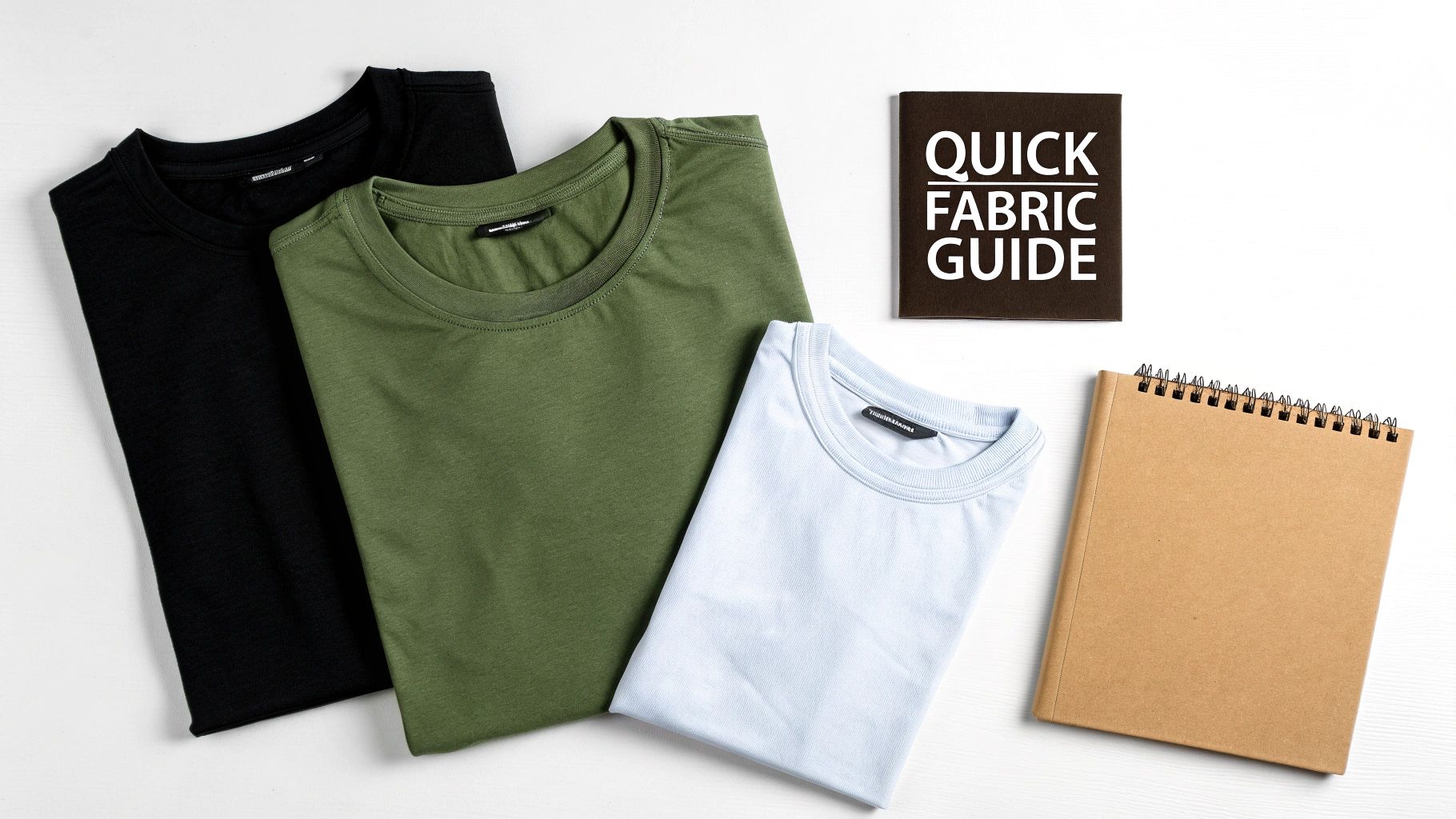
Choosing a t-shirt fabric can seem like a small detail, but it’s one of the most important decisions you’ll make. The right material impacts everything—from how the shirt feels against your skin to how your custom design holds up after the tenth wash.
Think about it like this: you wouldn't wear a heavy wool sweater for a summer run. That same practical thinking applies here. The fabric you pick is a foundation that determines:
- Comfort and Feel: Is it soft and breathable, or structured and heavy?
- Performance: Can it wick away sweat, stretch with movement, and fight off wrinkles?
- Print Quality: How well will it take a design? Will the colors pop or look faded?
- Durability: How will it stand up to wear and tear? Will it keep its shape and color?
To make this simple, the table below gives you a quick rundown of the most common fabrics. Think of it as a cheat sheet comparing the heavy hitters—cotton, polyester, and blends—at a glance.
Of course, the world of textiles is vast. Broadening your knowledge by understanding various garment fabrics like wool, linen, and cotton blends can give you an even better sense of what's possible. But for now, this table is your starting point.
And if you're specifically looking for shirts that print beautifully, don't miss our deep dive into the best blank t-shirts for printing.
Quick Comparison of T Shirt Fabrics
This summary breaks down the main characteristics of popular t-shirt materials to help you make a fast, informed choice.
| Fabric Type | Best For | Feel | Printing Suitability (DTF/Screen) | Durability |
|---|---|---|---|---|
| 100% Cotton | Everyday wear, casual apparel, high-detail prints | Soft, breathable, natural | Excellent | Good |
| 100% Polyester | Athletic wear, team uniforms, sublimation | Smooth, lightweight, moisture-wicking | Excellent (especially DTF/Sublimation) | Excellent |
| Cotton/Poly Blend | Versatile use, vintage look, budget-friendly | Soft yet durable, less shrinkage | Very Good | Very Good |
| Tri-Blend | Premium fashion, ultimate softness, retail | Exceptionally soft, lightweight, drapey | Good (creates a heathered/vintage look) | Good |
Now that you have the big picture, let's get into the specifics of each fabric type.
The Classic Choice: Understanding Cotton T-Shirts
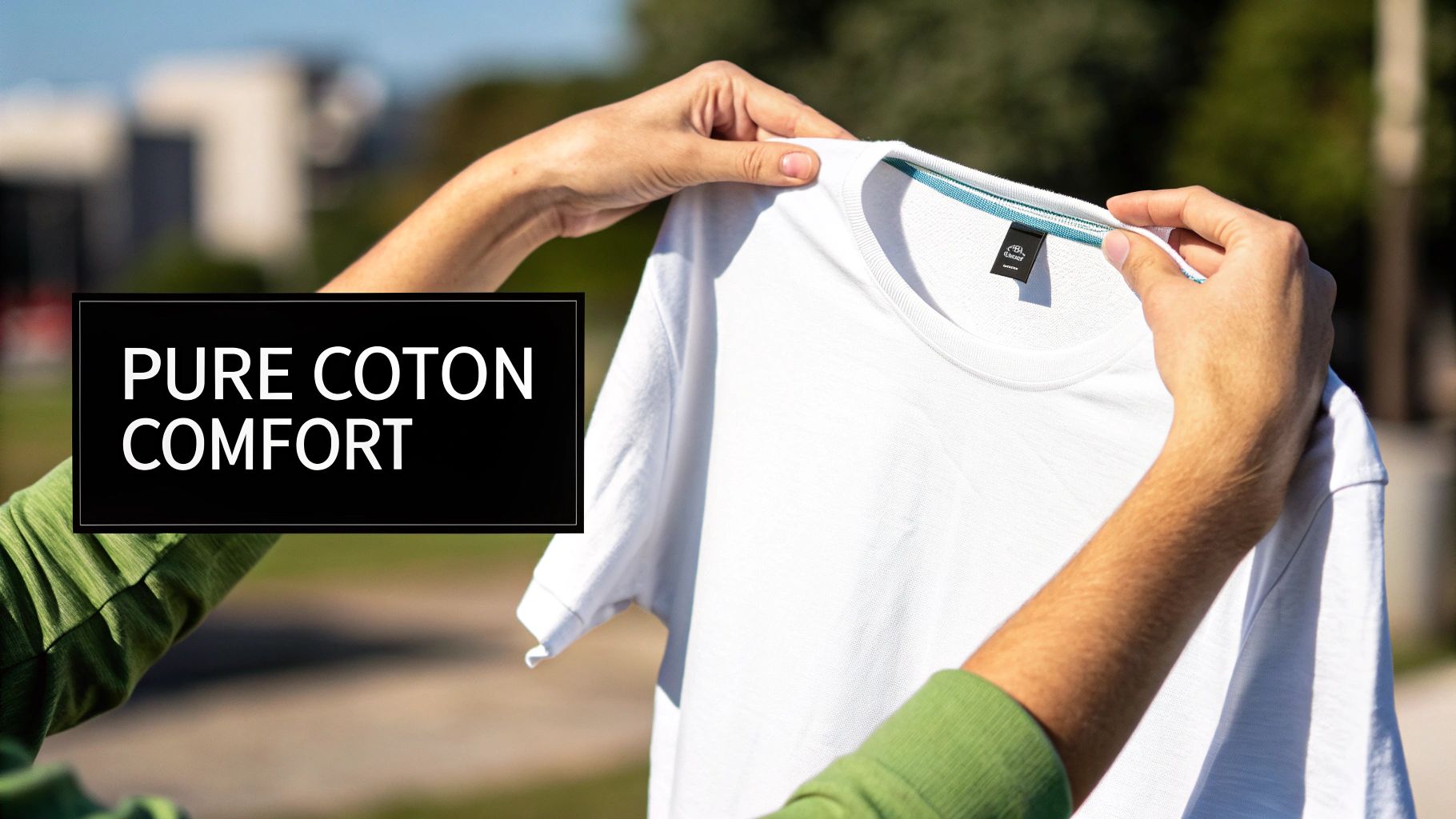
When you think of the perfect t-shirt, what comes to mind? For most of us, it’s a classic cotton tee. It’s the undisputed champion of the t-shirt world for a reason—its dominance isn't just about tradition. It's about a killer combination of comfort, reliability, and sheer versatility.
At its core, cotton is a natural fiber from a plant, and that’s the secret to its magic. Those plant-based fibers are naturally soft, breathable, and great at absorbing moisture. This means a cotton shirt feels amazing against your skin and helps you stay cool by letting air flow freely. It's the go-to for a reason.
Historically, cotton has always been the king of t-shirt manufacturing, consistently owning the largest slice of the global market. That long-standing popularity tells you everything you need to know: people love natural, comfortable fabrics they can depend on day in and day out.
Decoding the Different Grades of Cotton
Here's something you learn quickly in the apparel business: not all cotton is created equal. The feel, durability, and price of a tee all come down to how the raw fibers are spun into yarn. Think of it like buying bedsheets—you can immediately feel the difference between standard and high-thread-count sheets. The same idea applies here.
Your most common, budget-friendly option is carded open-end cotton. This is the workhorse fabric you'll find in most basic, promotional-style tees. It's durable, for sure, but the yarn-making process can leave the fibers a bit rough, resulting in a heavier, sometimes scratchy feel. A perfect example is the classic Gildan Heavy Cotton tee—you can read our full breakdown of it here: https://raccoontransfers.com/blogs/guides/gildan-t-shirt-heavy-cotton.
Ready for a big step up in softness? Meet ringspun cotton. This process involves twisting and thinning the cotton fibers over and over, which creates a much finer, smoother, and stronger yarn. The finished t-shirt feels incredibly soft and much lighter than its carded counterpart, giving you a more premium feel without a huge jump in price.
Key Takeaway: Ringspun cotton is a game-changer for softness. The spinning process aligns the fibers to create a smoother, stronger yarn, turning a basic tee into something you actually want to wear all day.
If you're after the absolute best, combed and ringspun cotton is the top of the line. This material gets an extra step where fine brushes, or "combs," pull out any short fibers and impurities before spinning. This leaves only the longest, straightest fibers, producing an exceptionally smooth, soft, and durable fabric that’s the gold standard for high-end apparel.
Premium and Sustainable Cotton Options
Beyond the spinning methods, some types of cotton are famous for their exceptional qualities, while others are all about environmental responsibility.
-
Pima and Supima Cotton: Think of these as the luxury sedans of the cotton world. They have extra-long staple (EHS) fibers, making the resulting fabric incredibly soft, resistant to pilling and tearing, and unbelievably durable. Supima® is simply a trademarked brand of American-grown Pima cotton that guarantees a certain level of quality.
-
Organic Cotton: For any brand or designer focused on sustainability, organic cotton is a no-brainer. It's grown without synthetic pesticides, herbicides, or GMOs. This approach is better for the planet, improves soil health, and creates safer working conditions for farmers.
Choosing organic cotton isn't just about getting a soft, hypoallergenic shirt; it's a statement about your brand's values. To get a better sense of how different natural fibers stack up, especially for sensitive products like baby clothes, it's interesting to see how organic cotton compares with bamboo.
Ultimately, from a basic promo tee to a high-end fashion piece, there’s a perfect cotton out there for every project.
Diving into Performance and Synthetic Fabrics
While cotton is the undisputed king of casual comfort, the game changes entirely when performance is the priority. For anything athletic, heavy-duty, or specialized, synthetic fabrics step into the spotlight. These aren't your typical plant-based fibers; they're engineered from the ground up to do things natural fibers simply can't.
Instead of soaking up moisture like a sponge, these materials are designed to repel it, move with your body, and survive countless punishing wash cycles. Think of them less as a cozy blanket and more as a high-tech second skin, built for action.
Polyester: The Workhorse of Performance Wear
If cotton is all about comfort, polyester is all about performance. It's a synthetic, plastic-based fiber that has become the foundation of virtually all modern activewear. Its secret weapon is that it’s hydrophobic—a fancy way of saying it hates water.
This one property is a total game-changer. When you sweat in a polyester shirt, the moisture isn’t absorbed by the fabric. Instead, it gets pulled away from your skin and pushed to the surface of the shirt, where it can evaporate in a flash. That’s the magic behind moisture-wicking tech, and it’s what keeps you dry and comfortable when you’re pushing your limits.
But polyester brings more to the table than just moisture management. It's also a beast when it comes to:
- Incredible Durability: These synthetic fibers are tough as nails, resisting stretching, shrinking, and general wear and tear far better than cotton ever could.
- Wrinkle Resistance: Polyester holds its shape incredibly well, meaning it looks fresh right out of the dryer with zero effort.
- Color Fastness: Dyes bond to polyester fibers for life. Your vibrant designs will stay vibrant, wash after wash.
It's no surprise that polyester is the most-used fiber in the world, making up roughly 59% of all fiber production. Its dominance in the t-shirt world reflects just how versatile and reliable it is. If you're curious about the numbers, you can explore more t-shirt market trends at bestcolorfulsocks.com.
Rayon: The Silky Smooth Imposter
Not every synthetic is built for the gym. Rayon is a really interesting fiber that blurs the line between natural and man-made, which is why it's often called a semi-synthetic. It actually starts as natural cellulose—usually from wood pulp—but then undergoes a chemical process that transforms it into a silky, smooth fiber.
Rayon is all about adding a touch of luxury. While it can't wick moisture like polyester, its main draw is its incredible feel and drape.
Rayon’s signature quality is its fluid, elegant drape. It hangs beautifully on the body, creating a flattering, non-clinging silhouette that feels incredibly light and airy.
This silky texture makes it a go-to for fashion tees and, most famously, as a key ingredient in tri-blend fabrics. It’s the rayon that gives those shirts their signature softness and flowy feel, making them feel so ridiculously comfortable. The tradeoff? Rayon is a bit more delicate than cotton or poly and usually needs a little extra care in the wash to keep its shape and texture.
Spandex: The Secret to Stretch
Last but not least, we have spandex, which you might also know by its brand name, Lycra, or its generic name, elastane. This synthetic fiber is the unsung hero of countless garments. You’ll rarely see a shirt made of 100% spandex, but it's the secret ingredient that provides stretch and flexibility.
Think of spandex as the rubber band of the fabric world. It can be stretched over 500% of its size without breaking and will snap right back to its original shape.
Just a tiny bit of spandex (usually 2-10%) blended with other t shirt materials like cotton or polyester completely changes how the fabric behaves.
What a Little Spandex Does for a Shirt:
- Freedom of Movement: It allows the garment to move with you, not against you, making it perfect for everything from a yoga class to just reaching for something on the top shelf.
- Shape Retention: It helps a tee keep its form, preventing that saggy, stretched-out look over time. This is especially important for more fitted styles.
- A Better Fit: That bit of stretch helps the shirt conform to your body, creating a more flattering silhouette that works for different body types.
By blending these powerful synthetics—polyester for durability, rayon for softness, and spandex for stretch—fabric engineers can create textiles that truly offer the best of all worlds.
Sometimes, you need a fabric that does more than what a single fiber can offer. While 100% cotton is king for comfort and polyester is a beast when it comes to durability, what if you could combine them? That's the simple genius behind blended fabrics—they're engineered to take the best qualities of each fiber and leave the downsides behind.
Think of it like making a great cocktail. Sure, you can have whiskey on its own, but when you mix it with the right ingredients, you create something much more complex and enjoyable. Fabric blends follow the same principle, resulting in textiles that are softer, stronger, and more versatile than the sum of their parts.
This synergy opens up a whole new world of feel and function. Adding a little polyester to cotton can stop it from shrinking and wrinkling so much. A touch of rayon can give a standard tee a surprisingly luxurious, silky drape. It's all about finding that perfect combination.
The Classic 50/50 Cotton and Polyester Blend
The undisputed champion of blends is the classic 50/50 cotton/polyester mix. It's a true workhorse in the apparel world for a reason. It strikes a perfect balance between the soft, breathable feel of cotton and the tough, easy-care nature of polyester.
Here’s a look at what each fiber brings to the table:
- Cotton (50%): This is where the comfort comes from. It provides that classic softness and natural breathability that just feels right against your skin.
- Polyester (50%): This is the functional powerhouse. It adds serious strength, resists wrinkles, and holds color incredibly well. It also helps the shirt dry way faster and keeps it from shrinking in the wash, which is a common headache with pure cotton.
What you get is a t-shirt that's comfortable enough to live in but tough enough to survive countless washes without losing its shape or color. This durable, low-maintenance fabric is a go-to for everything from vintage-inspired band tees to daily work uniforms, hitting a sweet spot between performance and price.
A 50/50 blend is the ultimate compromise in t-shirt fabrics. You get the comfort you love from cotton without sacrificing the resilience and easy care that polyester provides, making it an incredibly versatile and reliable choice.
You'll often notice a "heathered" look in these blends. Those little flecks of gray or white mixed into the color come from the way the different fibers take the dye. This gives the shirt a slightly vintage, textured vibe that a lot of people are after.
The Fan-Favorite Tri-Blend
If the 50/50 is the dependable daily driver, the tri-blend is the luxury sports car. This is a premium fabric that takes things to the next level by combining three materials, typically 50% polyester, 25% combed and ringspun cotton, and 25% rayon. Each one has a specific job to do.
The magic of a tri-blend is in how these three work together:
- Polyester for Strength: Just like in the 50/50, polyester is the backbone. It gives the shirt its structure, durability, and keeps it from stretching out of shape.
- Cotton for Comfort: This isn't just any cotton; it's high-quality combed and ringspun cotton. It brings that signature softness and familiar, breathable feel.
- Rayon for Drape: This is the game-changer. Rayon adds a silky smoothness and an amazing, fluid drape that lets the shirt hang perfectly. It's what makes a tri-blend feel so light and flattering.
This trio creates a t-shirt that is ridiculously soft, unbelievably lightweight, and has just the right amount of stretch to move with you. Honestly, it feels like that perfectly worn-in vintage tee you've had for years, right from the first time you put it on. It’s no wonder tri-blends are a top pick for fashion-forward brands and anyone wanting to offer a truly premium garment.
Matching T-Shirt Materials to Printing Methods
Picking the right t-shirt fabric is only half the job. The real magic happens when you pair that fabric with the perfect printing method, turning a great shirt into an unforgettable one. This is where your fabric knowledge pays off, because getting it right means your design will be crisp, vibrant, and durable. Get it wrong, and you're looking at a faded, disappointing mess.
Think of it like painting: some paints just don't stick to certain canvases. The same is true for ink and fabric. Some fibers are naturally thirsty and grab onto ink, while others are slick and repel it. Understanding this basic relationship is the key to avoiding costly mistakes and producing pro-level quality every time.
The Best Fabrics For Screen Printing and DTG
When it comes to old-school screen printing or modern Direct-to-Garment (DTG), one fabric is king: 100% cotton. The natural, absorbent fibers in cotton are like a perfect sponge for the water-based inks used in these methods. They lock in the color, letting you create incredibly sharp, detailed designs.
- Why it works: Cotton fibers soak the ink right up, creating a deep bond that keeps colors rich and true.
- Best choice: For an even better result, look for combed and ringspun cotton. This gives you the smoothest possible surface, which helps prevent "fibrillation"—those annoying little fibers that can poke through the ink—and keeps your print looking clean.
While pure cotton is the ideal, high-cotton blends (like an 80/20 cotton/poly mix) can also work quite well. Just be aware that as you add more polyester, the vibrancy of DTG prints can start to fade because those synthetic fibers just don't absorb the ink in the same way. For a deeper dive into how these two fabrics stack up, our guide on cotton vs. polyester is a great resource.
The Only Choice For Sublimation Printing
In the world of sublimation printing, there's one non-negotiable rule: you must use 100% polyester. This isn't just a suggestion; it's a matter of chemistry. Sublimation uses heat to turn solid dye into a gas. This gas then penetrates the synthetic polymer fibers of the polyester, bonding with them permanently.
Sublimation isn't just a layer of ink on top of the fabric—it's a molecular bond. The dye becomes part of the fabric itself. The result is a design with zero feel, amazing vibrancy, and incredible durability that will never crack, peel, or fade.
Trying to sublimate on cotton is a recipe for failure. Cotton has no polymer fibers for the dye to bond with, so the design will simply wash out, leaving you with a faint, ghostly image. This method is strictly for synthetics, making polyester the undisputed champ for all-over prints and performance apparel.
This diagram really helps visualize how combining fibers can give you the best of both worlds—a shirt that feels great and holds up over time.
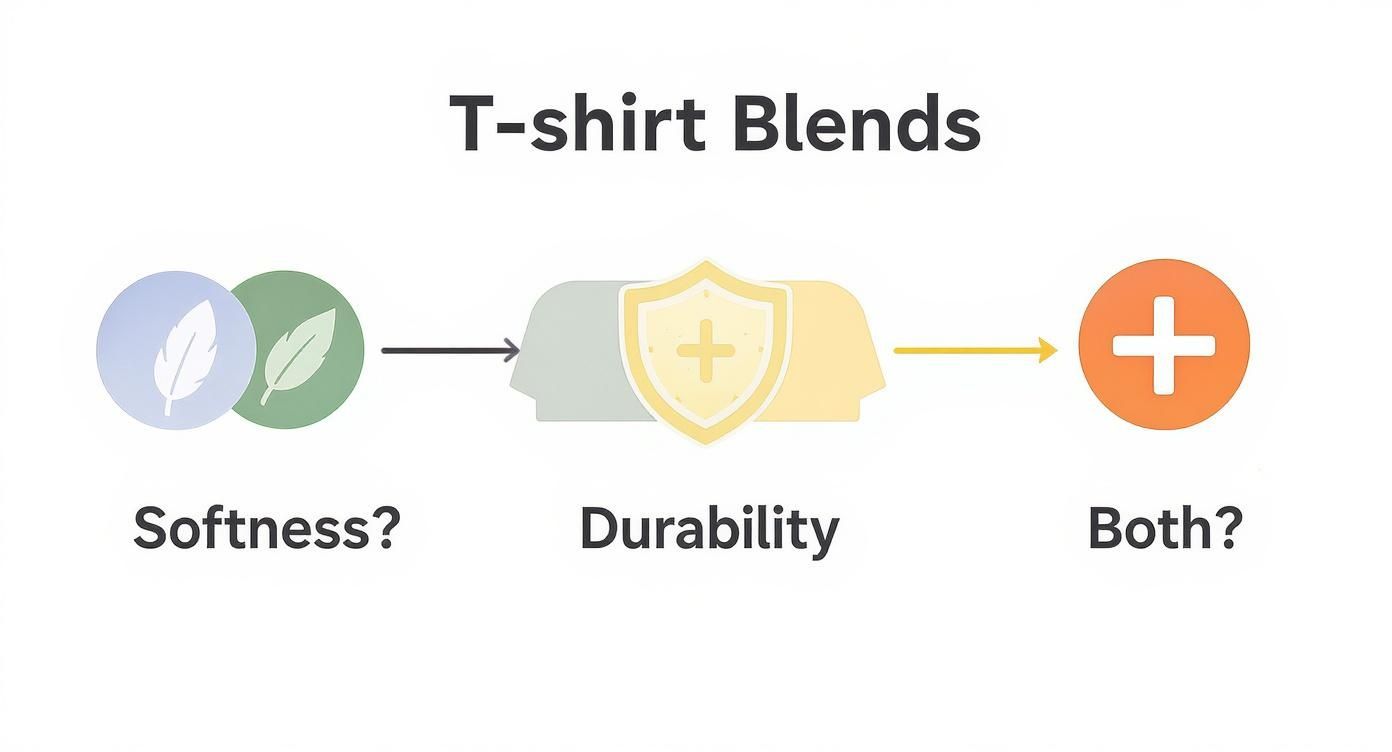
As you can see, blending materials allows you to find that sweet spot between a soft touch and the durability needed for everyday wear.
The Ultimate Versatility of DTF Transfers
And that brings us to the real game-changer: Direct-to-Film (DTF) transfers. DTF printing basically bridges the gap between all these other methods, offering amazing flexibility across almost any t-shirt material you can think of. Unlike DTG or sublimation, DTF doesn’t need the fabric’s fibers to hold the ink. Instead, the design is printed onto a special film and then heat-applied to the shirt with a strong adhesive.
This process makes it compatible with just about anything:
- 100% Cotton
- 100% Polyester
- Cotton/Polyester Blends
- Tri-Blends
- Even tricky materials like leather and nylon
This incredible versatility has supercharged the decorated apparel industry. The global custom t-shirt printing market, currently valued at around $9 billion, is expected to jump to roughly $13.55 billion in the next few years, largely thanks to accessible technologies like DTF. Because it works on almost anything, DTF gives creators the freedom to choose fabrics based purely on feel and function, without ever having to worry about print quality.
Printing Method Compatibility By Fabric Type
To make it even clearer, here’s a quick-reference table that breaks down which printing techniques work best with the most common t-shirt materials. Think of this as your cheat sheet for matching the right fabric to the right print method.
| Fabric Type | Best for DTF | Best for Screen Printing | Best for Sublimation | Notes & Considerations |
|---|---|---|---|---|
| 100% Cotton | Excellent | Excellent | No | The go-to for vibrant DTG and screen prints. Will not work with sublimation. |
| Cotton/Poly Blends | Excellent | Good | Poor (Heather/Vintage Only) | DTF excels here. Screen printing is good, but sublimation results in a faded, retro look. |
| 100% Polyester | Excellent | Good (with special inks) | Excellent | The only choice for true sublimation. DTF works perfectly. Requires specific inks for screen printing. |
| Tri-Blends | Excellent | Challenging | No | DTF is the clear winner. The mix of fibers makes other methods difficult to get right. |
| Performance Fabrics | Excellent | Challenging | Good (if 100% poly) | Often heat-sensitive. DTF with a low-temp adhesive is the safest and most reliable choice. |
Ultimately, the best printing method comes down to the material you’ve chosen for your project. With DTF, you have the most options, but knowing the strengths and weaknesses of each technique will ensure you get the best possible result every single time.
Got Questions? We've Got Answers.
Even after diving deep into the world of t-shirt fabrics, a few questions always seem to pop up. Let's tackle some of the most common ones so you can feel totally confident picking out your next blank.
What's the Absolute Softest T-Shirt Material?
If you're chasing that buttery-soft, luxury feel, it’s hard to beat premium cottons like Pima or Supima. Another top contender is anything with modal in it, a type of rayon that gives fabric a ridiculously smooth, silky hand.
That said, a whole lot of people will tell you that a tri-blend is the softest shirt they've ever worn, right off the rack. The magic mix of cotton, polyester, and rayon creates a fabric that feels perfectly broken-in, lightweight, and incredibly gentle from the very first wear.
Which T-Shirt Material Is Best for Hot Weather?
This really depends on what kind of "hot" we're talking about. For a dry, sunny day, you can't go wrong with a lightweight 100% cotton tee. It's one of the most breathable fabrics out there, letting air flow freely to keep you cool.
But if you're dealing with thick, humid air or planning to break a sweat, you'll want a moisture-wicking polyester or a poly-blend. Instead of soaking up moisture like a sponge, these fabrics pull sweat away from your skin and move it to the surface to evaporate. The result? You stay much drier and way more comfortable.
Do 100 Percent Cotton T-Shirts Shrink?
Oh, absolutely. 100% cotton is notorious for shrinking, especially after its first trip through a hot wash and a high-heat dryer. The heat and tumbling action release the tension that was put on the cotton fibers during the manufacturing process, causing them to shrink up.
The best way to fight the shrink is to wash your cotton tees in cold water and either tumble dry on low or, even better, let them air dry. Look for shirts labeled "pre-shrunk," as this process takes care of most of the shrinkage before you even buy it, though you might still see a tiny bit more over time.
Why Are Polyester Shirts So Good for the Gym?
Polyester dominates the gym for one simple reason: it's hydrophobic. That's just a fancy way of saying it hates water and dries incredibly fast.
Think about it—when you sweat, a cotton shirt acts like a towel, getting heavy, wet, and clingy. Polyester, on the other hand, wicks that moisture right off your skin. This keeps you from feeling weighed down, helps prevent chafing, and ensures your shirt can stand up to the constant washing that workout gear demands.
Ready to bring your designs to life on any fabric? Raccoon Transfers specializes in high-quality DTF transfers that work beautifully on cotton, polyester, blends, and more. Get vibrant, durable prints with a fast 24-hour turnaround. Start creating your custom transfers today!