
Best Guide: best heat press machine for small business to boost ROI
For a small business, the best heat press machine really comes down to your specific needs—your workspace, what you plan to make, and how much of it you need to produce. Most startups find that a versatile 15"x15" clamshell or swing-away press with solid digital controls hits that sweet spot between capability and cost. This size lets you efficiently crank out high-quality custom apparel. Your final decision will boil down to a simple trade-off: do you need speed and a compact machine, or the flexibility to handle thicker, more unusual items?
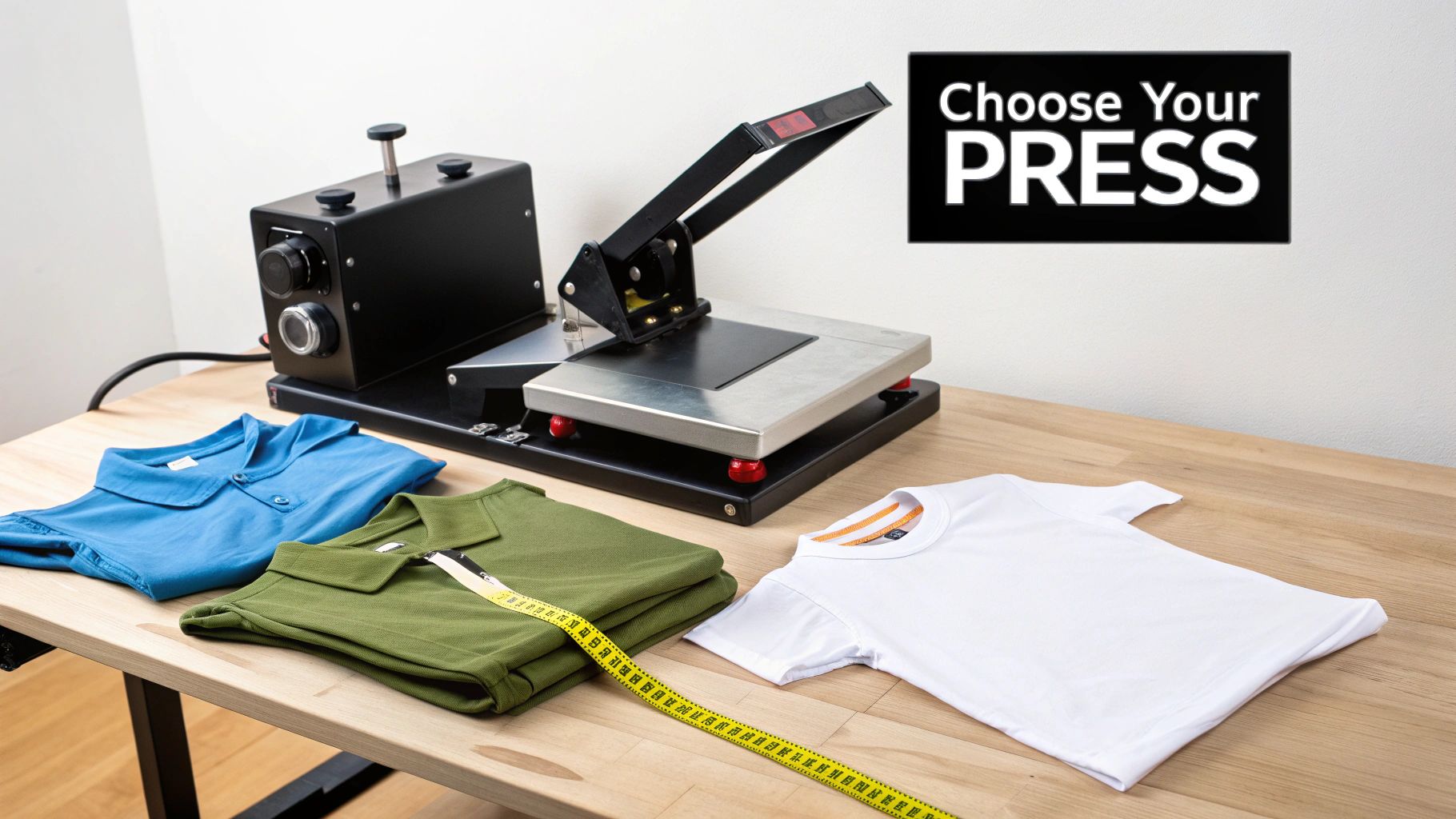
Choosing Your First Professional Heat Press
Picking out your first heat press is a huge step for any new apparel business. It's more than just buying a piece of equipment; it's a real investment in your brand's quality and your ability to grow. The machine you go with will shape everything from the products you can sell to how fast you can get orders out the door. Getting this right from the beginning saves you from the headache of costly upgrades and production jams later on.
Think of this guide as your practical roadmap. We’re going to skip the generic fluff and connect every feature to what it actually means for your business, making sure you end up with a machine that's a true workhorse for your shop.
Core Decision Factors for Small Businesses
Before you start comparing specific models, you need to get a handle on the main things that set one press apart from another. These are the factors that will determine if a machine is the right fit for how you work.
- Heat Press Type: This is your first big choice. Deciding between a clamshell and a swing-away model will define your day-to-day workflow and the range of products you can offer.
- Platen Size: This dictates the maximum size of your transfers and how efficiently you can work with things like DTF gang sheets.
- Digital Controls: Accurate temperature and pressure controls are absolutely essential for professional-grade work. They’re the key to getting consistent, vibrant, and long-lasting prints every single time.
To make it clearer, here’s a breakdown of the two main types of heat presses, so you can see which one aligns better with your business goals.
| Feature | Clamshell Heat Press | Swing-Away Heat Press |
|---|---|---|
| Workspace Footprint | Small; opens straight up, so it doesn't need much side-to-side room. | Large; the top platen swings out, requiring a lot more clearance. |
| Best For | High-volume jobs with standard items like t-shirts and other flat goods. | Thicker items like hoodies, plaques, tiles, and anything bulky. |
| Ease of Use | Faster to operate because of its simple up-and-down motion. | Slower cycle time, but gives you a clear, unobstructed view for lining things up. |
| Pressure Application | Pressure comes in at an angle, which can be less even on thick materials. | Even, direct top-down pressure, making it perfect for jobs that need precision. |
Getting a feel for these differences is the first step. For more perspectives and advice from others in the custom printing world, you can Explore industry insights on the Copycat247 blog. And as you start narrowing down your choices, check out our guide on https://raccoontransfers.com/blogs/guides/good-heat-press-brands to learn which manufacturers are known for building reliable machines and offering great support.
Why Invest in a Heat Press Now
Deciding when to buy new equipment is a huge decision for any small business. It’s not just about the money you spend upfront; it’s about having a clear vision for how that investment will make you money. A heat press isn't just another tool—it's your key to one of the most exciting and fast-growing markets out there: custom products.
The hunger for personalized apparel, unique accessories, and branded promo items has never been stronger. People are actively looking for one-of-a-kind goods that express who they are, which opens up a massive opportunity for entrepreneurs ready to deliver. This isn't a niche trend anymore; it's a full-blown market shift.
The Exploding Market for Customization
This surge in demand is fueling a thriving community of small businesses. The global heat press machine market is seeing incredible growth, making it a smart move for independent designers and e-commerce startups wanting to scale up. Right now, the market is valued at around USD 1.1 billion, but it's projected to almost double to USD 2.0 billion with a solid 6.8% compound annual growth rate (CAGR). This upward trend is driven entirely by the demand for personalized goods—exactly what a quality heat press helps you create. You can dig deeper into the heat press market's growth projections to see the numbers for yourself.
What’s really great about this growth is that it's not just for the big players. Professional-grade equipment is more accessible than ever, leveling the playing field. Now, small creators can produce top-notch, retail-quality products from a small workshop or even a spare room.
A heat press is your entry ticket into the creator economy. It empowers you to turn digital designs into tangible, profitable products with minimal overhead, directly capitalizing on the consumer's desire for personalization.
A Gateway to Multiple Revenue Streams
Getting the best heat press machine for your small business does more than just let you print t-shirts. It opens the door to a whole range of profitable ventures that can seriously expand your business model.
Think about all the ways you could make money:
- Direct-to-Consumer (D2C) Apparel: Launch your own clothing line. Sell your unique designs directly from your website or social media.
- Corporate and Team Merchandise: Become the go-to printer for local businesses, schools, and sports teams that need branded gear.
- Etsy and Online Marketplaces: Tap into a built-in audience of millions who are already searching for custom-made gifts and cool novelty items.
- Event-Based Sales: Set up a booth at local markets, fairs, or festivals and offer on-the-spot custom printing. It’s a great way to engage with customers directly.
Each of these is a legitimate path to growing your brand and boosting your income. Of course, having the right tool is only part of the equation. Understanding how to grow your business is just as important. Exploring some proven small business growth strategies can give you a real competitive edge. When you pair a powerful tool like a heat press with a smart business plan, you’re setting yourself up for long-term success and a fantastic return on your investment.
Clamshell vs. Swing-Away: Picking Your Workhorse
When you're starting out, choosing between a clamshell and a swing-away heat press is one of the first big decisions you'll make. This isn't just about the machine; it's about defining your workflow, what you can create, and how you use your precious workspace. There’s no single “best” press—only the one that’s right for your business.
The choice really comes down to a classic trade-off: space and speed versus versatility and precision. Clamshells are compact, fast, and built for volume. Swing-away presses need more room but give you the flexibility to work with a much wider range of products. Let's break down where each one shines.
Comparing Heat Press Types for Small Business Use
This table cuts right to the chase, comparing the two main types of manual heat presses on the factors that matter most when you're just starting or scaling up.
| Decision Factor | Clamshell Heat Press | Swing-Away Heat Press | Best Use Case for a Small Business |
|---|---|---|---|
| Workspace Footprint | Compact; opens vertically. Ideal for small shops, home offices, or event setups. | Requires significant clearance (double its width) for the top platen to swing out. | Clamshell: Perfect for a business with tight space constraints. |
| Production Speed | Very fast. The simple open-and-close motion is great for high-volume, repetitive jobs. | Slower cycle time due to the swing motion. Each press takes a few extra seconds. | Clamshell: The clear winner for pumping out large t-shirt orders quickly. |
| Product Versatility | Best for thin, flat items like t-shirts, tote bags, and mousepads. Struggles with thick items. | Excellent for both thin and thick items (hoodies, plaques, tiles) due to even pressure. | Swing-Away: Essential for shops wanting to offer a diverse product catalog. |
| Pressure Application | Applies pressure at an angle, which can be less even on the edges. | Applies direct, top-down pressure, ensuring perfectly even distribution across the platen. | Swing-Away: The go-to for precision and flawless results on any item. |
| Ease of Use & Safety | Higher risk of accidental burns since the work area is directly under the hot platen. | Much safer. The hot platen swings completely away, giving you an open, safe workspace. | Swing-Away: A safer and less stressful option, especially for beginners. |
In short, your business model should point you directly to the right machine. If you're all about speed and standard apparel, the clamshell is your ally. If you're building a brand on variety and quality, the swing-away is the smarter long-term investment.
The Case for Clamshells: Speed and Efficiency
Clamshell heat presses are the top pick for businesses that need to crank out orders and don't have a ton of space. The top platen opens on a hinge, just like its namesake, in a simple up-and-down motion. This design is incredibly efficient for repetitive tasks.
Picture this: you've landed a big order for event t-shirts. With a clamshell, you can get into a rhythm—load the shirt, press, and pull it out in a matter of seconds. Its small footprint means it can sit on a sturdy table in a spare room or a corner of your garage, making it the perfect starting point for many home-based businesses.
That speed is its superpower. For standardized, high-volume jobs, those saved seconds add up, leading to faster turnaround times and happier customers.
For a business built on speed and consistency with flat apparel, a clamshell press is an efficiency engine. Its compact design and rapid operation maximize output in minimal space, making it a perfect starting point for many t-shirt brands.
The Advantage of Swing-Aways: Versatility and Precision
On the other side, you have swing-away heat presses, which are built for businesses that refuse to be limited. Here, the top platen swings completely away from the bottom one, giving you a wide-open, unobstructed view of your workspace. This is a game-changer.
First off, you can see exactly what you're doing. This makes lining up tricky transfers, like a full chest design from a DTF gang sheet, much easier and more accurate. Second, the platen comes straight down, applying perfectly even pressure from edge to edge. This is non-negotiable for thicker items like hoodies, plaques, or ceramic tiles, where a clamshell’s angled pressure just won't cut it.
The market data backs this up. For small businesses that need flexibility, swing-away models are a top choice. They hold the largest market share at 31.09%, valued at USD 244.5 million, and are expected to grow at a 6.68% annual rate. Why? That 360-degree swing arm that guarantees even pressure is a major selling point. This makes them indispensable for any shop offering a diverse product lineup.
This visual guide can help you map your business goals to the right type of press.

As the flowchart shows, if versatility is your north star, the swing-away is your path. If it's all about volume, the clamshell is the way to go.
Making the Right Call for Your Business
At the end of the day, the best machine is the one that fits your business plan. There’s no right or wrong answer, just the right tool for your specific goals.
Here’s a quick gut check to help you decide:
-
You Should Get a Clamshell If:
- You’re focusing almost exclusively on t-shirts, totes, and other thin, flat goods.
- You need to pump out high-volume orders as fast as possible.
- Your workspace is small, and every square foot counts.
-
You Should Get a Swing-Away If:
- You want to print on everything—from sweatshirts and hoodies to thick items like tiles or plaques.
- Getting placement perfect is critical for your brand's quality.
- You have enough room for the machine to operate without feeling cramped.
Think of it this way: a niche t-shirt brand could build an entire business with a reliable clamshell. But a promotional products company that needs to say "yes" to any client request will find a swing-away absolutely essential. Match the machine to your mission, and you'll have a tool that helps you grow.
Essential Features That Impact Your Final Product
Once you've decided between a clamshell or a swing-away, the real work begins. The specific features of your heat press are what will make or break the quality of your finished products. These aren't just bullet points on a sales page; they are the dials and levers that determine whether your t-shirts, hoodies, and tote bags look professional and last wash after wash. For a small business building its reputation, getting this right is everything.
Think of your heat press as a business partner. A machine with sloppy controls or a platen that’s too small will constantly create headaches in your workflow, costing you time, wasted materials, and money. Let's dig into the core features that truly make a difference.
Platen Size and Production Efficiency
The platen is the hot plate of your press, and its size is one of the most important decisions you'll make. It’s tempting to grab a smaller, cheaper press to save a few bucks upfront, but that can quickly turn into a massive bottleneck as your orders start rolling in.
For most small shops, the sweet spot is either a 15"x15" or a 16"x20" press.
A 15"x15" platen is a solid workhorse. It’s big enough to handle the vast majority of adult t-shirt designs and other standard apparel, and it won't take over your entire workspace. It’s a fantastic starting point for many new businesses.
But if you're serious about growth, especially if you plan on using Direct-to-Film (DTF) transfers, the 16"x20" is a much smarter investment. That extra space lets you press oversized designs or, even better, press multiple smaller designs from a single DTF gang sheet at once. This one change can drastically cut your production time per item, boosting your throughput and profit margins.
Choosing a platen that's slightly larger than you think you need is a strategic move. It prepares your business for growth, allowing you to take on larger, more complex orders without needing to upgrade your primary machine.
The custom apparel market is exploding, largely thanks to small businesses meeting the massive demand for personalized gear. Independents are making a huge impact, capturing 40% of online sales. This trend is fueled by a 35% annual jump in small businesses launching e-commerce stores, which lines up perfectly with a 25% yearly rise in consumer demand for custom apparel. You can dive deeper into the heat press machine market on datainsightsmarket.com. Having the right machine is how you compete.
The Importance of Digital Controls
You can't get consistent, professional-grade results without precise control over three things: temperature, time, and pressure. This is where digital controls become an absolute necessity, not just a nice-to-have feature. Look for a machine with a clear digital display that lets you lock in your settings with confidence.
-
Temperature Control: DTF transfers and other print methods have very specific heat requirements. If your press is off by even a few degrees, you risk scorching garments, getting poor adhesion, or seeing colors wash out. Good digital controls ensure the platen heats evenly, killing the cold spots that can ruin a perfectly good print.
-
Time Control: An integrated digital timer, especially one with an audible alarm, is non-negotiable. It stops you from over-pressing (which can damage the fabric) or under-pressing (which means the transfer will peel off). This simple feature frees you up to prep the next item while the current one is pressing.
-
Pressure Adjustment: Pressure is often adjusted with a manual knob, but the system should be easy to use and, most importantly, repeatable. Getting consistent pressure is what embeds the transfer's adhesive deep into the fabric fibers, which is the key to incredible durability.
Nailing these settings is fundamental. For a complete look at the right settings for different materials, check out our heat press temperature guide for flawless transfers.
Build Quality, Warranty, and Support
Finally, let's talk about the stuff that isn't on the spec sheet but is just as crucial for a small business. A heat press is a long-term investment, and when it goes down, your business grinds to a halt.
Look for a press built with a solid steel frame. It will hold up to daily use way better than a flimsy, plastic-heavy model from a no-name brand. Scour reviews for mentions of sturdiness and longevity—a well-built machine will deliver consistent pressure and accurate temperatures for years.
Just as important are the manufacturer's warranty and customer support. A strong warranty (one year or more is a good sign) shows the company believes in its product. And when something inevitably goes wrong, accessible and genuinely helpful customer support can be an absolute lifesaver. This is your safety net, protecting your investment and keeping your business running.
How to Maximize Your Return on Investment
Getting the right heat press is just the first hurdle. The real money is made when you know how to use that machine to its absolute fullest potential. Mastering your process is what turns a decent investment into a profit-generating powerhouse, ensuring every shirt that leaves your shop is something you can be proud of.
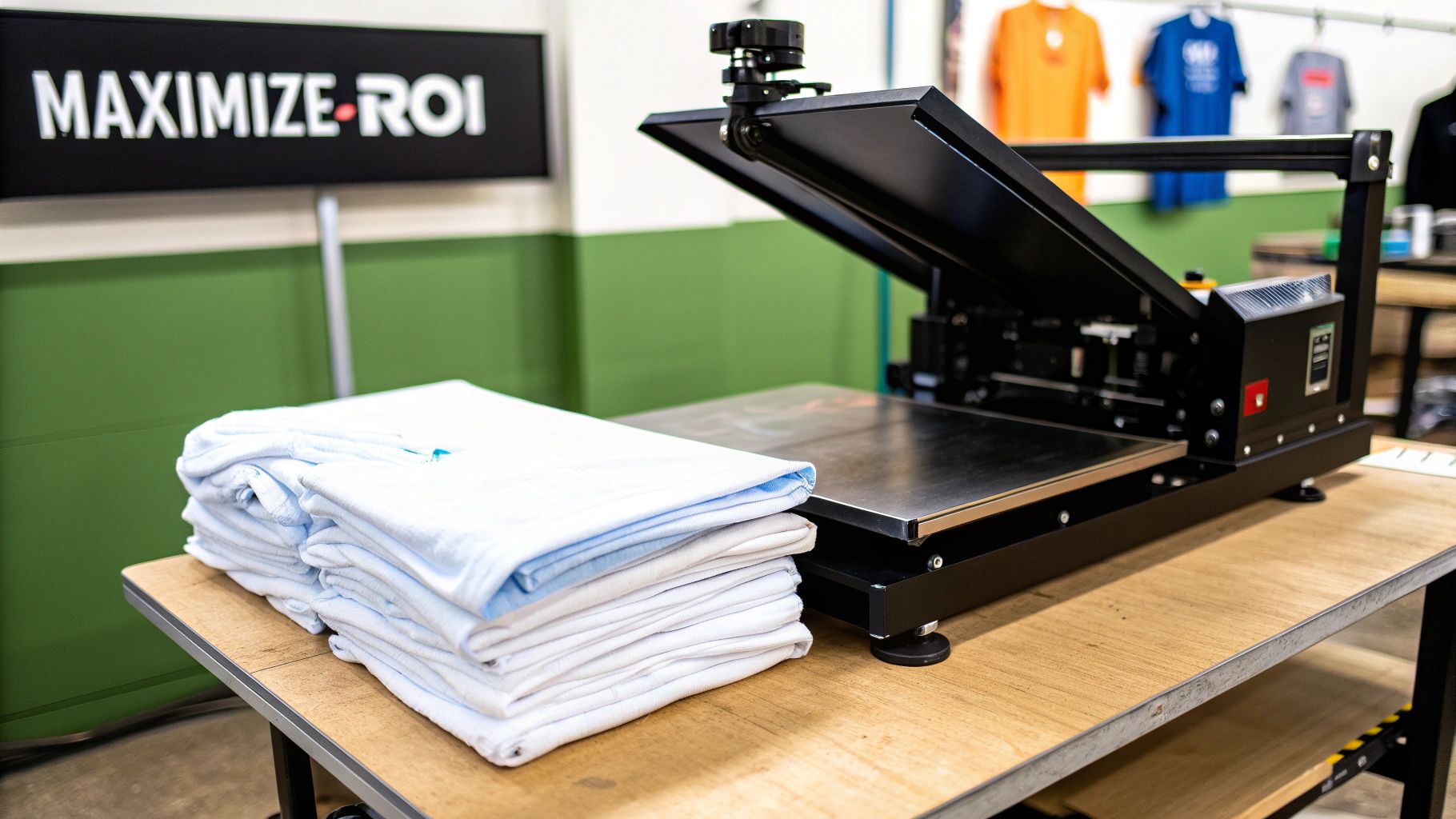
It’s about moving beyond guesswork and establishing a workflow that’s repeatable and professional. When your results are consistent, you build customer trust, cut down on wasted materials, and protect your bottom line.
Perfecting Your Application Process
That flawless, durable print you’re after? It comes down to a few key techniques that really separate the pros from the beginners. Building these simple steps into your routine will make a night-and-day difference in the quality of your finished apparel.
First up, always pre-press your garment for 3-5 seconds. This quick step zaps any hidden moisture and flattens out wrinkles, creating a perfectly smooth canvas for your transfer. Trust me, skipping this is one of the most common reasons prints start peeling after a few washes.
Next, get into the habit of a post-press for 5-10 seconds after you’ve peeled the transfer film. Just lay a protective sheet (parchment or Teflon works great) over the design and give it one more quick press. This helps lock the ink into the fabric fibers, seriously boosting wash durability and giving the print a much softer, more professional feel.
Your best defense against quality control headaches is a consistent, multi-step process. Pre-pressing gets the garment ready, and post-pressing locks in the design for good.
Optimizing Settings for Common Materials
Your heat press settings are never a "one-size-fits-all" deal. Every fabric and transfer type needs a specific recipe of time, temperature, and pressure to bond perfectly. Getting this wrong leads to scorched shirts or prints that just don’t stick.
Here's a quick cheat sheet for common materials when you're working with DTF transfers:
- 100% Cotton: You're usually safe in the 300-320°F (149-160°C) range for 10-12 seconds with medium-to-firm pressure. Cotton is pretty tough and takes transfers beautifully.
- Polyester & Blends: Back the heat off. Aim for 275-290°F (135-143°C) for 8-10 seconds with medium pressure. Poly is sensitive and can scorch easily if you go too hot.
- Hard Surfaces (Coated): For things like specially treated wood or metal, you might need to crank it up to 350-400°F (177-204°C), but the time will vary a ton based on the item. Always, always test first.
Always start with the settings your transfer supplier recommends, but be prepared to do a few test presses on scrap material. This little bit of prep saves you from ruining a whole batch of inventory.
Leveraging Gang Sheets for Maximum Throughput
In a small business, time is money, and efficiency is king. One of the smartest ways to crank up your production speed is by using DTF gang sheets. A gang sheet lets you arrange multiple designs on one large transfer sheet.
Think about it: instead of pressing a small chest logo, then a sleeve logo, then a neck tag, you can do it all at once. With a 16"x20" platen, you could press a full front design, two sleeve hits, and a tag in a single cycle. This slashes your labor time per garment and helps you pump out bigger orders much faster.
This kind of efficiency is crucial for keeping costs down and pricing your products competitively. For a deeper dive, our guide on how to price custom shirts can help you build these efficiencies right into your business model. Squeezing every bit of value out of each press cycle is a simple but powerful way to boost your ROI.
Your Final Heat Press Purchase Checklist
Alright, you've done the research. You know the difference between a clamshell and a swing-away, and you've thought about platen sizes. Now it's time to make the final call, and that can feel a bit daunting. Don't worry. This isn't about second-guessing yourself; it's about a final, practical walkthrough to make sure the machine you're eyeing is truly the right fit for your business.
Think of this as your last gut check. It’s designed to connect all the technical details we've covered to the reality of your day-to-day work.
Core Business and Operational Fit
Before you even think about specific brands or models, let’s zoom out and look at the big picture. Getting this part right ensures the press you buy actually helps you achieve your goals.
- What are you actually making? Be honest about your primary products. If you're cranking out t-shirts all day, a clamshell is a workhorse. But if you plan to press thicker items like hoodies, awards plaques, or hats, a swing-away's versatility is non-negotiable.
- Where will it live? Seriously, get out the measuring tape. A clamshell is great for tight corners, but a swing-away needs a surprising amount of side-to-side clearance to operate safely and efficiently. Don't get stuck with a machine that doesn't fit your space.
- Is the price right for your plan? A bigger upfront cost for a 16"x20" platen or a more robust machine might seem scary, but think about the return. If it lets you press more items faster with fewer mistakes, it pays for itself.
Your heat press isn't just another line item on your expense sheet—it's the engine of your production. The right machine will minimize wasted transfers, produce consistently great results, and ultimately build your reputation for quality.
Technical and Support Verification
Last but not least, let's look at the fine print. This is the stuff that can save you from major headaches down the road.
- Who has your back when it breaks? Look for a solid one-year warranty at a minimum. More importantly, dig into reviews about their customer support. When you’re up against a deadline and your machine goes down, you'll be glad you chose a company with a responsive and helpful team.
- Does it play well with your transfers? Double-check the press’s temperature range and pressure settings. Make sure they align with the specs your DTF, sublimation, or vinyl supplier recommends. A mismatch here is a recipe for faded colors and peeling prints.
Ticking off these boxes means you’re doing more than just buying a piece of equipment. You're choosing a reliable partner that will help you turn your creative ideas into a profitable business.
Common Questions About Buying a Heat Press
Buying your first heat press brings up a lot of questions. It’s a big investment, and you want to get it right the first time to avoid headaches later on. Let’s walk through some of the most common things that trip up new business owners.
Getting these answers straight will help you go from just researching to making a confident decision on the right machine for your shop.
What Size Heat Press Is Best for a T-Shirt Business?
If you're launching a t-shirt business, the 15"x15" press is the classic workhorse. It’s the industry standard for a reason—it’s big enough for most adult shirt graphics but won't take over your entire workspace. It’s a solid, versatile starting point.
But, if you know you'll be working with DTF gang sheets or want to print those popular oversized designs, you should seriously consider a 16"x20" press. That extra space is a game-changer. You can press a huge back graphic in one shot or knock out multiple smaller logos at once, which really speeds up your workflow.
Expert Insight: Go for the 16"x20" if you can. It’s a smart long-term investment that you won’t outgrow in six months when your orders start picking up and your designs get more ambitious.
How Much Should I Spend on My First Heat Press?
It’s tempting to grab one of those sub-$200 presses you see online, but I'd steer clear. They're cheap for a reason. You'll often fight with uneven heat spots and flimsy construction, which means ruined shirts and wasted money.
A good, reliable starter press that won't let you down will typically run you between $300 and $600. In that sweet spot, you’ll find machines from trusted brands that offer accurate digital controls and decent customer support. Spending a little more here saves you a fortune in reprints and frustration down the road.
Can I Use One Press for Different Products?
Your standard flat press—whether it’s a clamshell or a swing-away—is perfect for anything flat. Think t-shirts, tote bags, hoodies, and mousepads. It's the cornerstone of any print shop.
However, you can't use it for items with a curve, like mugs, tumblers, or hats. For those, you need a specialty press designed for the job:
- Mug/Tumbler Press: These wrap snugly around cylindrical items, giving you the even heat and pressure needed for a perfect transfer.
- Hat Press: This one has a curved platen that fits the shape of a cap, ensuring your logo applies smoothly without any weird creases.
You might see "all-in-one" combo machines with different attachments. While they seem like a great deal for a hobbyist, any serious business will find that dedicated, single-purpose presses produce much more consistent, professional results.
At Raccoon Transfers, we make premium DTF transfers that pair perfectly with professional-grade heat presses. To see just how easy it is to bring your designs to life, check out our gang sheet builder. Explore our DTF transfer solutions today!